

 Français
  English
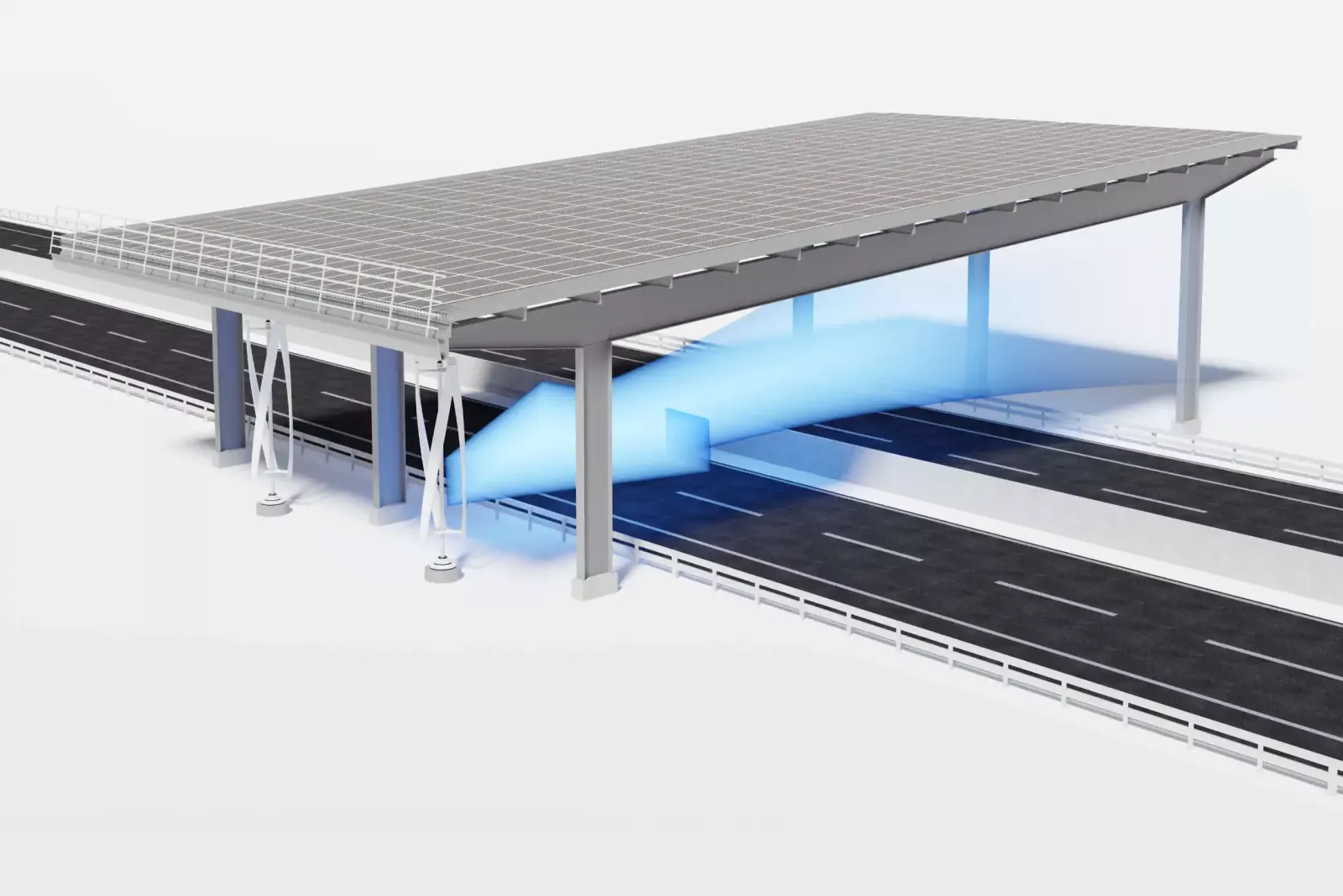
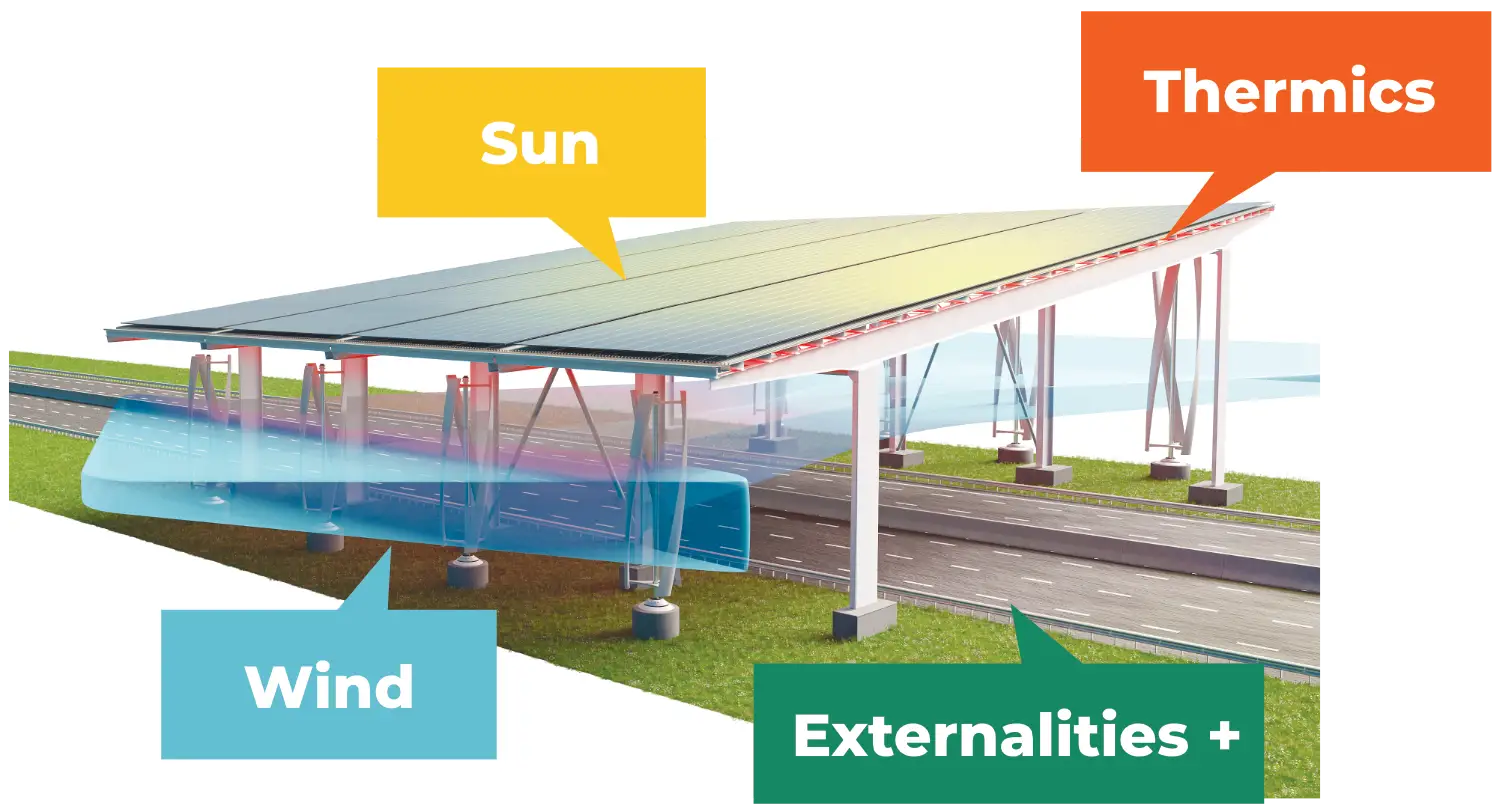
EnergyPier Combined Power Plants produce clean (green) electricity and generate positive externalities
-

Sun -Thousands of square metres of solar panels generate large amounts of renewable electricity
-

Wind – The supporting structure is designed to create an effect that accelerates the air, turning it into a source of energy, which is harnessed by the AnemoGen™ generators from EnergyPier installed on either side of the supporting pillars.
-

Thermal – Recovery of natural ambient heat and heat generated by photovoltaic panels
Externalities + - The EnergyPier's structure offers additional benefits to motorway operators and users:
- Noise reduction
- Reduced winter maintenance
- Protection against heavy rain and gully erosion
- Protection of the road against excessive heating
Significant additional benefits for motorway users and operators: Positive externalities
As well as being a high-output power station, EnergyPier also offers additional benefits for motorway operators and users:
-
 The structure, including the protective wall and canopy, offers the benefit of a significant reduction in noise
 -
 The canopy structure protects the road from snowfall and eliminates the need for winter maintenance, or reduces it significantly depending on the circumstances (salting, mechanical snow clearance)
 -
 The roof protects the road surface from excessive heat and UV rays in summer, whilst significantly extending its lifespan
 -
 The roof surface can be used to collect rainwater
 -
 The supporting structure can be fitted to accommodate cables and other installations
 - The facility offers the option of installing emergency power points for e-mobility

Innovation #1
R&D and technical research: achieving a high level of innovation by using only tried-and-tested technologies, thereby ensuring the safety and longevity of the structure, whilst avoiding costly and time-consuming teething problems.

Innovation #2
Building over motorways without disrupting traffic and without compromising user safety, by adapting existing, tried-and-tested construction techniques

Innovation #3
Integrating infrastructure into the landscape: transforming the motorway’s core transport function into a multifunctional tool, thereby creating additional benefits without causing further negative impacts

Innovation #4
A combined power plant offering the perfect balance between cost and performance: it is the combination of high-performance solar cells with EnergyPier’s AnemoGen™ air turbines that will deliver the best value per kWh.

The aim of this environmental assessment is to lay a solid foundation that will dispel any doubts regarding the fundamental justification for the proposed EnergyPier combined-cycle power stations:
Contributing to a prosperous yet sustainable economy that benefits everyone.
There are various tools available to assess a project’s sustainability, such as LCA (Life Cycle Assessment), impact assessments and carbon footprints...
We can establish a solid basis for assessment by measuring the energy invested using the ratio of energy produced to embodied energy, the embodied energy saved, and by determining the project’s ancillary effects on the environment through an assessment of externalities.
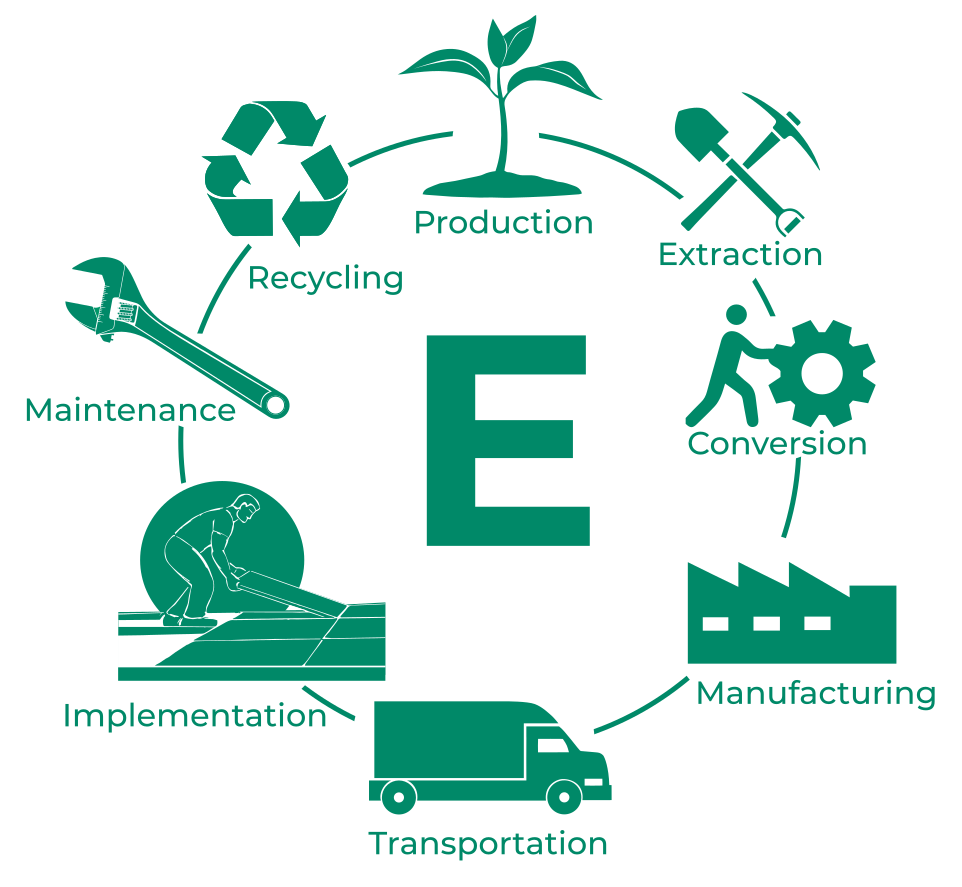
Energy expended
Moderately favourable region: Europe, the Rhône Valley
Option 1

Ratio of energy produced to embodied energy = >13
Option 2

Ratio of energy produced to embodied energy = >19
Option 3

Ratio of energy produced to embodied energy = +E3 > 20
Highly favourable region: the Middle East
Option 1
Ratio of energy produced to embodied energy = >20
Option 2
Ratio of energy produced to embodied energy = >30
Option 3
Ratio of energy produced to embodied energy = +E3 > 35
Positive externalities
-
Chemical emissions: noneExclusive use of renewable energy sources (solar, wind and geothermal) without the use of fossil fuels.
-
Noise emissions: reduction of 5 to 8 dBAnemoGen solar panels, inverters and generators produce less noise than the wind. The infrastructure EnergyPier directs sound waves from the motorway down towards the ground.
-
Visual impact: integrating the structure into the landscapeThe idea of transforming the motorway into a multifunctional facility, in addition to its primary function of facilitating travel, has no negative impact. It improves the motorway’s integration into the landscape
-
Electricity grid management: facilitating the integration of renewable energyAt EnergyPier, solar, wind and thermal power complement one another to ensure the daily and seasonal balance of the grid
-
Impact on wildlife: approaching zeroThe motorway is already a developed area, so there is no additional impact on wildlife, apart from a reduced risk of collisions
-
Other emissions (construction, dismantling, recycling): very lowThe embodied energy associated with these stages of the installation’s life cycle has already been taken into account.
Comparisons
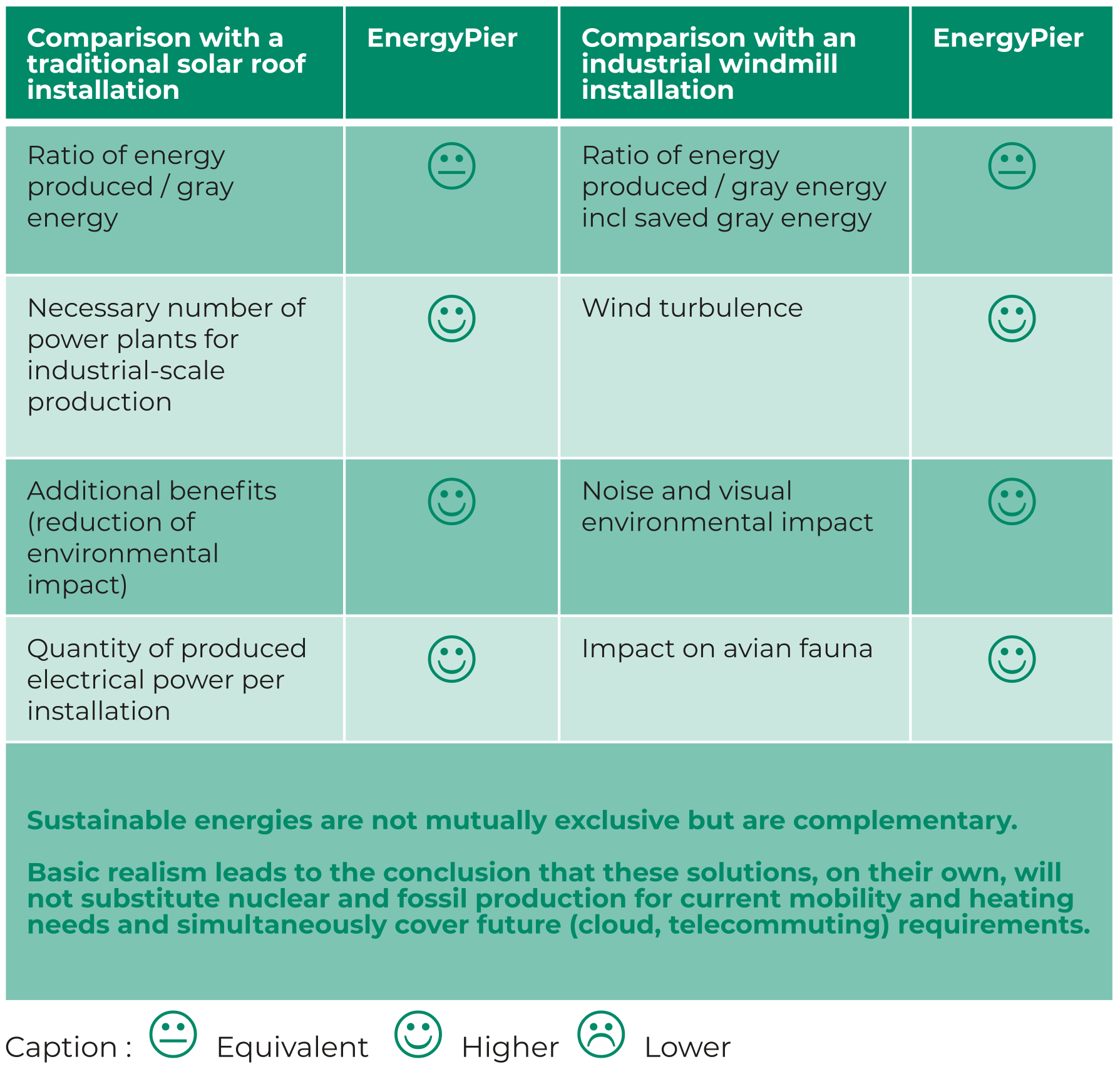
- The cost of the structure
- The manufacture of photovoltaic panels
- The production of AnemoGenTM generators
- The positive benefits of externalities, such as the protection of road surfaces (savings on road resurfacing, gritting and snow clearance), noise reduction, rainwater harvesting, etc.
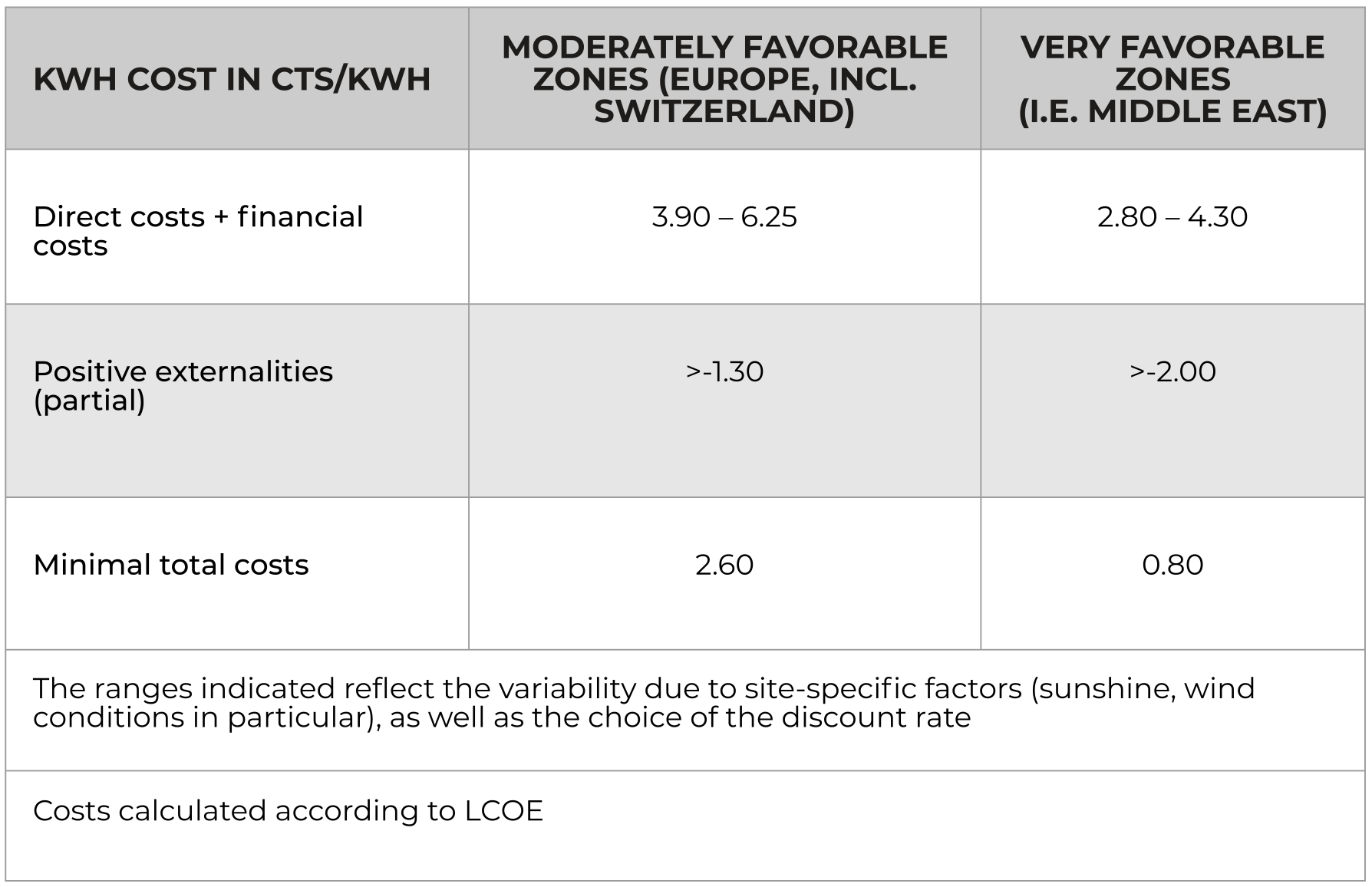
Current electricity generation costs (base year: 2018)
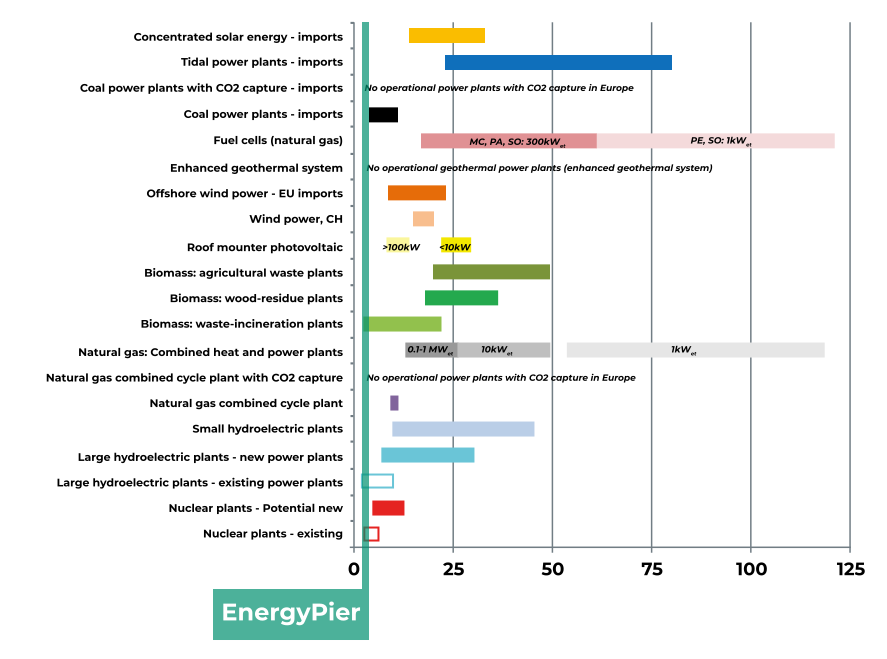
Estimated costs of electricity generation in 2050
Generation costs for new power generation facilities built in Switzerland (in ct./kWh) and offshore wind energy abroad
%20as%20well%20as%20offshore%20wind%20energy%20abroad.svg)
It is clear that the EnergyPier solution achieves highly competitive production costs in both the short and long term, which should enable its rapid integration into the energy landscape as a complement to existing renewable energy sources, particularly hydroelectricity, solar power and wind power.
Its contribution in terms of production volume is expected to complement photovoltaic and wind power, which are set to develop rapidly.
Exploitable potential of renewable electricity generation facilities in Switzerland (in TWh/year)
.svg)
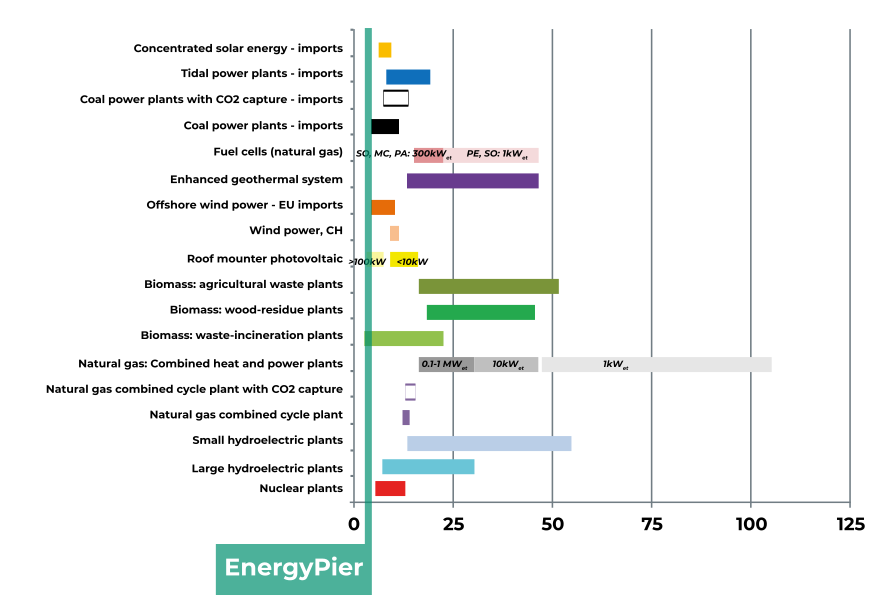
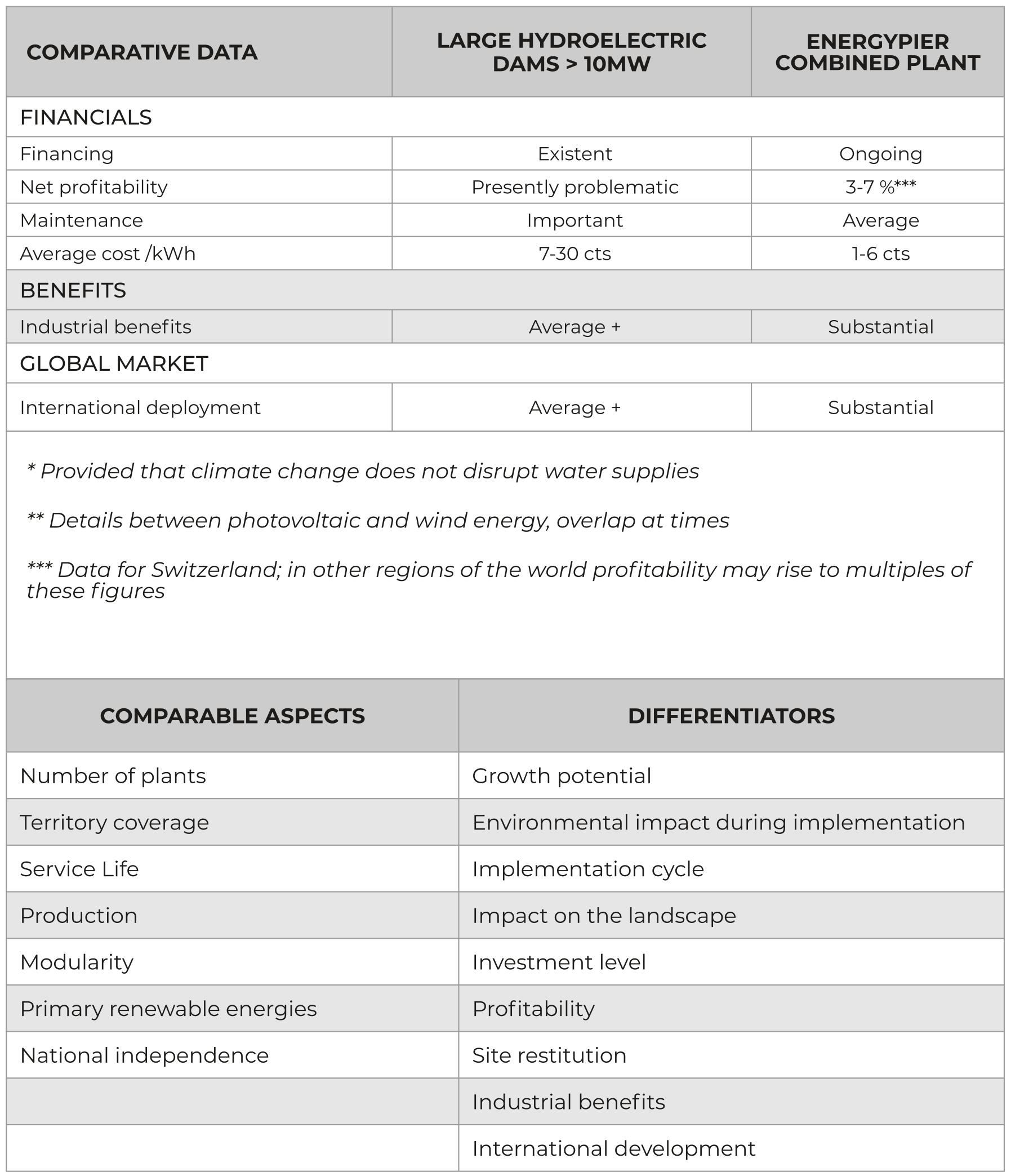
When the LCOE formula is applied to ongoing EnergyPier projects, both in Switzerland and in a subtropical country, the cost estimates fall within the lower cost brackets of the various technologies.
EnergyPier offers highly competitive production costs in both the short and long term, which should enable its rapid integration into existing renewable energy sources, notably hydroelectricity, photovoltaics and wind power.
In terms of production volume, EnergyPier is expected to complement solar and wind power, which are currently undergoing rapid development. EnergyPier power stations will fall into the category of power stations requiring a comparatively low level of investment.
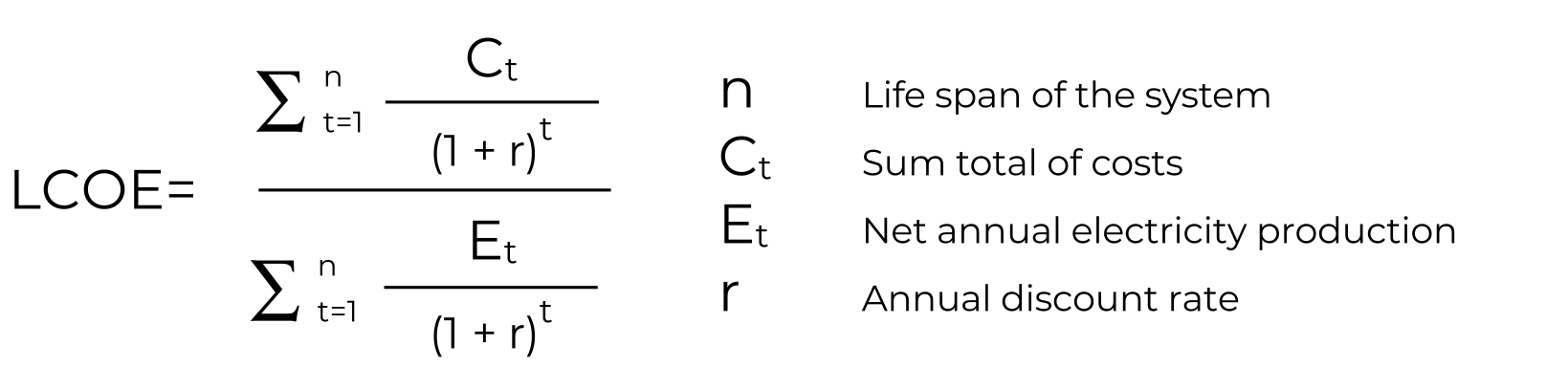
To determine its production costs, the electricity sector frequently uses a model known as LCOE (Levelised Cost of Energy). For a given power generation facility, this corresponds to the sum of the discounted costs of energy production divided by the quantity of energy produced, which is also discounted. It is typically expressed in ct/kWh (or another currency).
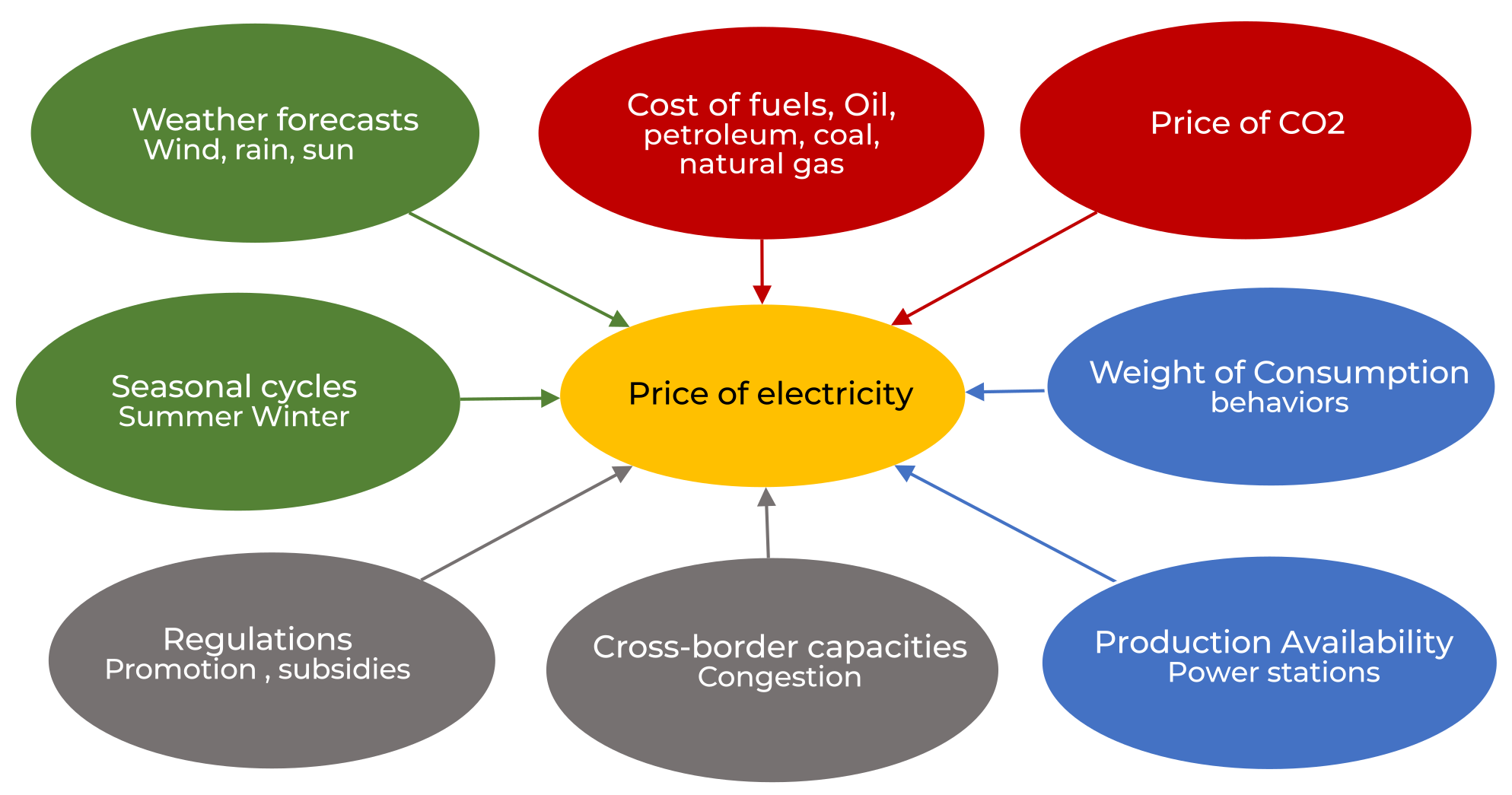
Calculating the cost price of the energy produced involves taking into account a multitude of factors, some of which are fixed and objective (the price of a solar panel), others objective but variable and entirely predictable (the cost of a foundation depending on the local geology), others that are variable and partially predictable (the weather), variable and almost impossible to predict (the state of the economy), some that are entirely arbitrary (the rate of return on invested capital, the financing model), and finally, for the most difficult factors, elements that are subject to controversy such as the cost of nuclear waste storage, the impacts of global warming, etc.
A comparison of large hydroelectric power stations with EnergyPier power plants
The economic boom that Switzerland experienced after the war necessitated the development of hydroelectric power: in a short space of time, between 1950 and 1970, nearly 80 dams over 15 metres high were built. These account for half of the existing structures in our country.
It was during this period that the Grande Dixence dam was built; at 285 metres high, it remains the world’s tallest gravity dam.
Since then, the pace of dam construction has slowed. However, Swiss engineers have contributed their knowledge and experience to numerous projects abroad. In this way, they preserve their expertise and remain at the forefront of a constantly evolving technology.
This is beneficial for ensuring the effective maintenance of our own dams.
EnergyPier Combined Power Plant in Fully (VS), A9 motorway
Fully - VS


Swiss Market Development 2020–2035
Key considerations for Switzerland’s energy transition include offsetting the shortfall caused by the reduction in current generation resulting from the imminent decommissioning of the country’s nuclear and thermal power plants, and meeting the new demand for electricity arising from the decarbonisation of passenger and commercial vehicle fleets and heating systems, as well as the rise in remote working.
In 2019, renewable energy sources, excluding hydroelectricity, amounted to 3 TWh/year. Despite their rapid growth, the 25–35 TWh/year threshold will only be reached with the addition of significant new generation capacity.
EnergyPiers are therefore an important complementary solution.
Assuming an average plant size corresponding to the A4-KW plant in the Knonauer Amt described above, around 250 EnergyPier plants will need to be built, spread across the entire Swiss motorway network.
To address this range of possible scenarios, EnergyPier operates within a flexible structure that adapts to the needs and choices of its clients and partners in the design and implementation of projects.
At the heart of the start-up that saw the birth and growth of the EnergyPier project, the EnergyPier team is already active in advising on the initiatives that various stakeholders will take during the process leading to Switzerland’s energy transition.
It is ready to explore all forms of collaboration proposed with a view to responding swiftly to the challenges created by the energy transition.
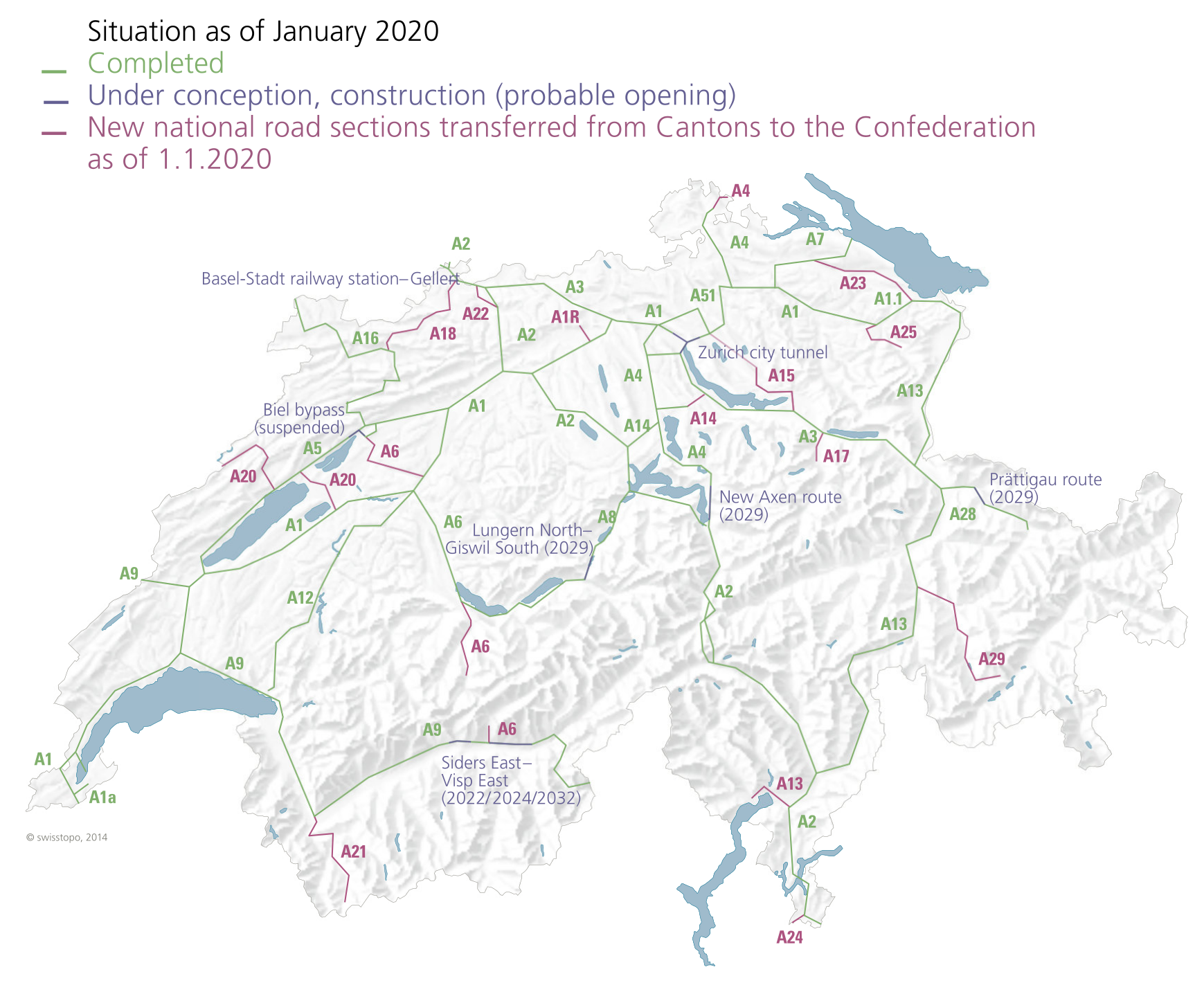
Condition of national roads and motorways in 2020
In addition to its commitment to building the power stations that Switzerland will need, the EnergyPier team is also expanding its operations internationally.
Initially, the team looked at certain European countries neighbouring Switzerland, where the solution is appealing because they are striving to phase out nuclear power and high-carbon fossil fuels.
The team soon went further, establishing local partnerships to identify, provide expertise and adapt it to countries with more pressing needs in much more favourable climatic conditions.
It follows that the global opportunities are countless.
As was the case with hydroelectric power stations, EnergyPier’s successive projects will lead to the development of a genuine Swiss combined-cycle power station industry.
A world-class industry that will address the energy transition concerns being felt across the globe.
Electricity generation by source

