Français
  English
 EnergyPier
Swiss Market Development 2020–2035
Key considerations for Switzerland’s energy transition include offsetting the shortfall caused by the reduction in current generation resulting from the imminent decommissioning of the country’s nuclear and thermal power plants, and meeting the new demand for electricity arising from the decarbonisation of passenger and commercial vehicle fleets and heating systems, as well as the rise in remote working.
In 2019, renewable energy sources, excluding hydroelectricity, amounted to 3 TWh/year. Despite their rapid growth, the 25–35 TWh/year threshold will only be reached with the addition of significant new generation capacity.
EnergyPiers are therefore an important complementary solution.
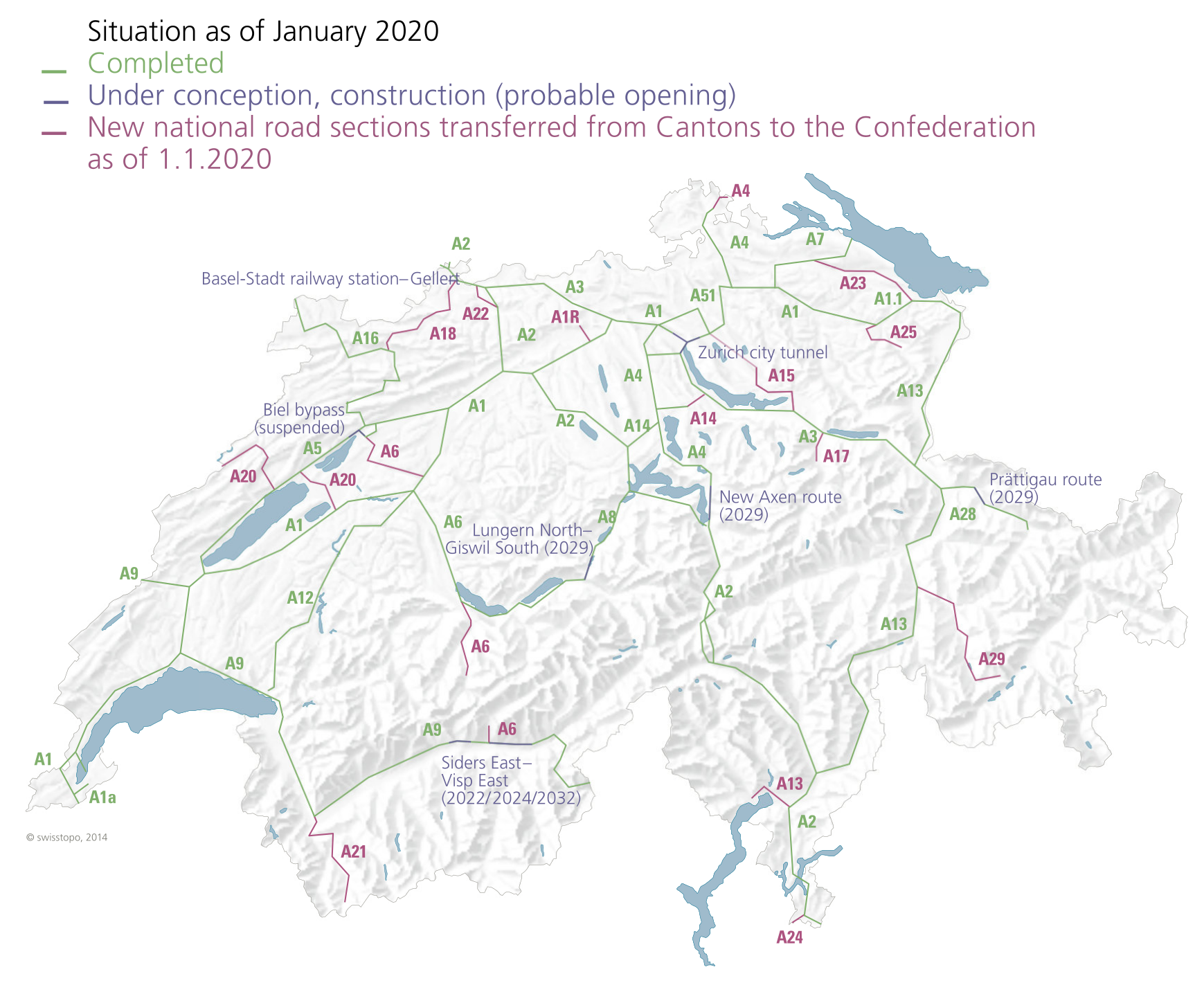
Assuming an average plant size corresponding to the A4-KW plant in the Knonauer Amt described above, around 250 EnergyPier plants will need to be built, spread across the entire Swiss motorway network.
To address this range of possible scenarios, EnergyPier operates within a flexible structure that adapts to the needs and choices of its clients and partners in the design and implementation of projects.
At the heart of the start-up that saw the birth and growth of the EnergyPier project, the EnergyPier team is already active in advising on the initiatives that various stakeholders will take during the process leading to Switzerland’s energy transition.
It is ready to explore all forms of collaboration proposed with a view to responding swiftly to the challenges created by the energy transition.
Condition of national roads and motorways in 2020