Français
  English
 GENEVA–PAV–ARCHIBORETUM: IT WAS ALMOST LIKE A DREAM…
There are projects that make you want to believe that cities can still be ambitious. And then there’s Geneva...
Amidst the vast Praille-Acacias-Vernets (PAV) urban development project, one scheme briefly offered a glimpse of what a 21st-century metropolis might look like: Vincent Callebaut and his spectacular Archiboretum. An idea that was almost scandalous in the local architectural landscape: a city that is beautiful, eco-friendly and visionary.
Fortunately, the Geneva authorities are keeping a close eye on things. We almost dared to dream… but not for too long.
In Geneva, we narrowly avoided a serious incident: a magnificent architectural project. Yes, these things do happen… by accident.
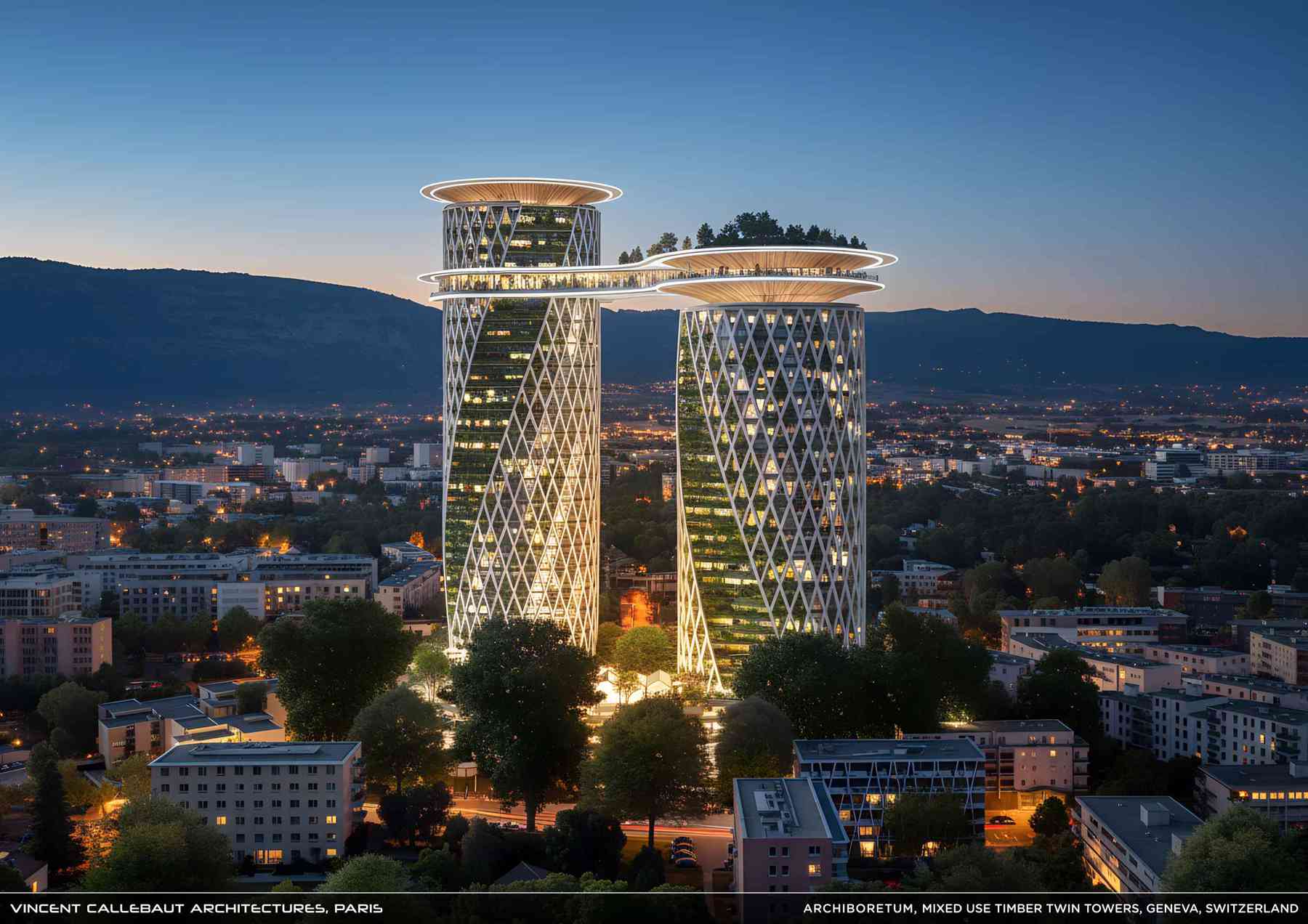
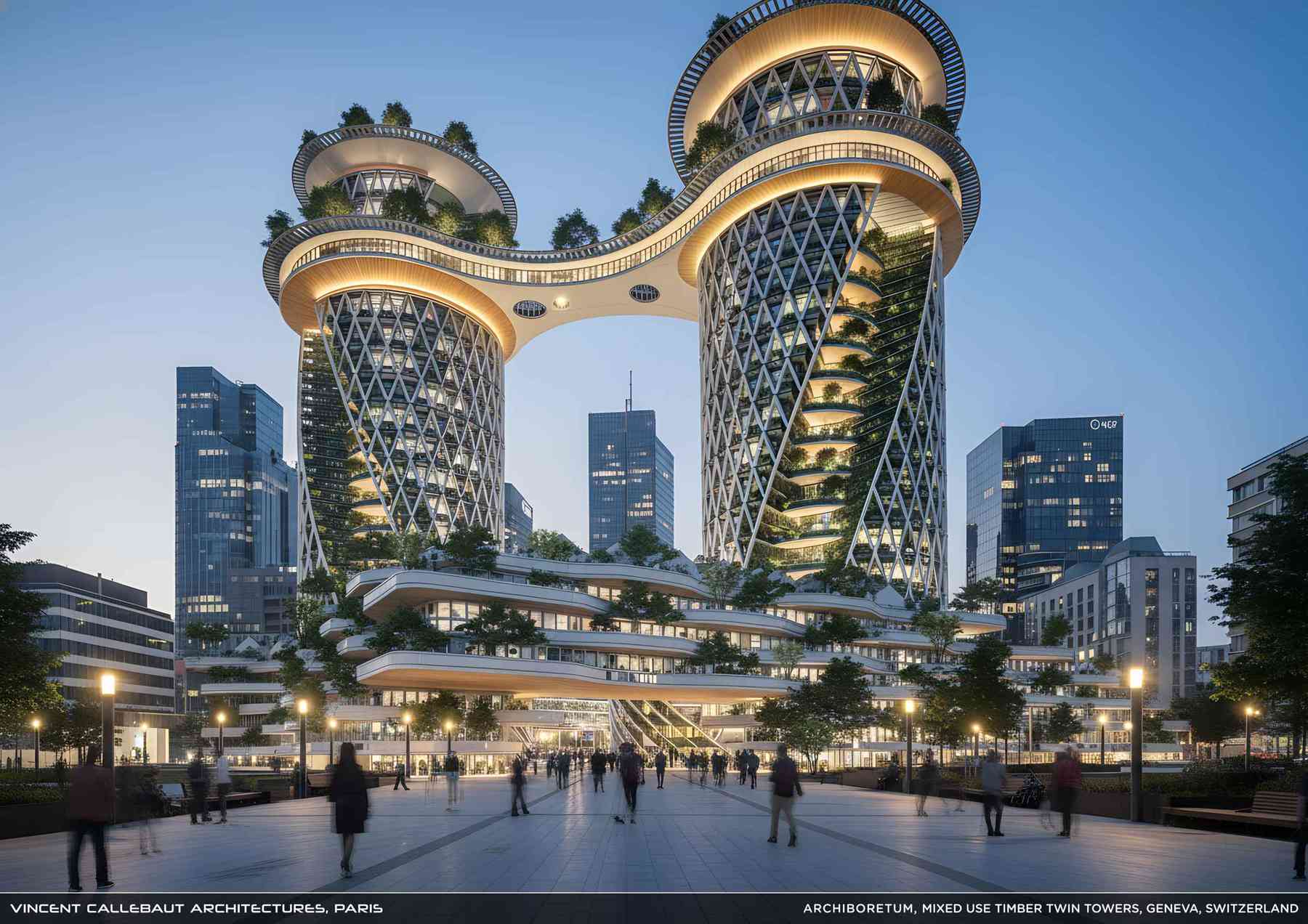
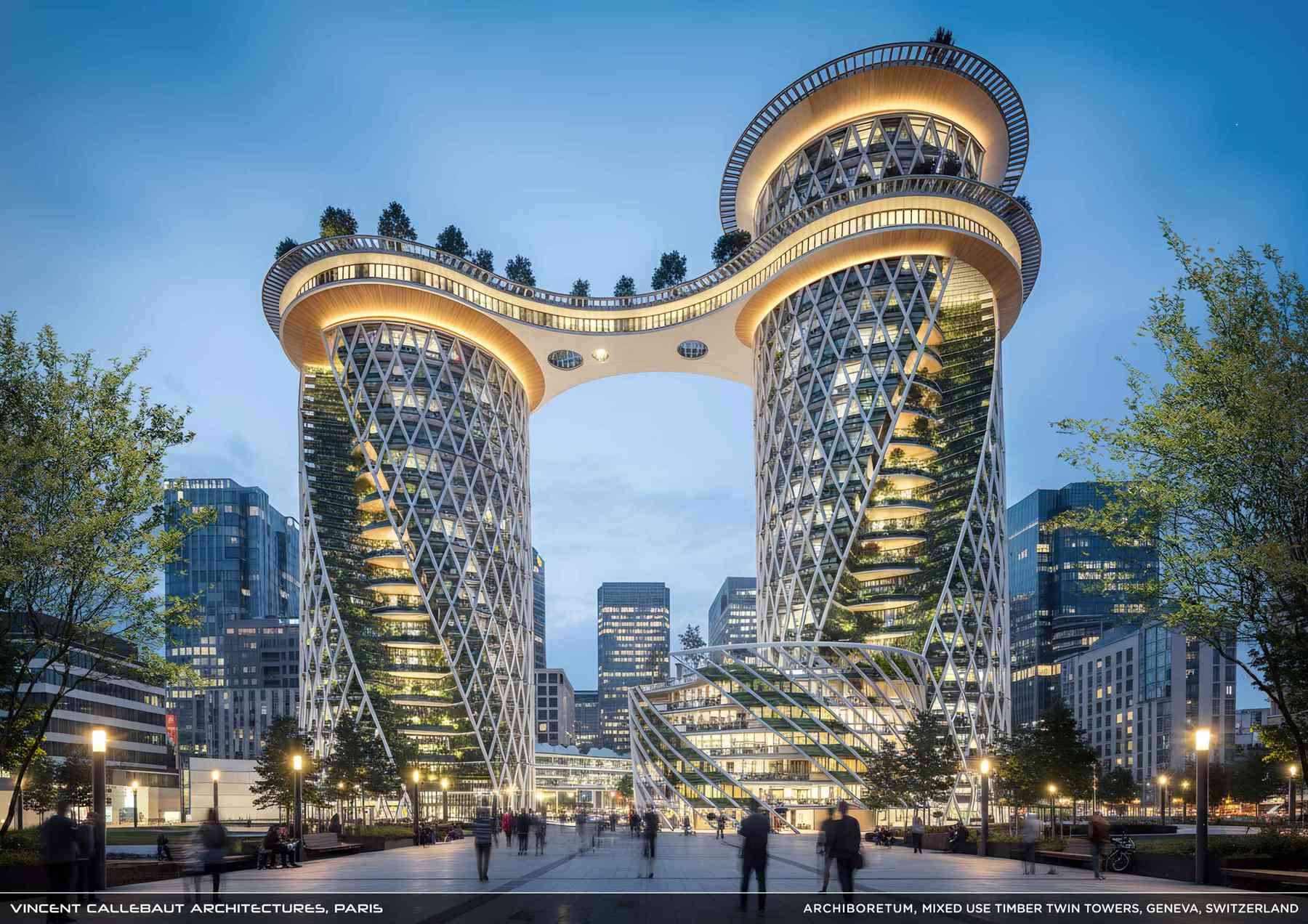
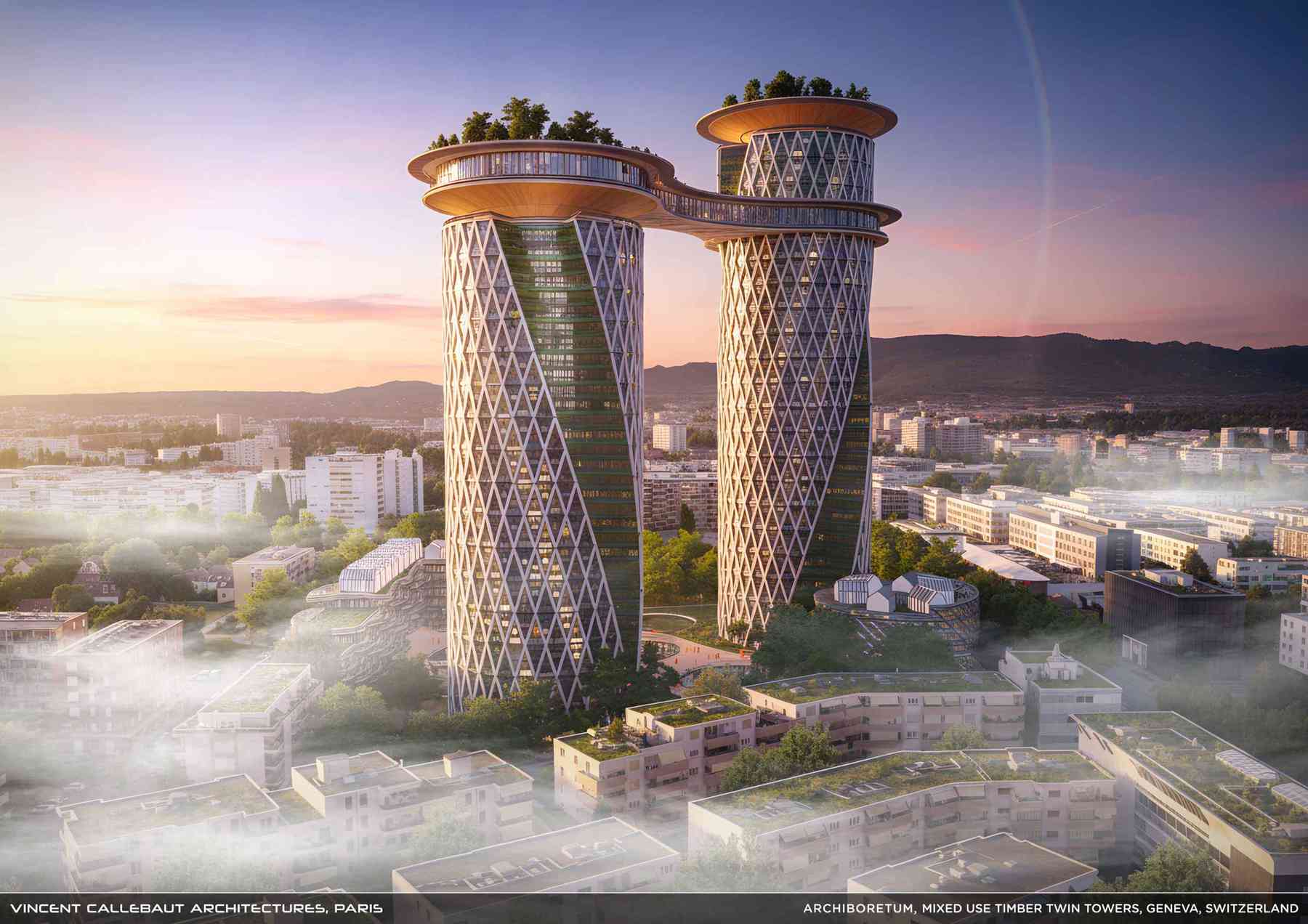
As part of the major PAV urban project, the visionary architect Vincent Callebaut had conceived something unbearably bold: ARCHIBORETUM.
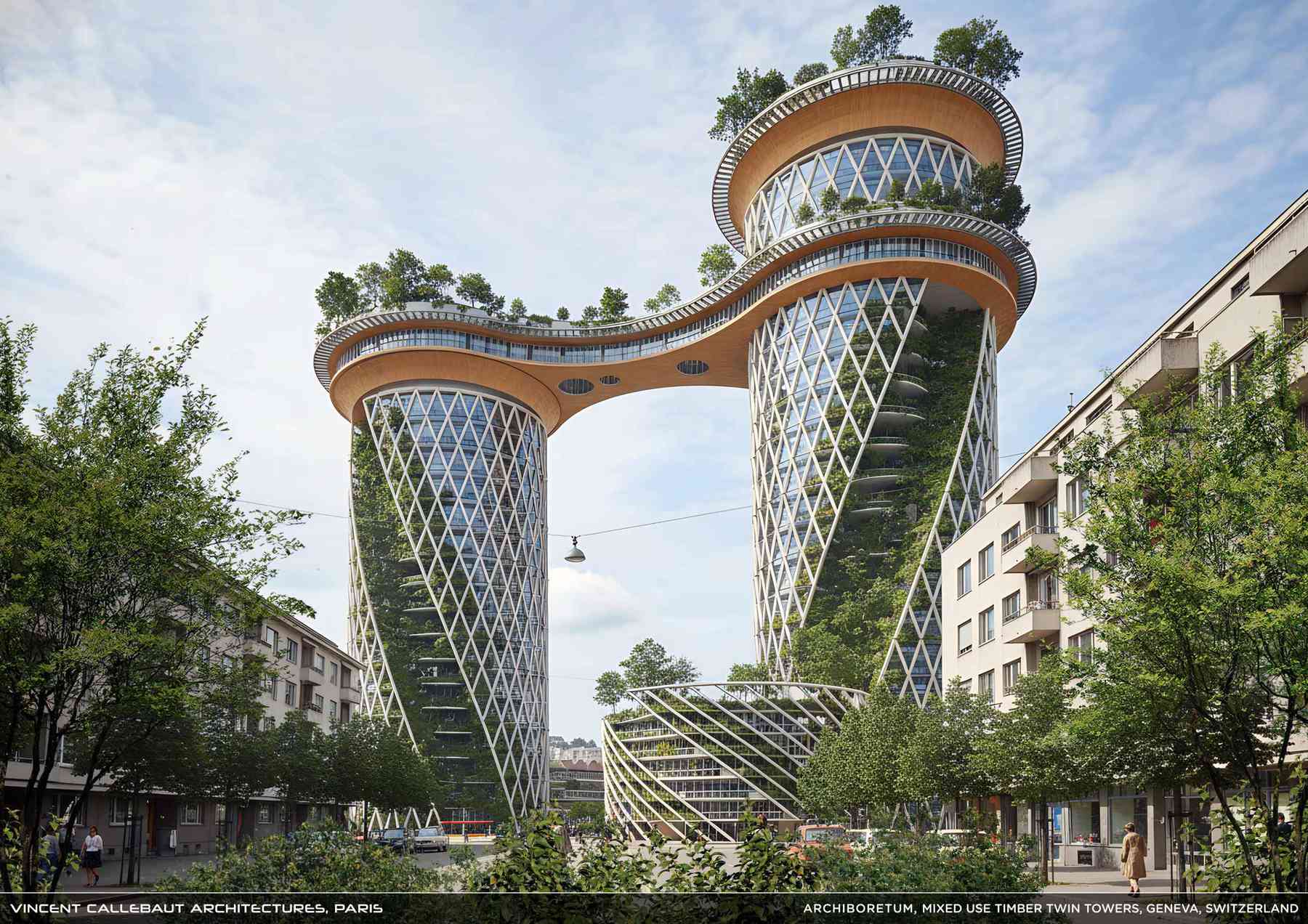
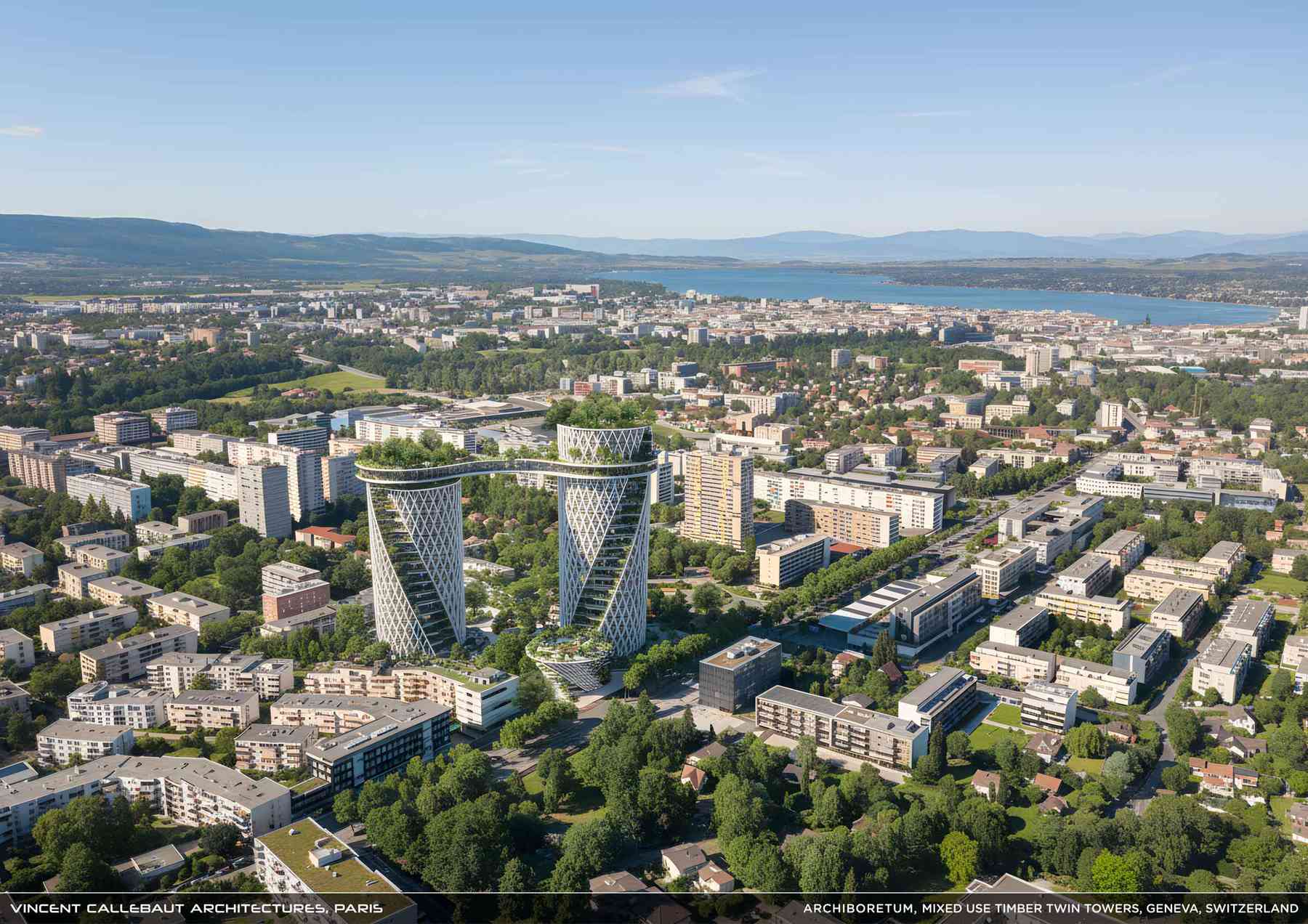
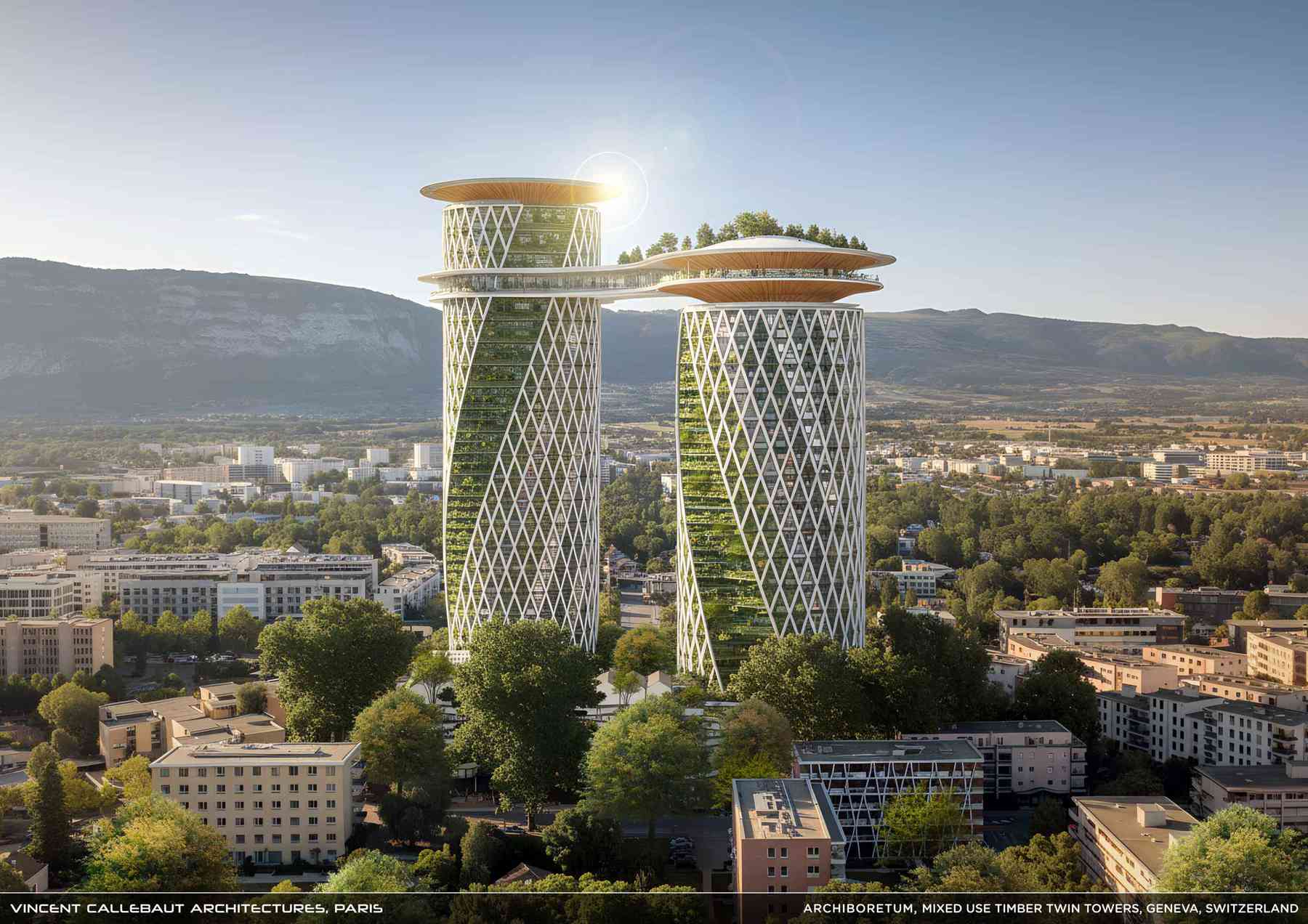
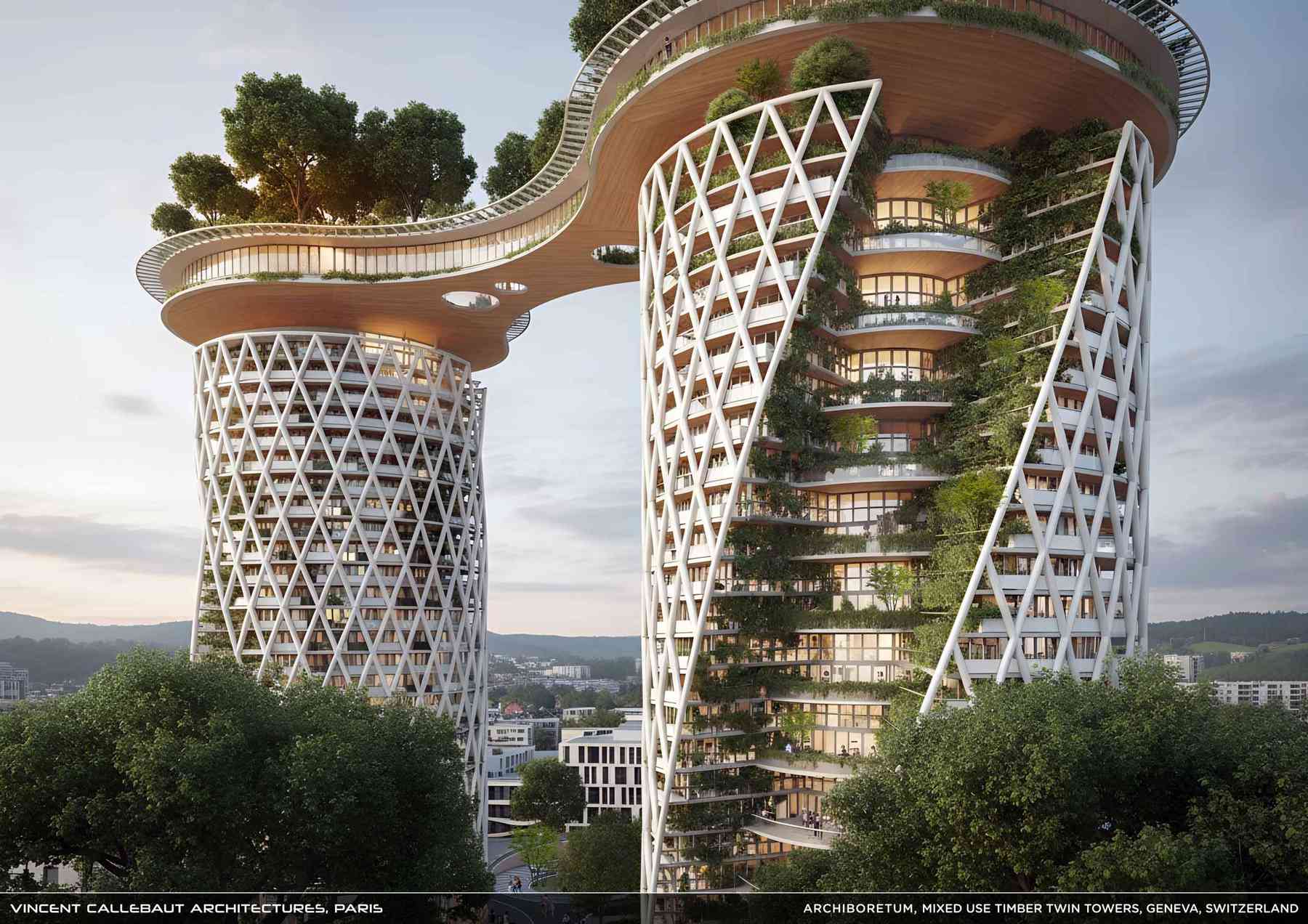
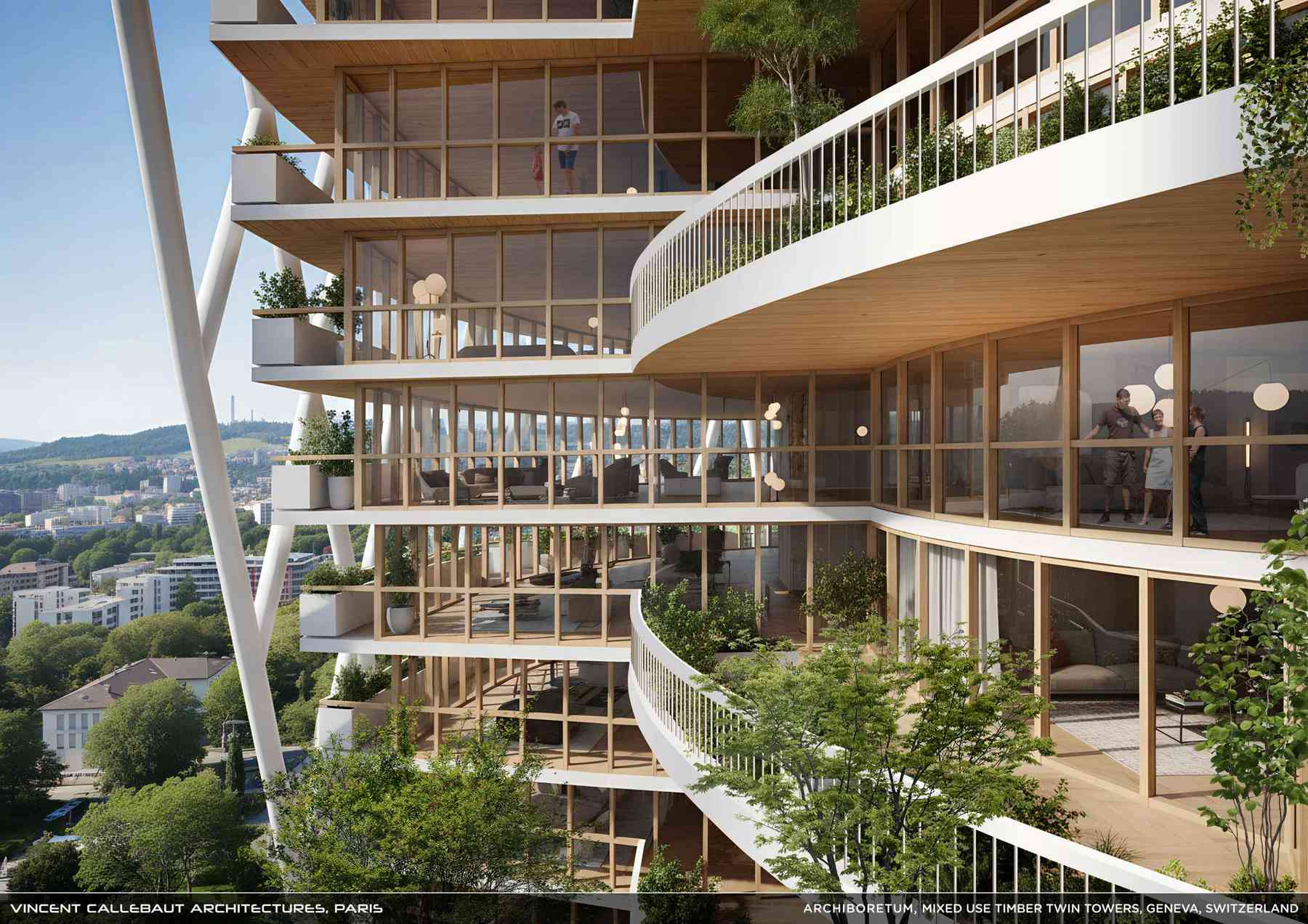
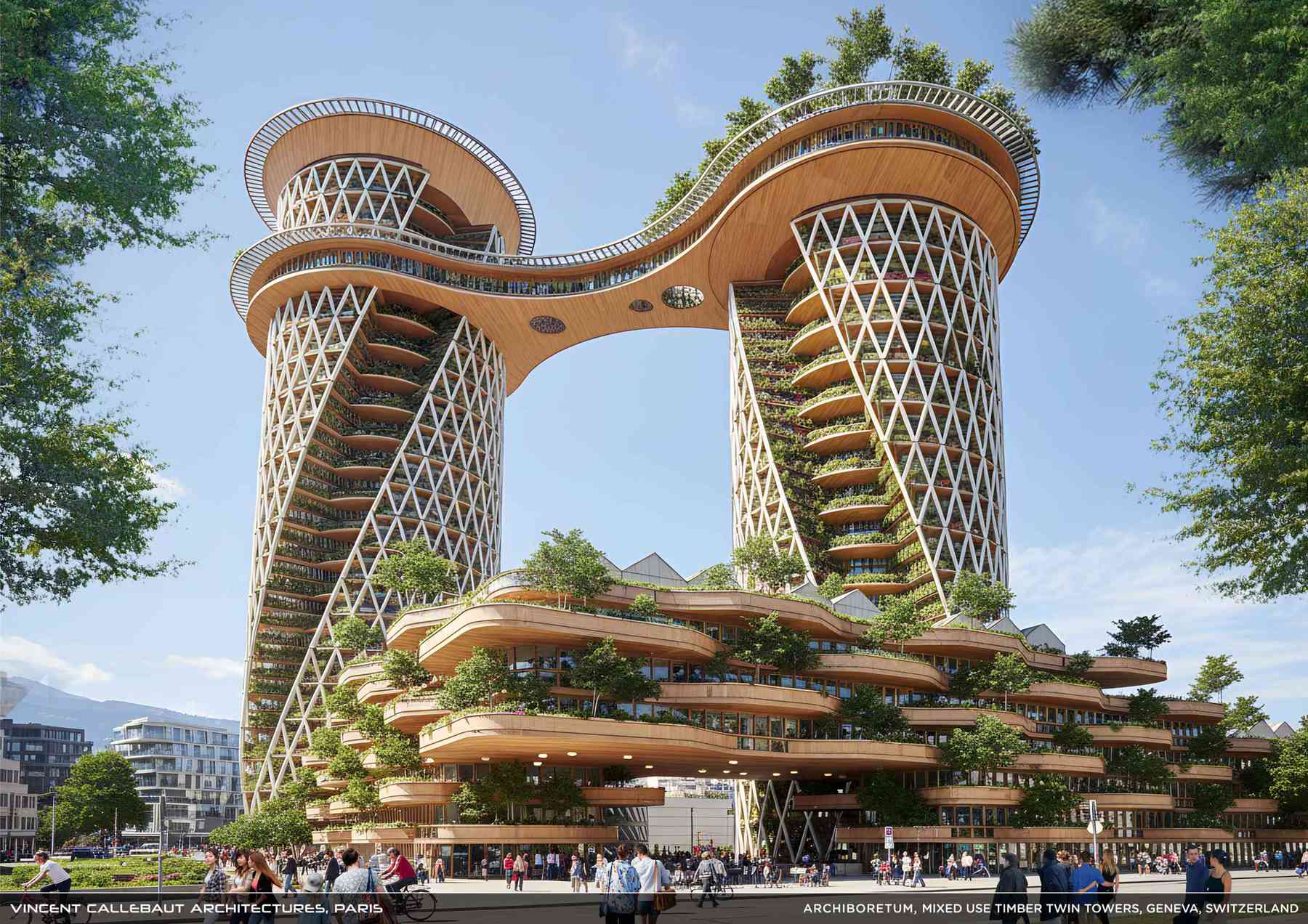
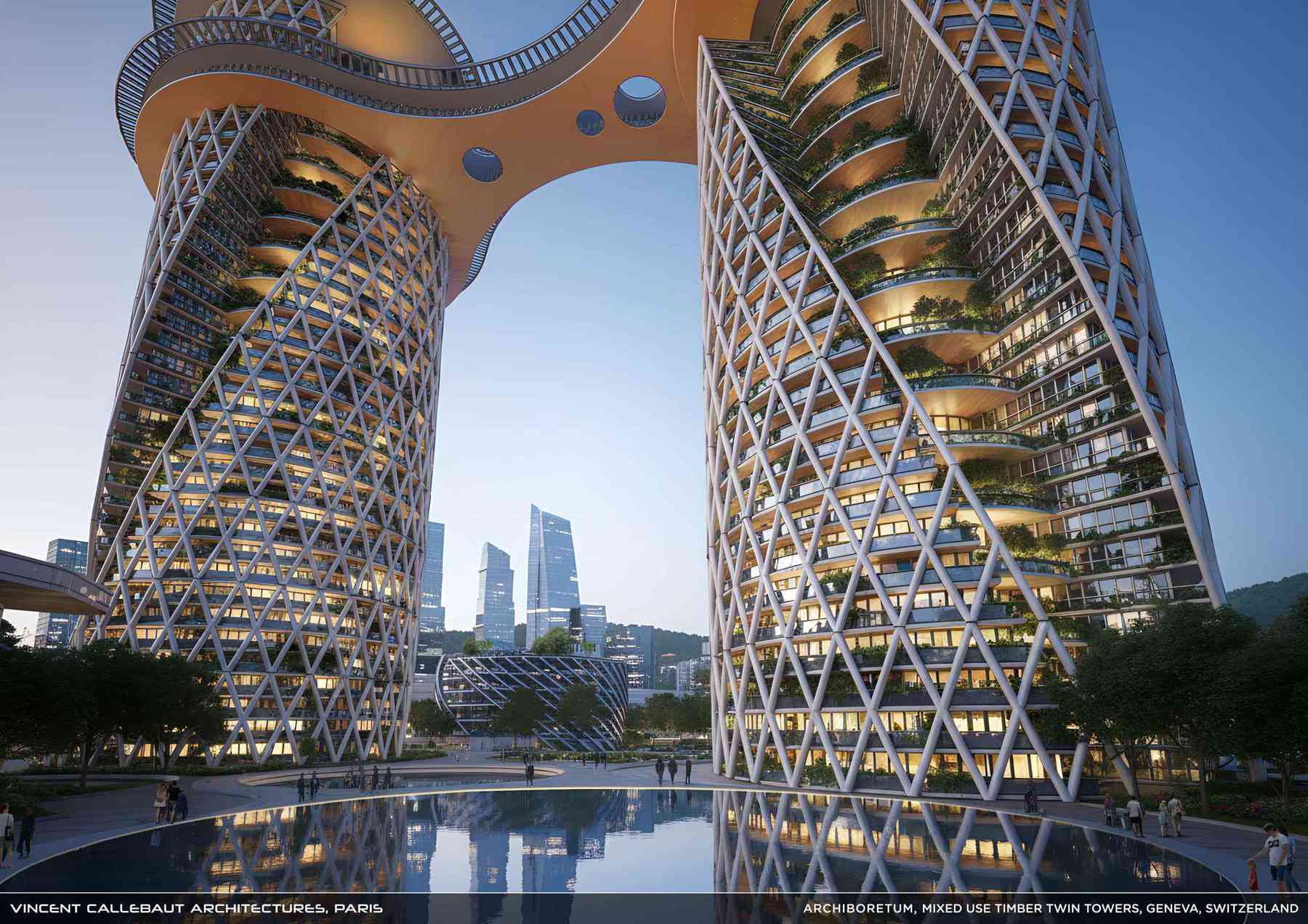
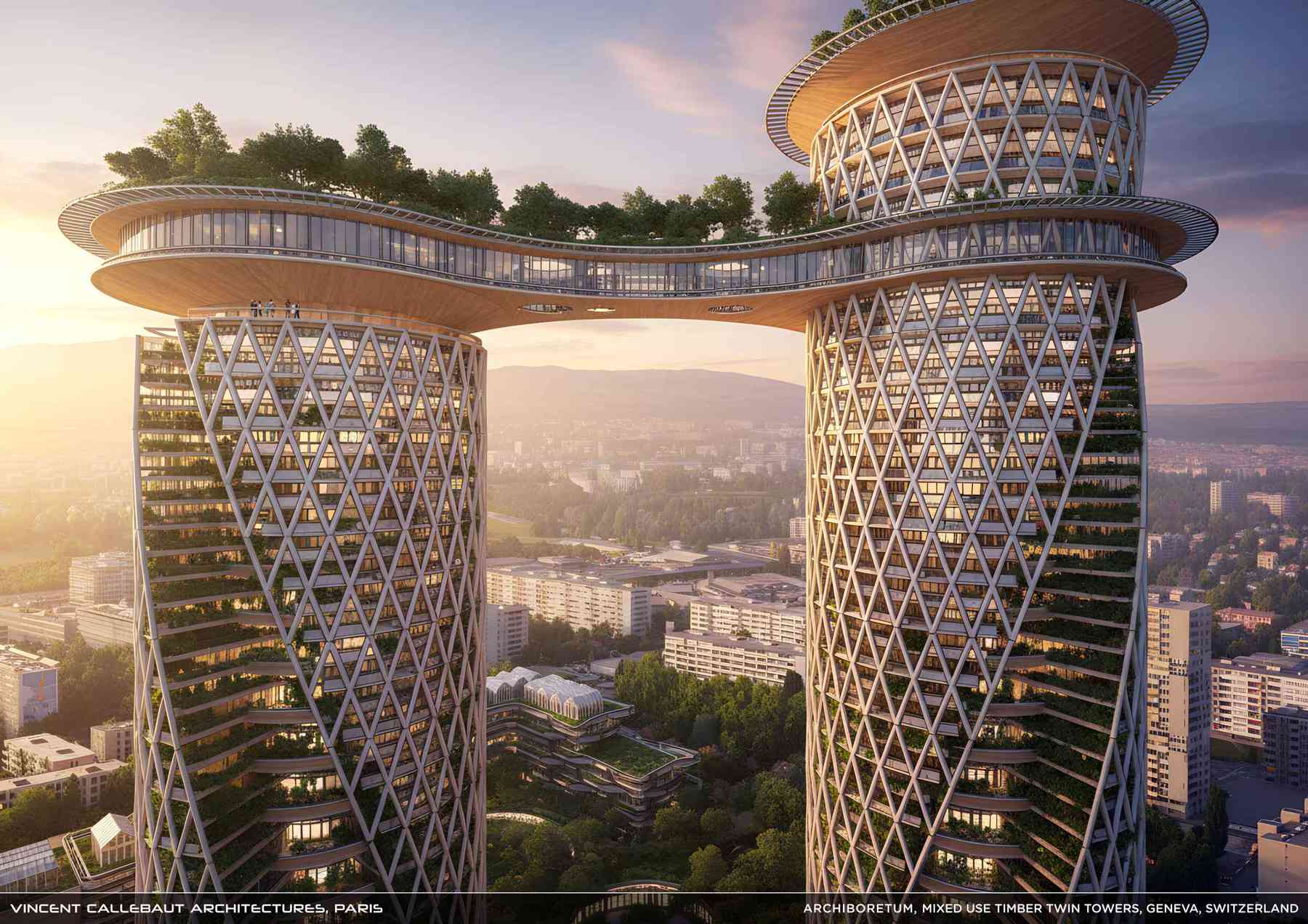
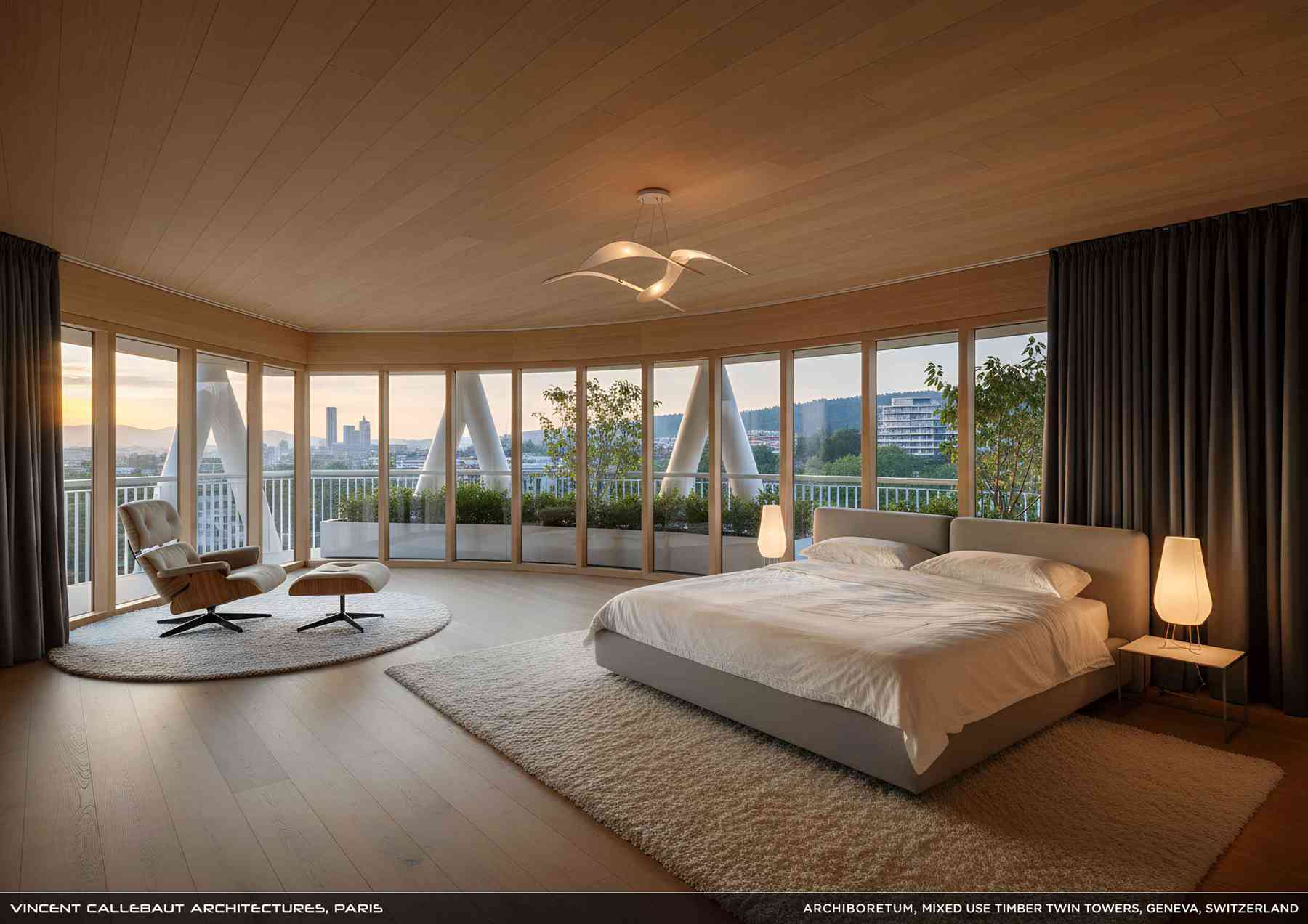
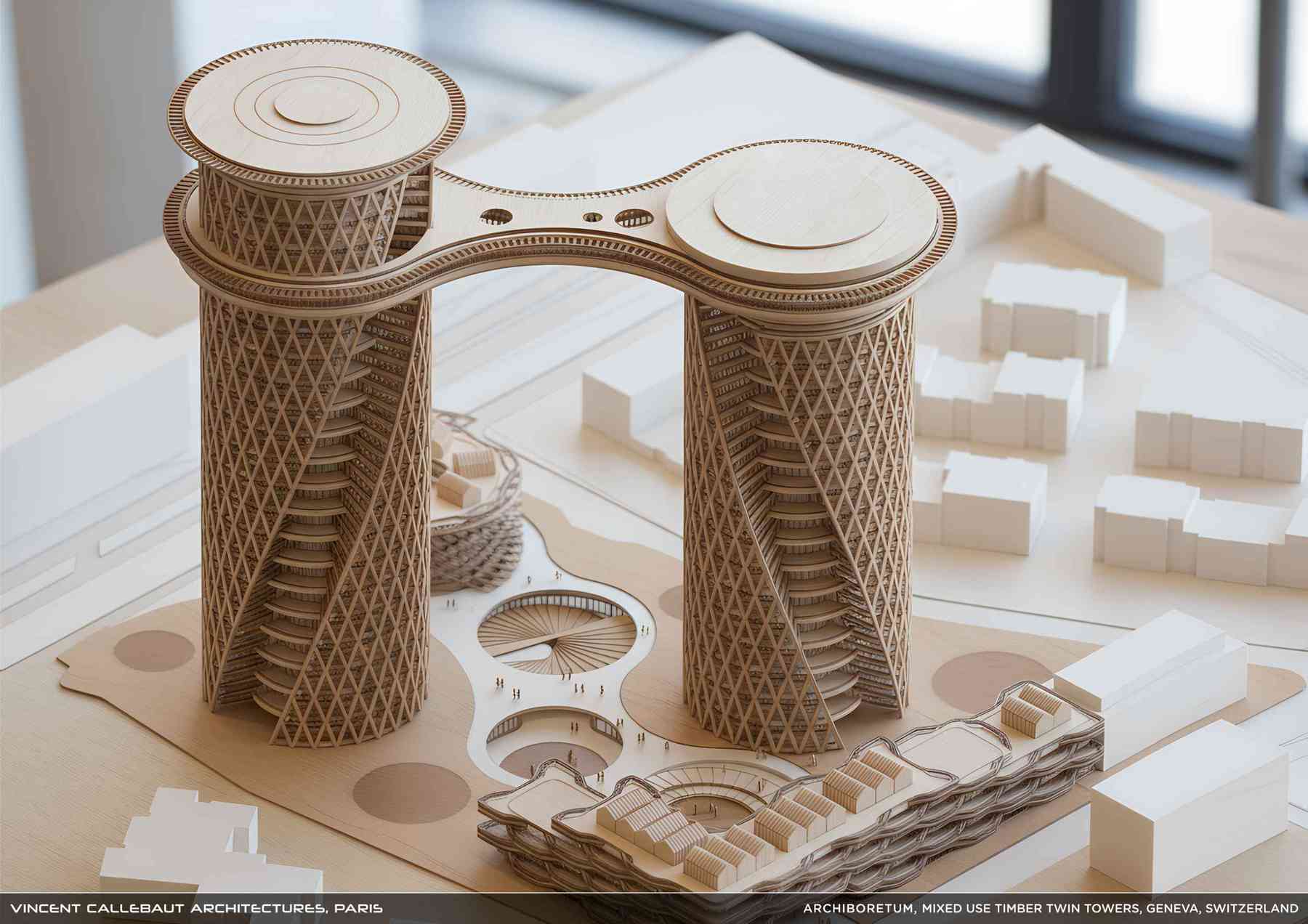
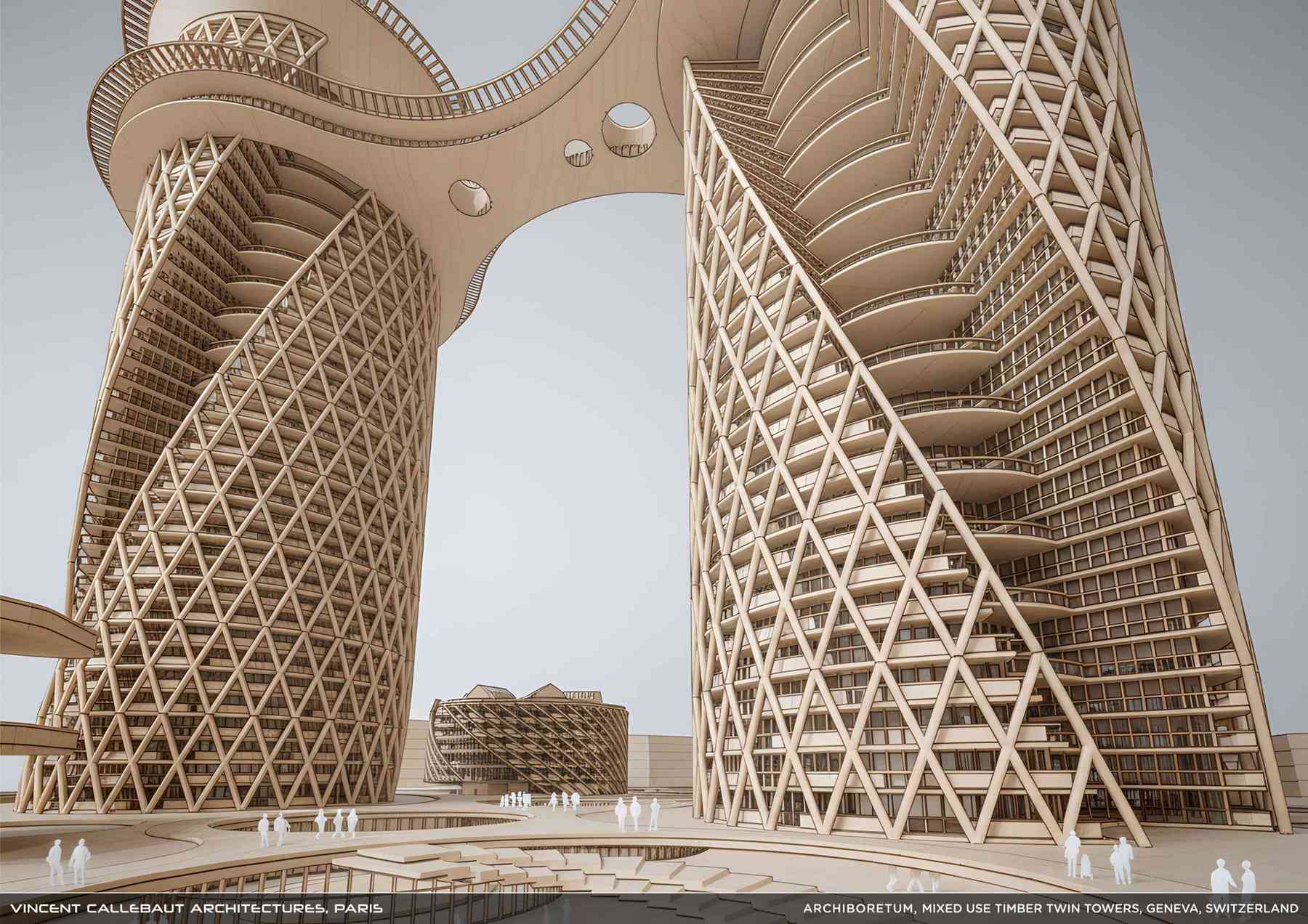
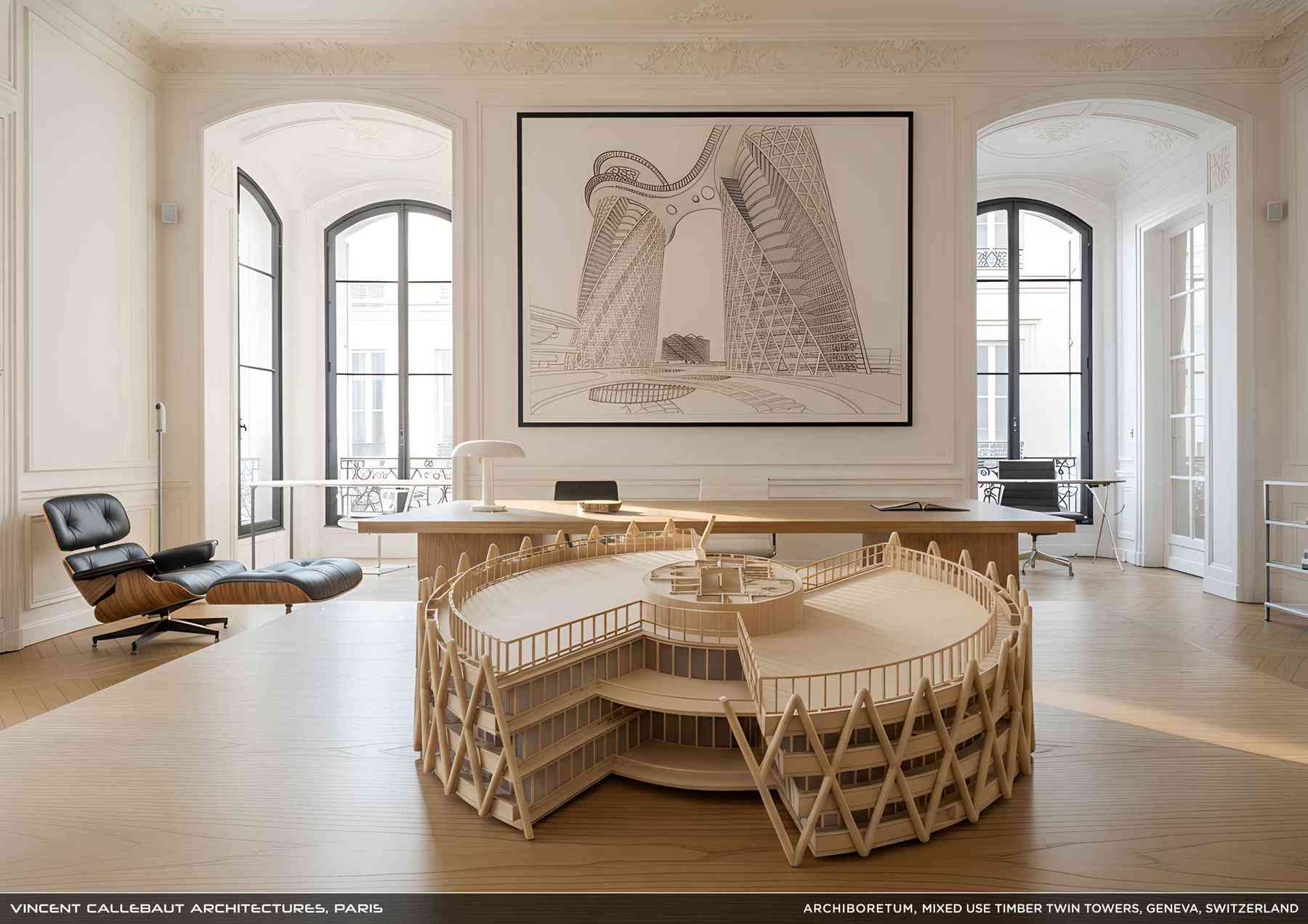
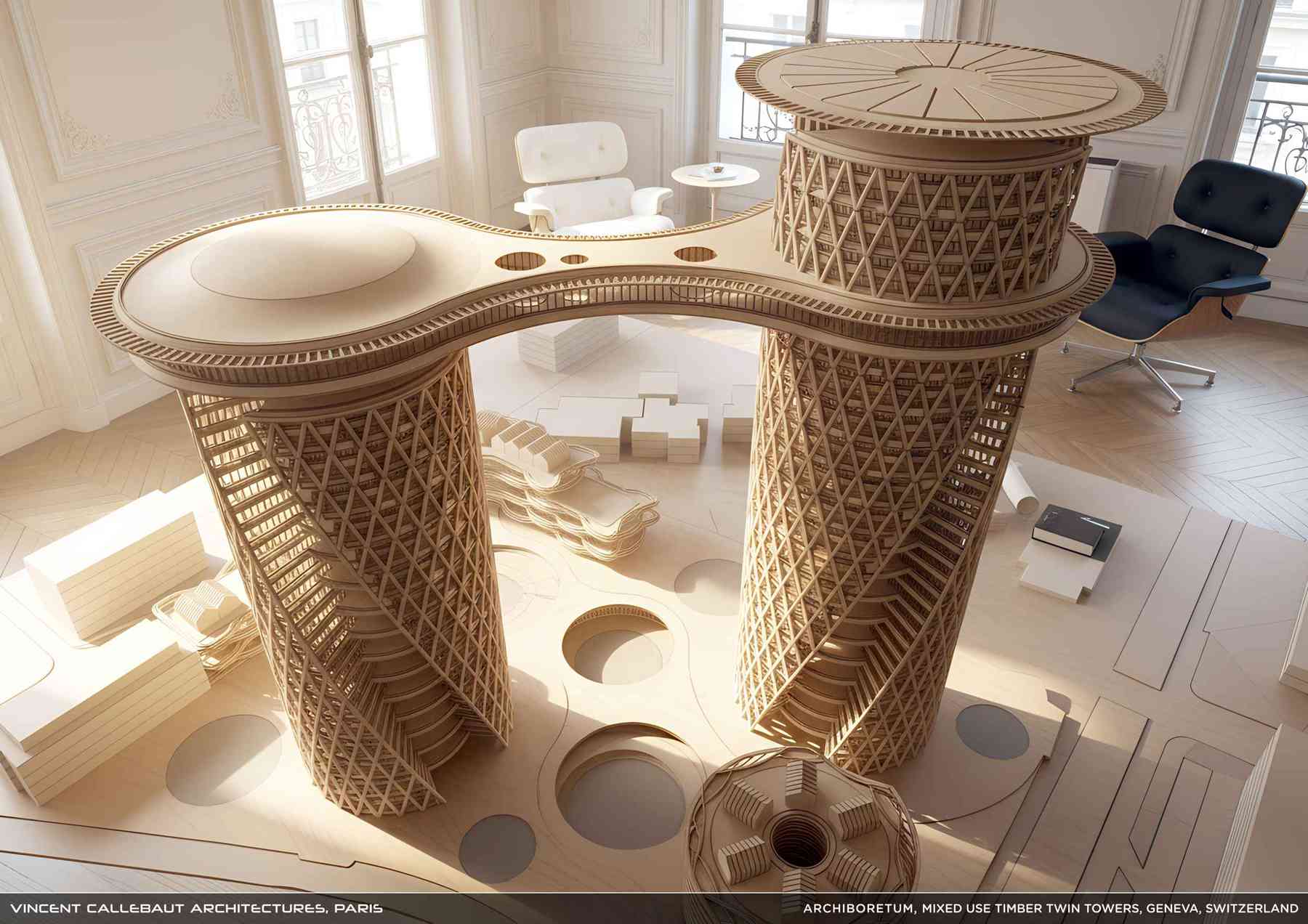
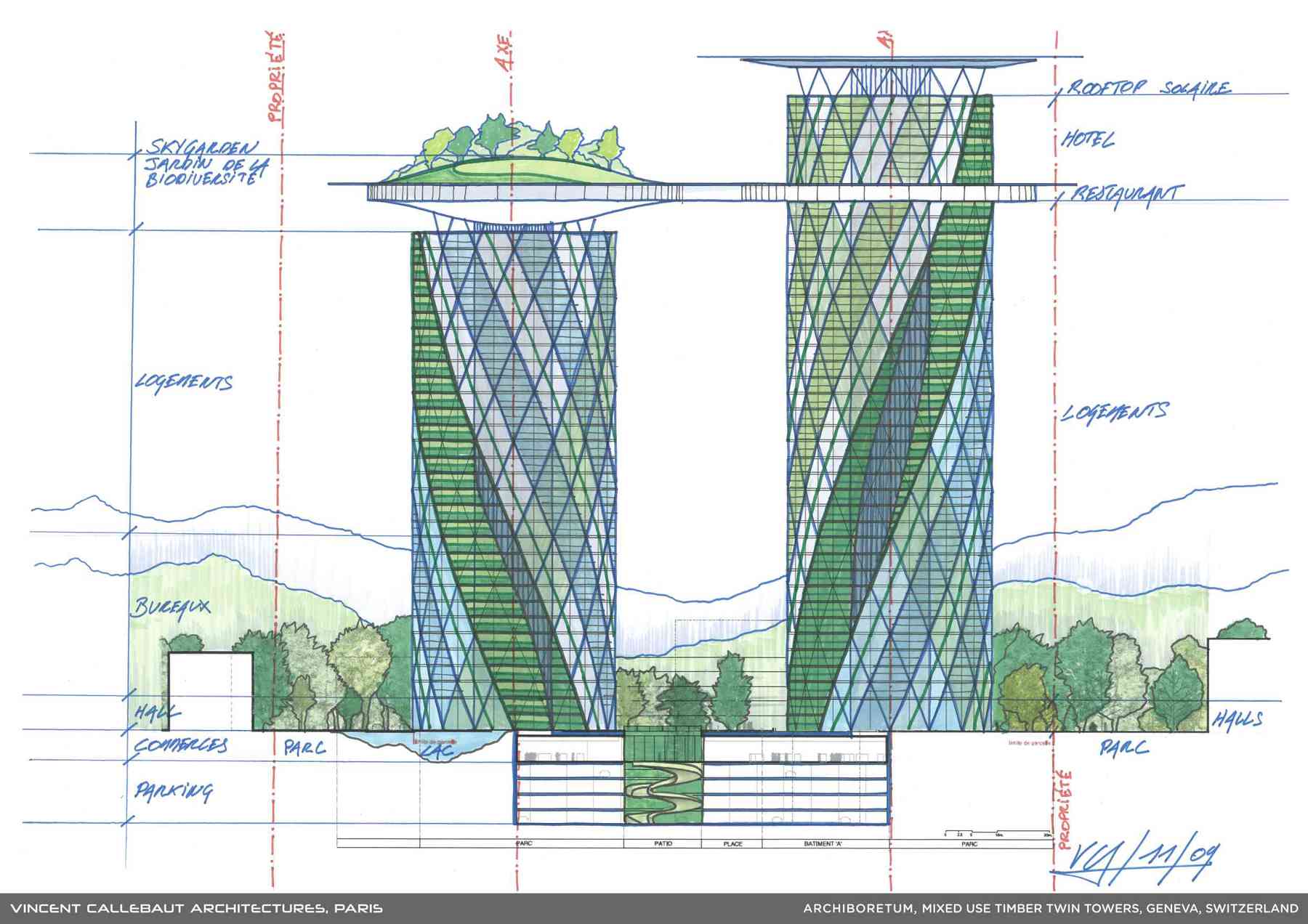
Two wooden towers, linked by a suspended park, covered in vegetation, generating their own energy, incorporating urban agriculture, biodiversity and environmental technologies. In short: a sublime project for a city of the future...
Horror!!!For Geneva is a serious city; here, architecture must remain a cold administrative activity, devoid of passion, taste or joy... Joy? Calvin always forbade the slightest display of ostentatious pleasure, and Geneva’s leaders are indeed his worthy heirs...
Now, let’s be honest, over the last 35 years we have seen a few very rare magnificent buildings go up, but with interminable procedures and particularly confidential political arrangements – that is Geneva too.
By Alain Farrugia
ARCHIBORETUM, A PROJECT THAT RESEMBLED A CITY OF THE FUTURE
On paper, Archiboretum had everything it needed to become one of Europe’s most iconic urban projects
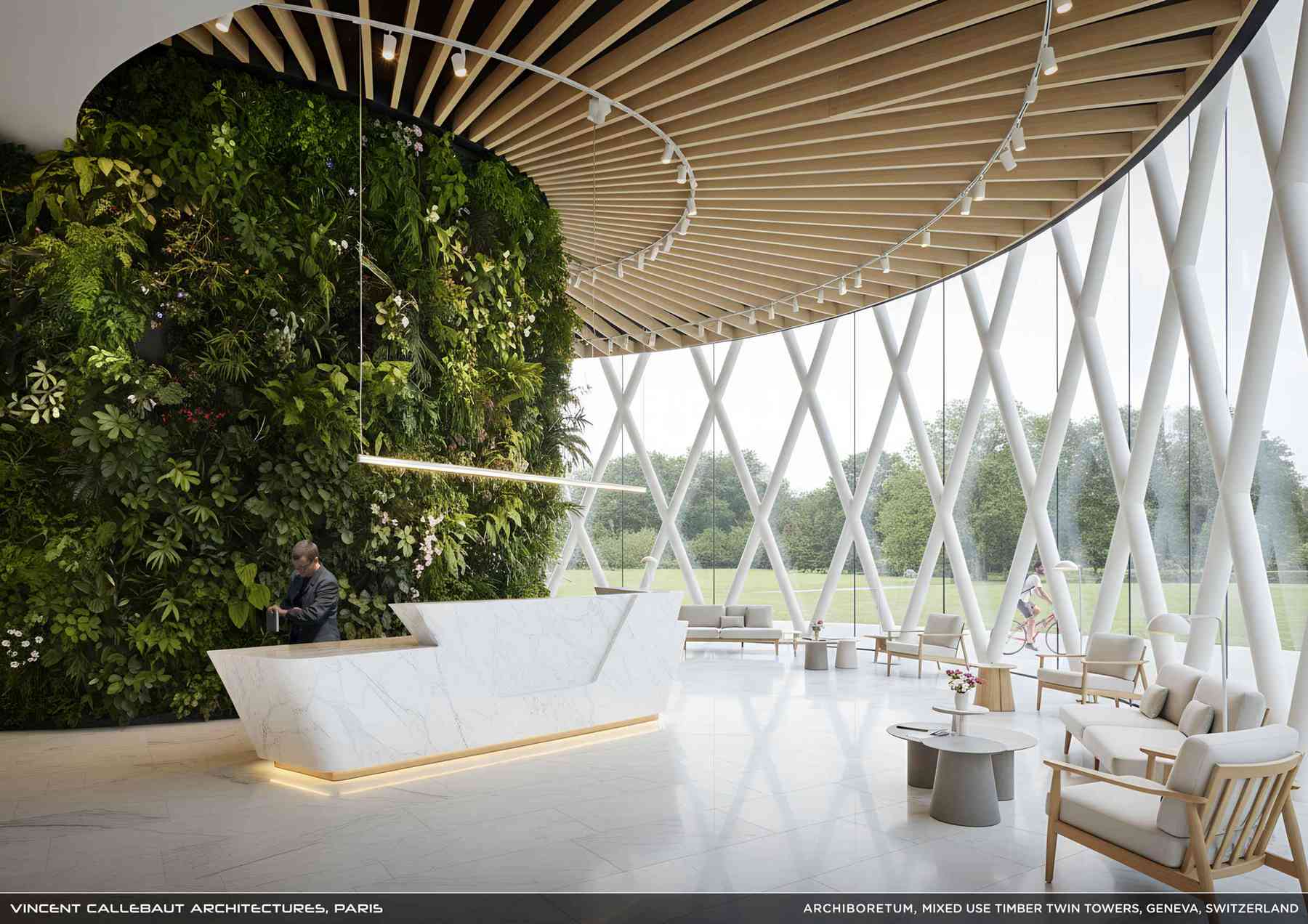
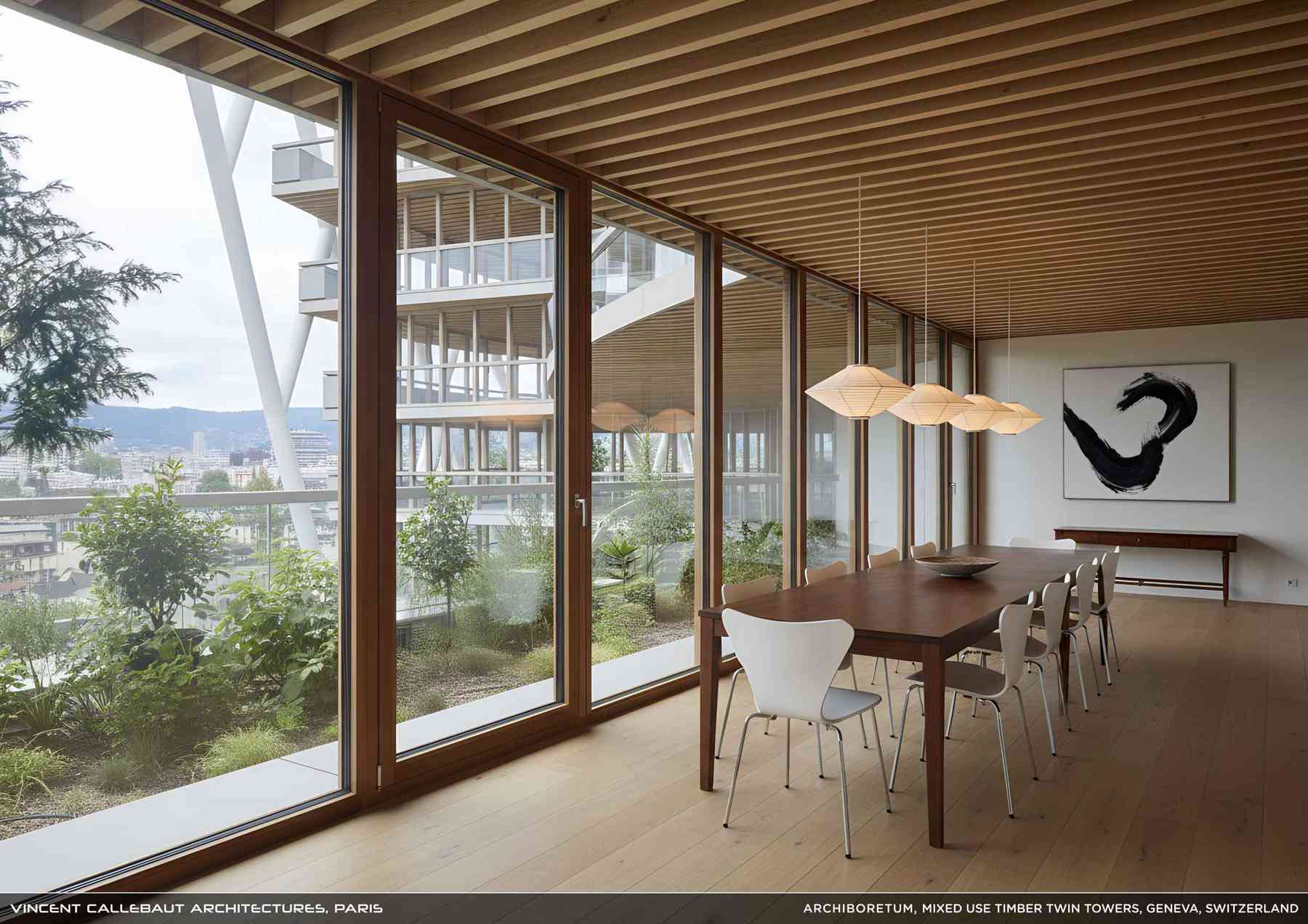
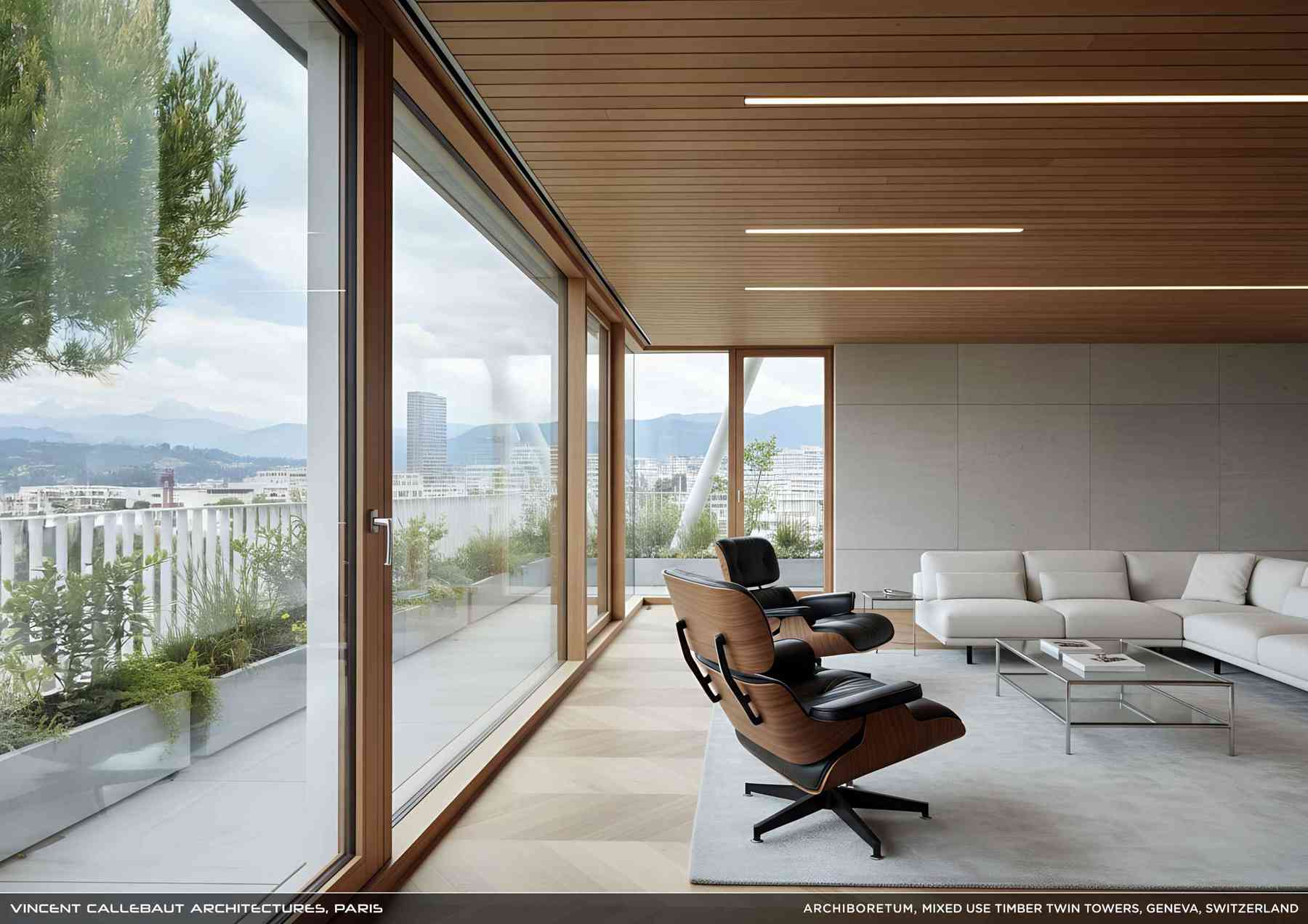
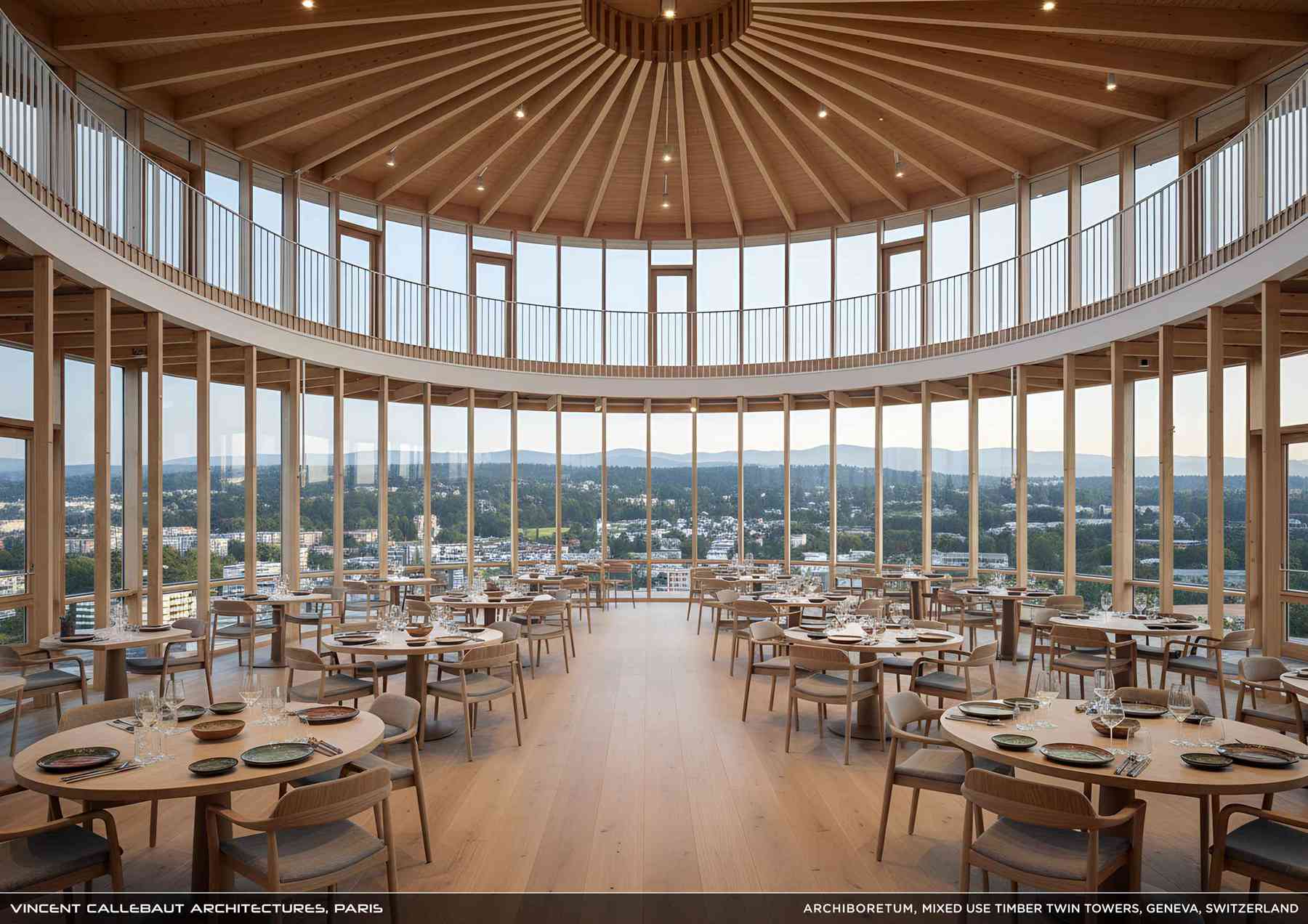
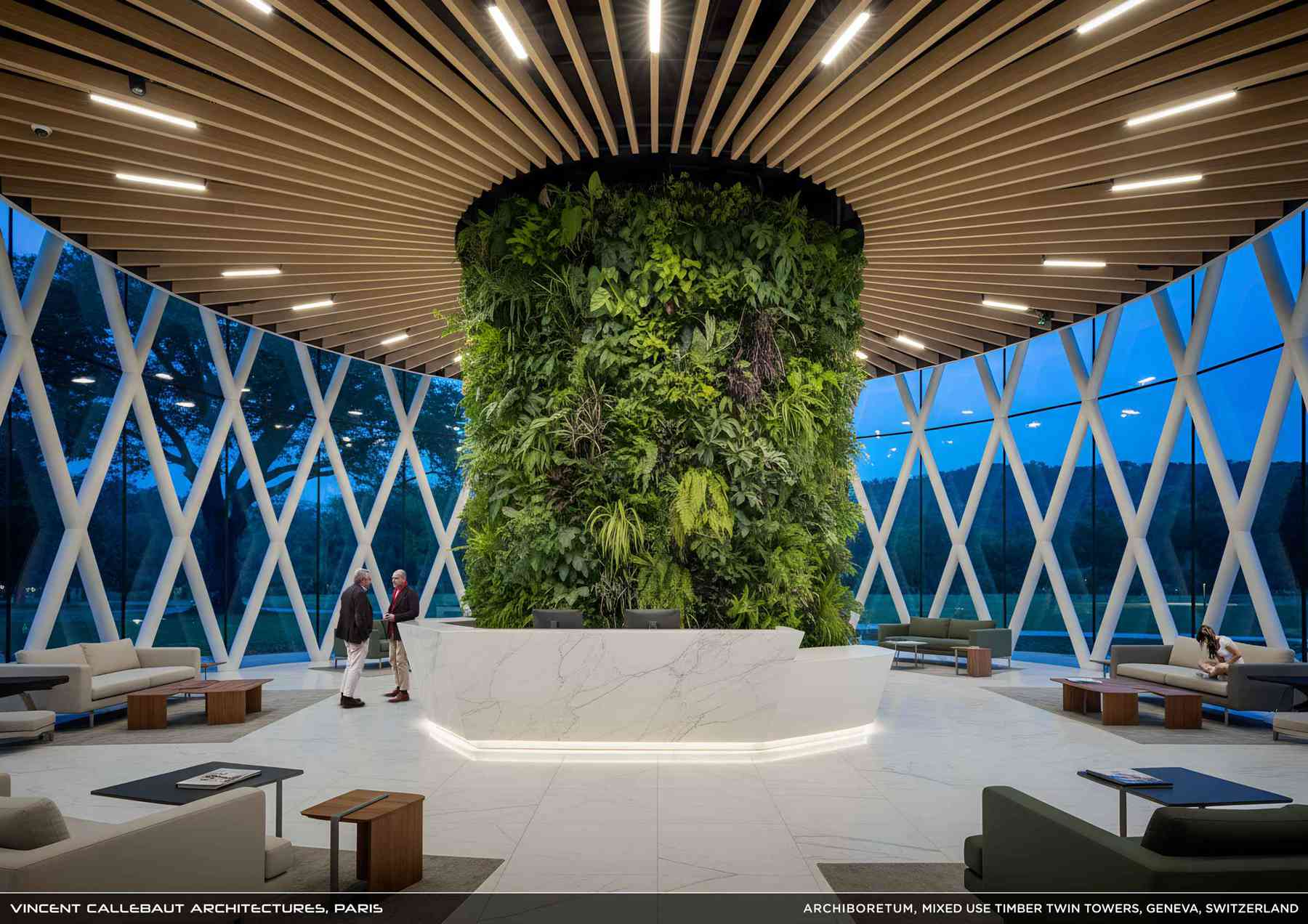
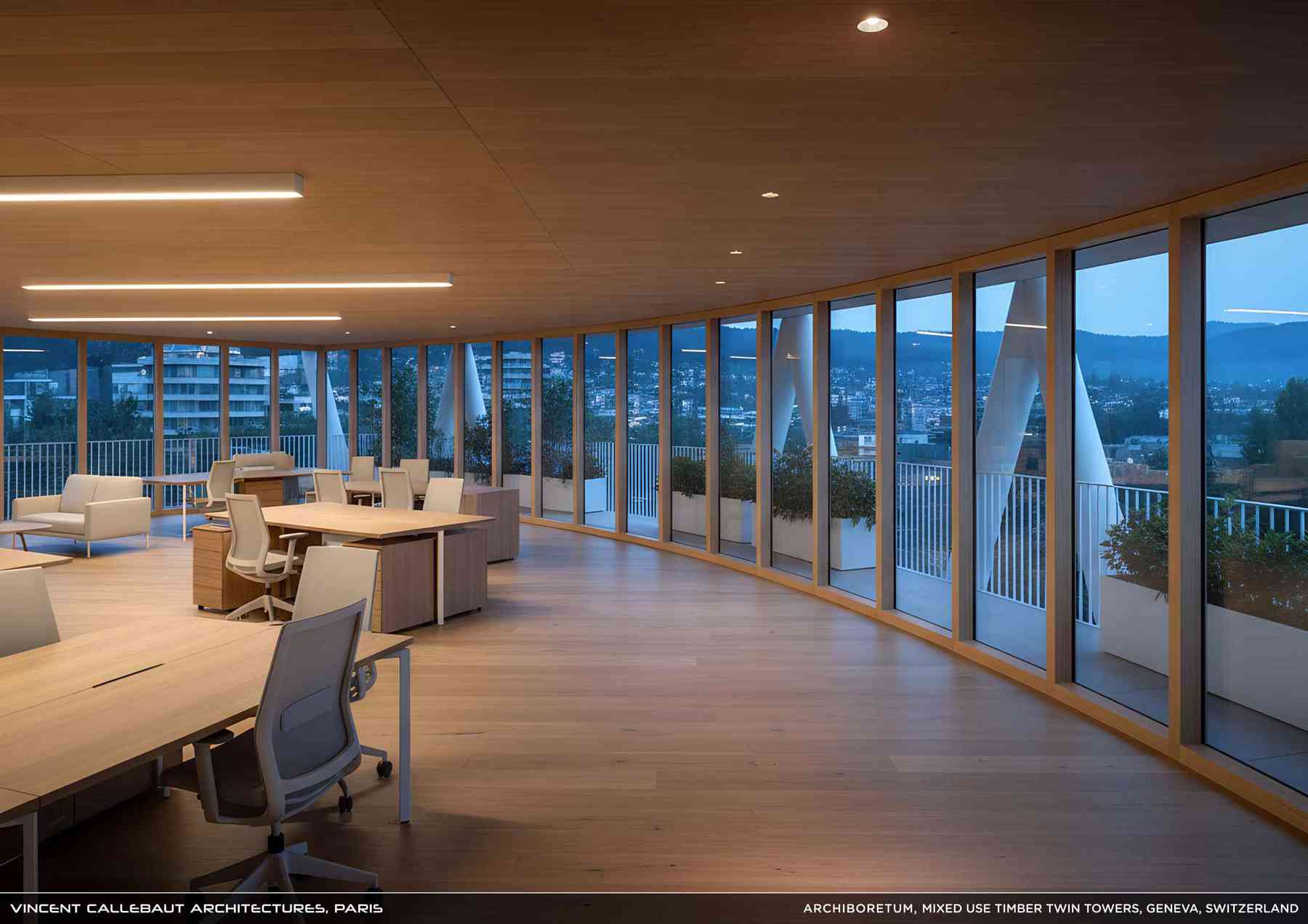
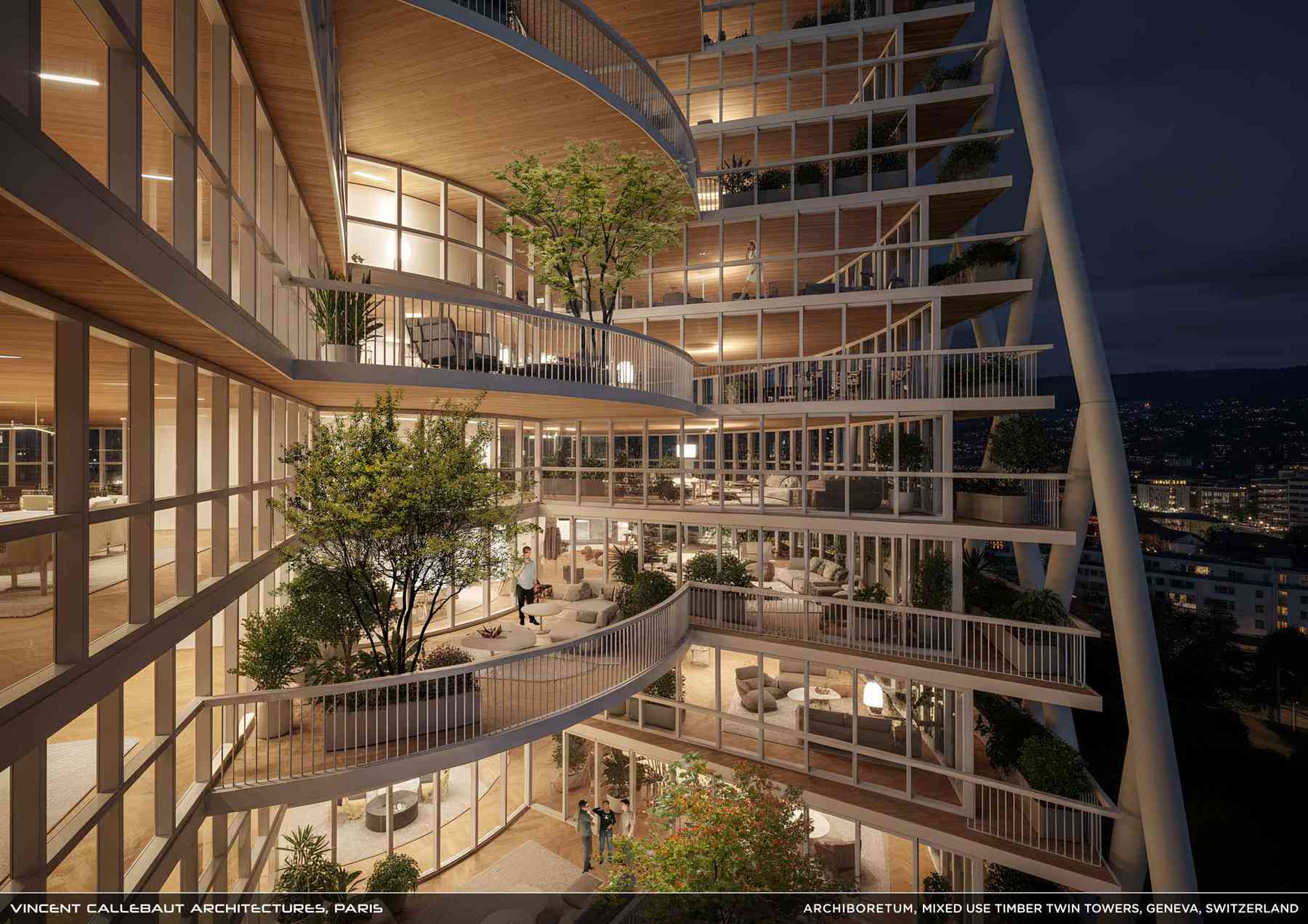
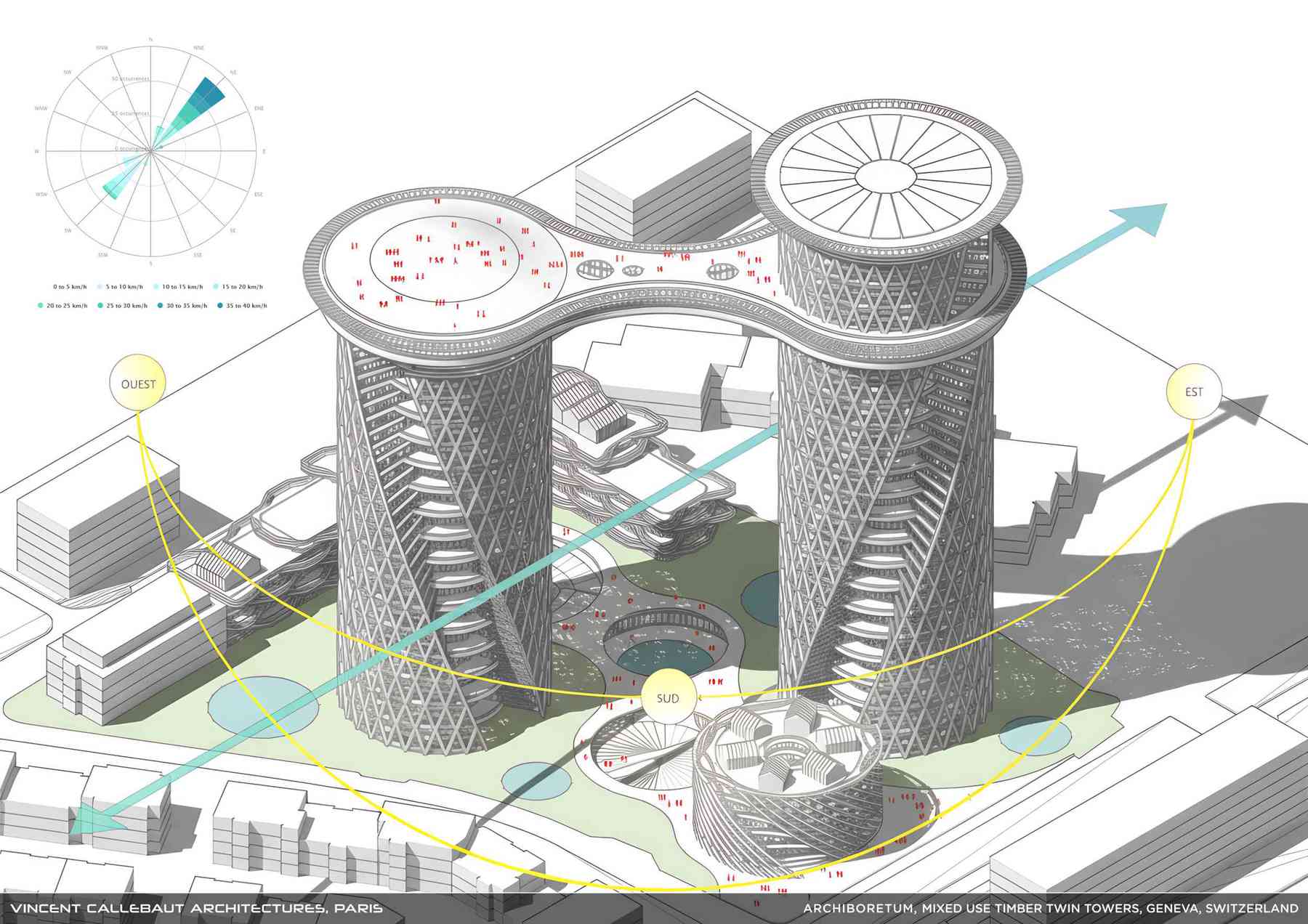
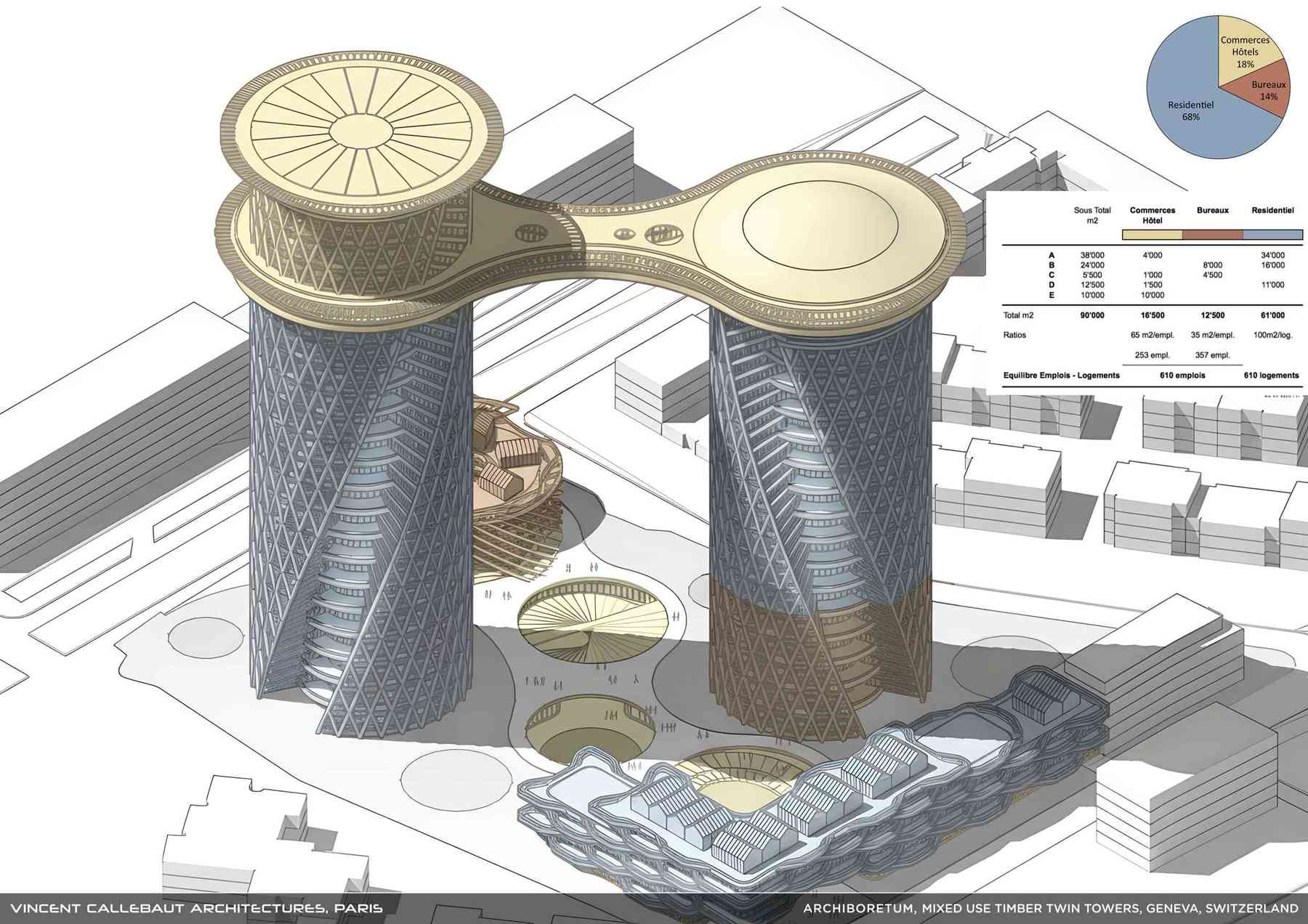
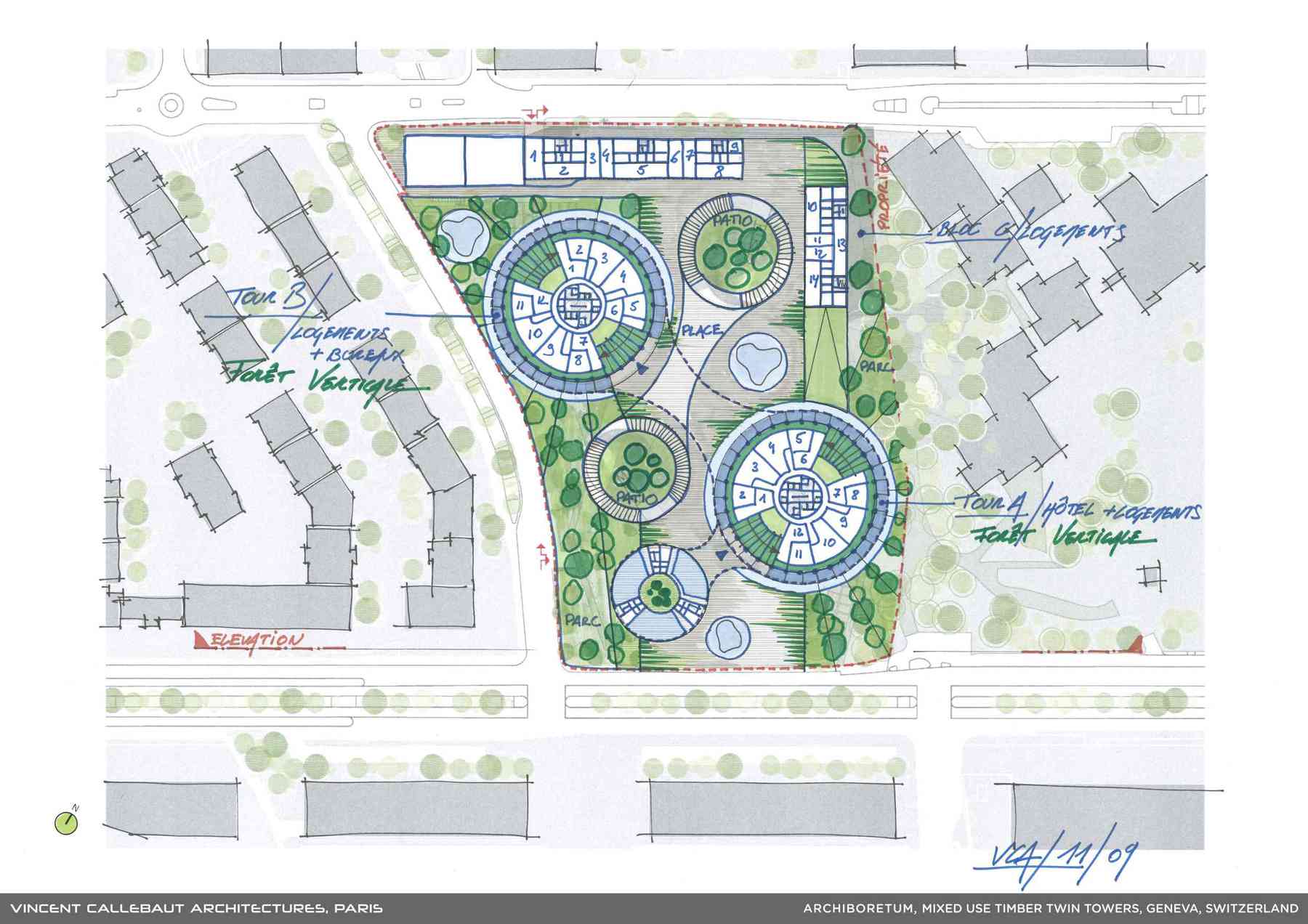
Two twin towers of solid timber, linked by a suspended public SkyPark, forming a sort of inhabited vertical forest. A complete neighbourhood stacked vertically: housing, offices, a hotel, shops, cultural spaces. In total, 90,000 m² of mixed-use space, with over 600 homes and 600 jobs.
But the project went far beyond a mere architectural feat:
- Cross-laminated timber (CLT) structure sourced from certified local forests
- Solar and photovoltaic facades generating electricity and hot water.
- Geothermal energy and biomass to provide heating and cooling.
- Complete water recovery with phytoremediation and reuse.
- Urban agriculture, greenhouses, aquaponics and permaculture integrated into the project.
- Biodiversity corridors with beehives, habitats for insects and bats.
And, an almost audacious detail: 45% of the site was dedicated to a metropolitan park, combining an urban forest, community vegetable gardens and aquaponics ponds.
In short, a vision: a city that generates its own energy, fosters biodiversity and produces some of its own food.
A LIVELY CITY
Urban planning that breathed
Archiboretum was not just a spectacular building; it was a philosophy.
The central idea was simple: to transform an urban block into a living ecosystem. The towers were designed like gigantic trees: a central trunk, branches, green terraces, and biomimetic architecture optimising light, ventilation and thermal comfort.
Instead of the traditional logic of the dormitory neighbourhood, the project proposed a complete vertical neighbourhood, combining housing, work, culture and public spaces.
An urban design that breathes, generates energy and brings nature back into the city.
In short, an almost dangerous idea.
GENEVA, WORLD CAPITAL OF THE RECTANGULAR BLOCK
For in Geneva, architectural innovation follows a simple rule:
Never exceed the level of audacity of an underground car park.
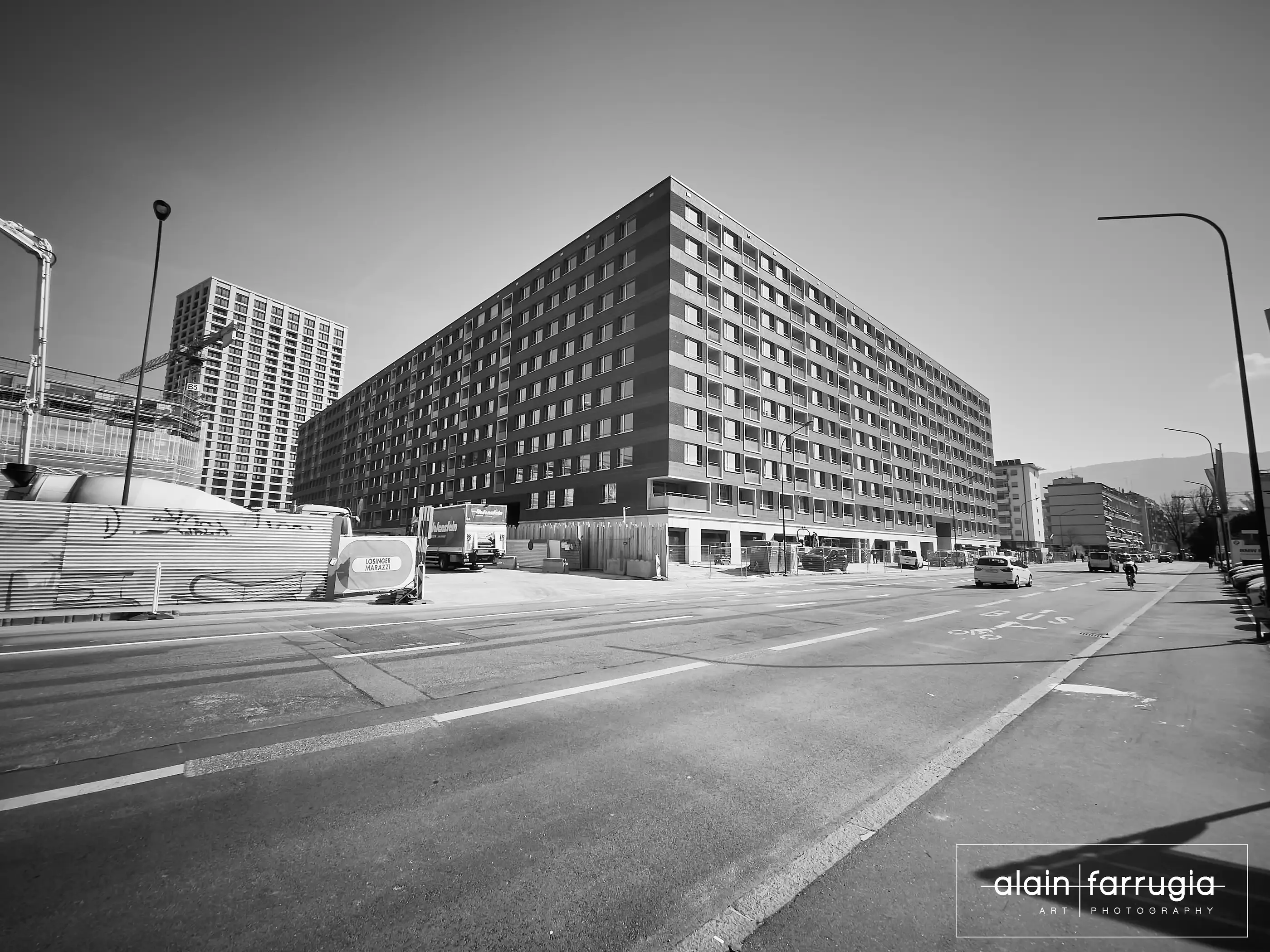
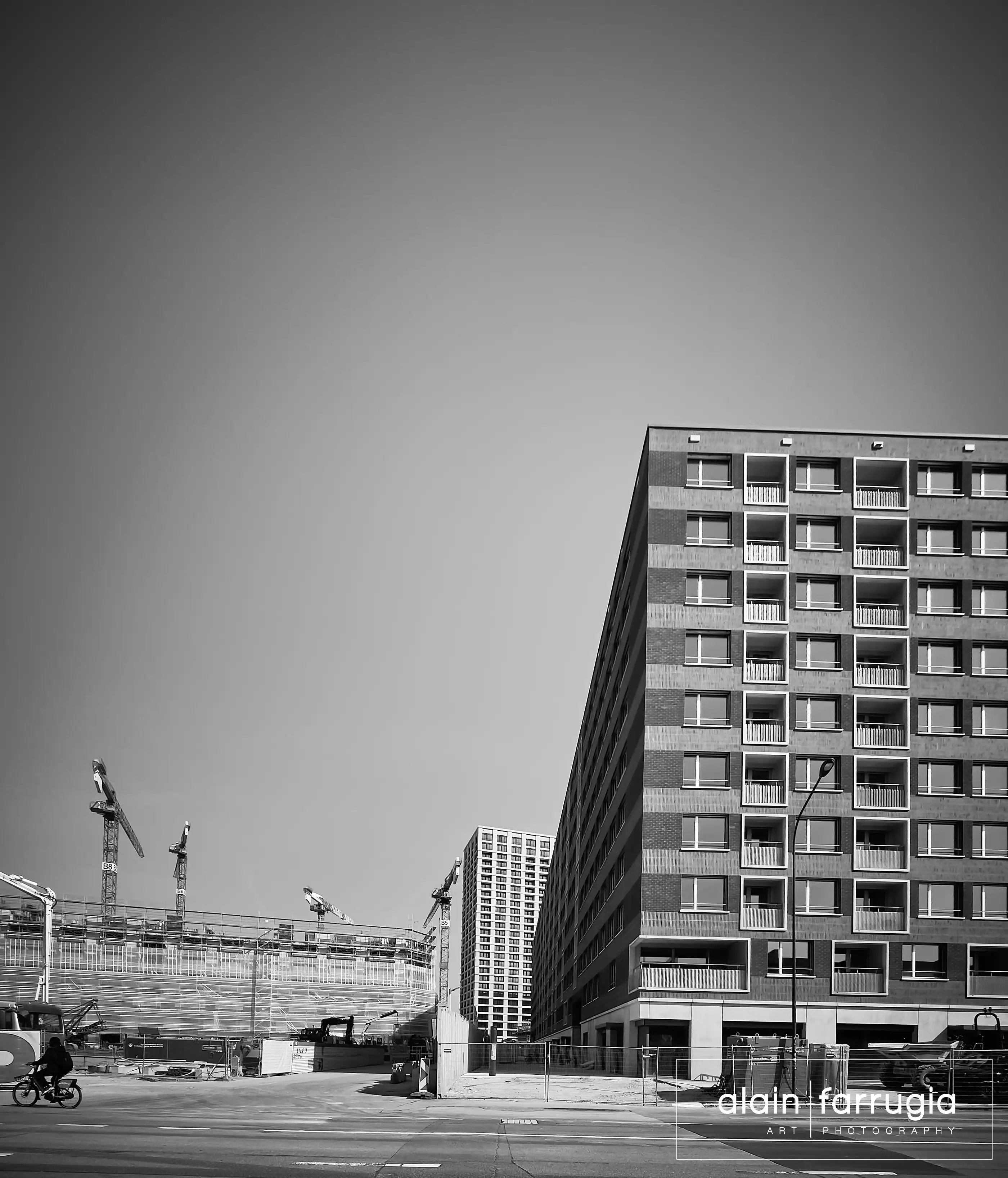
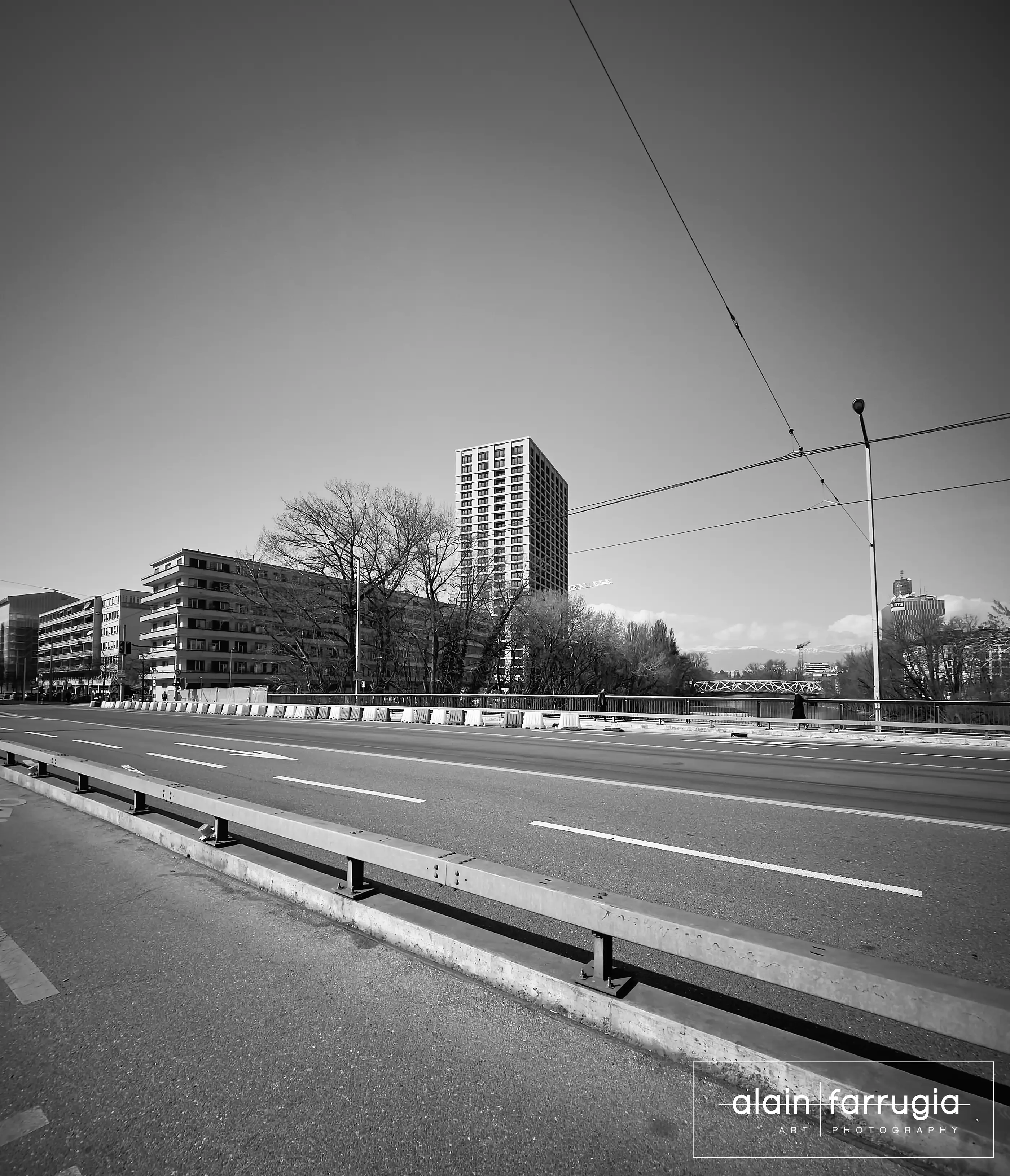
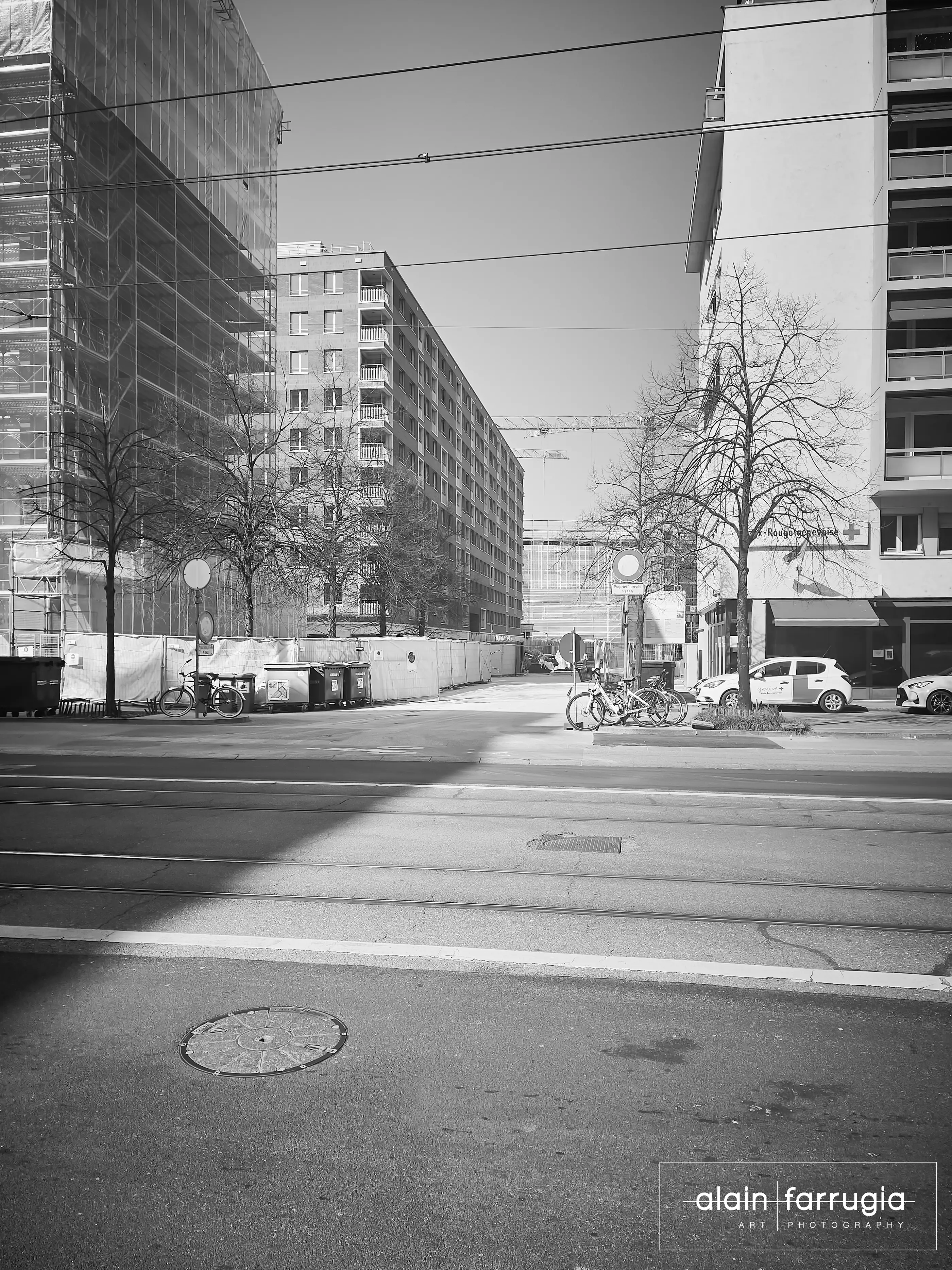
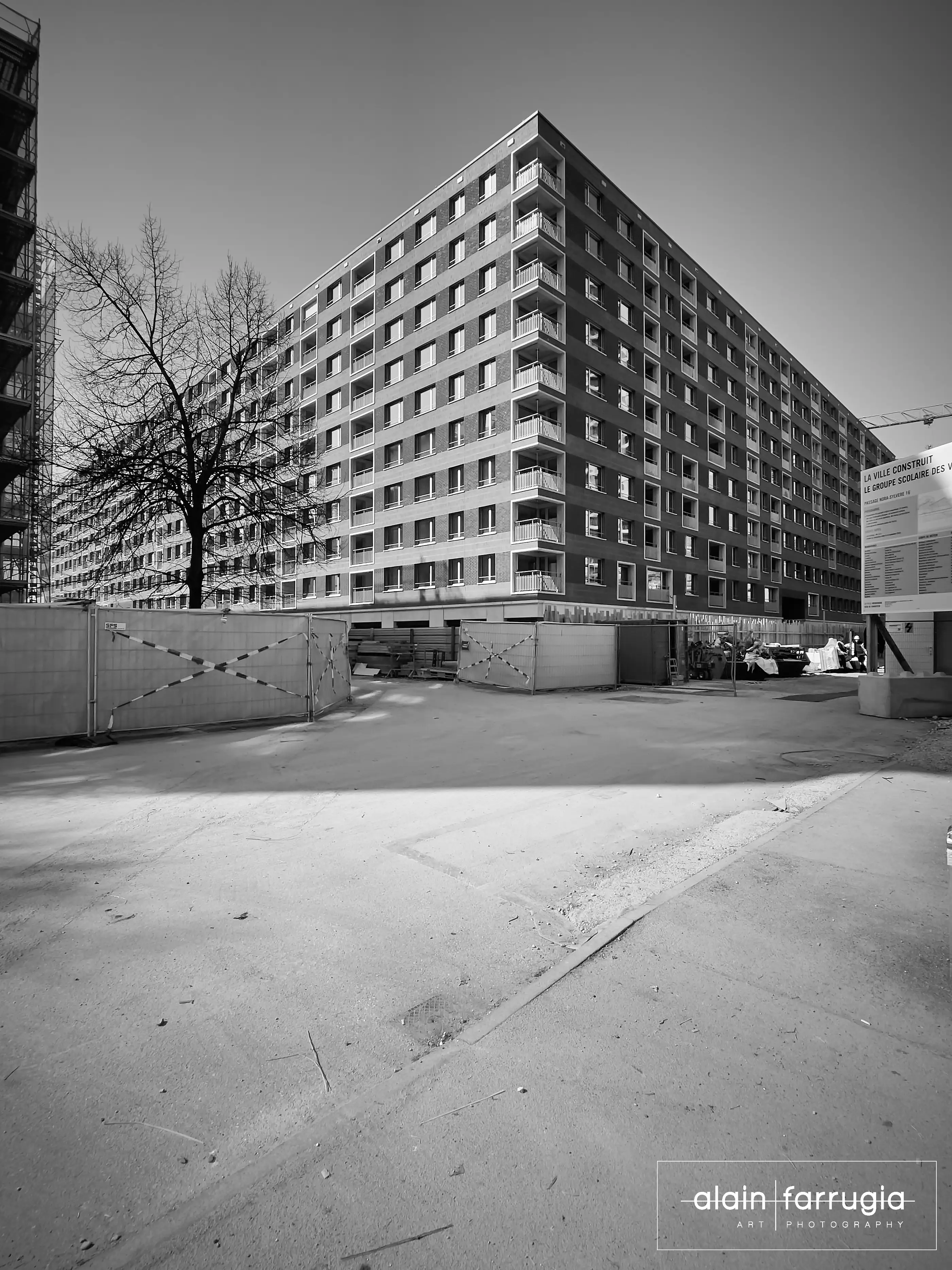
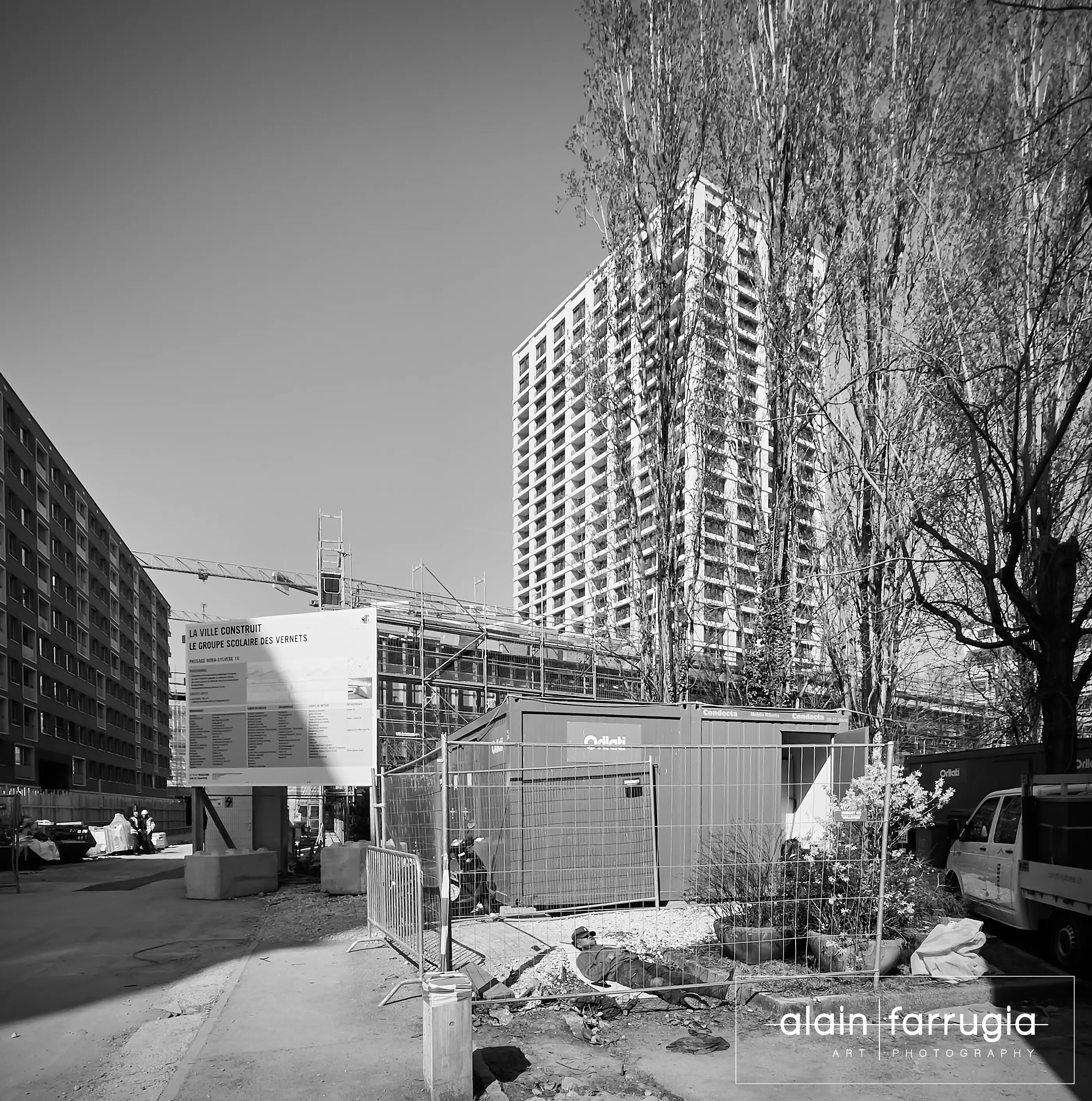
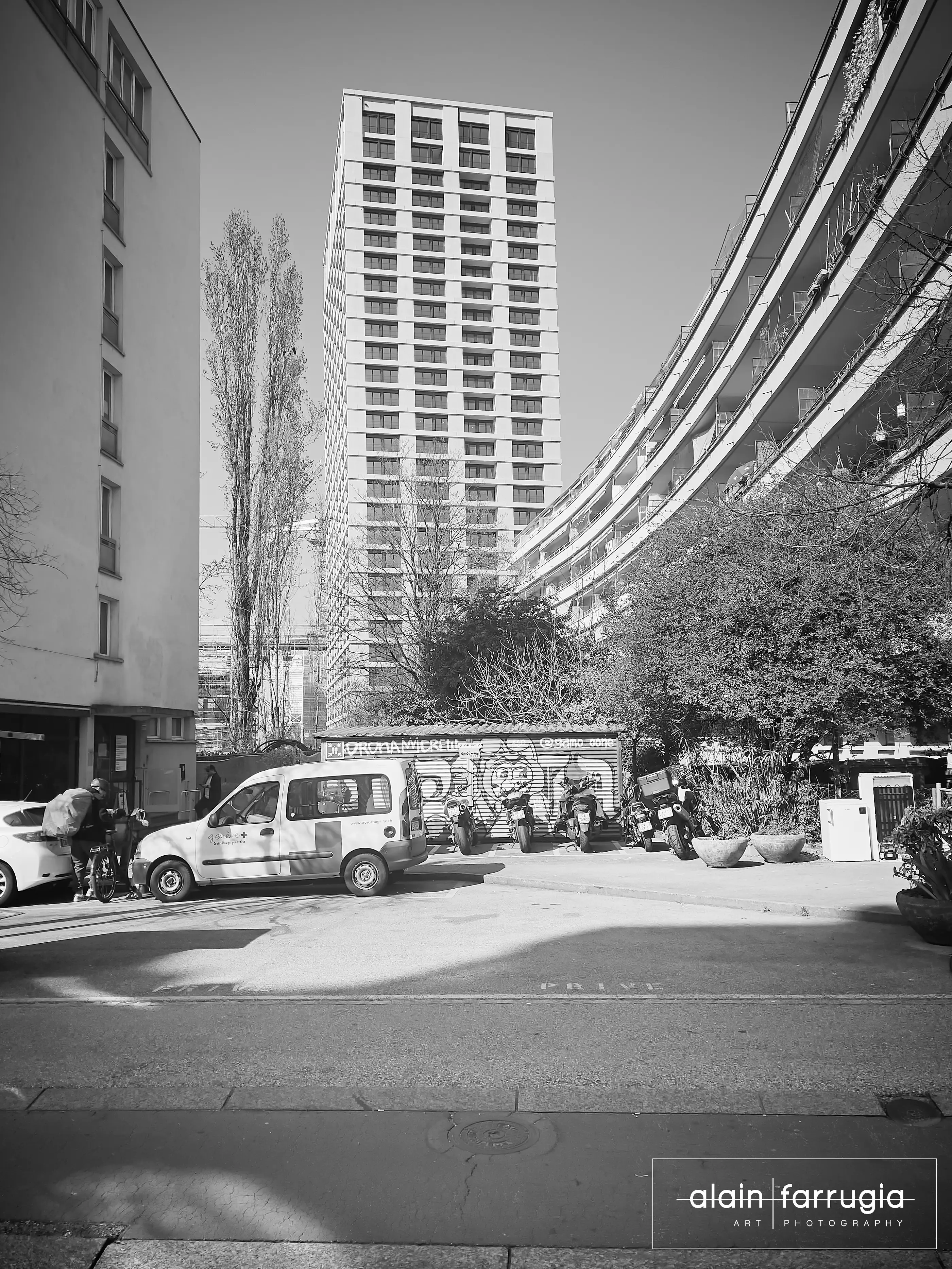
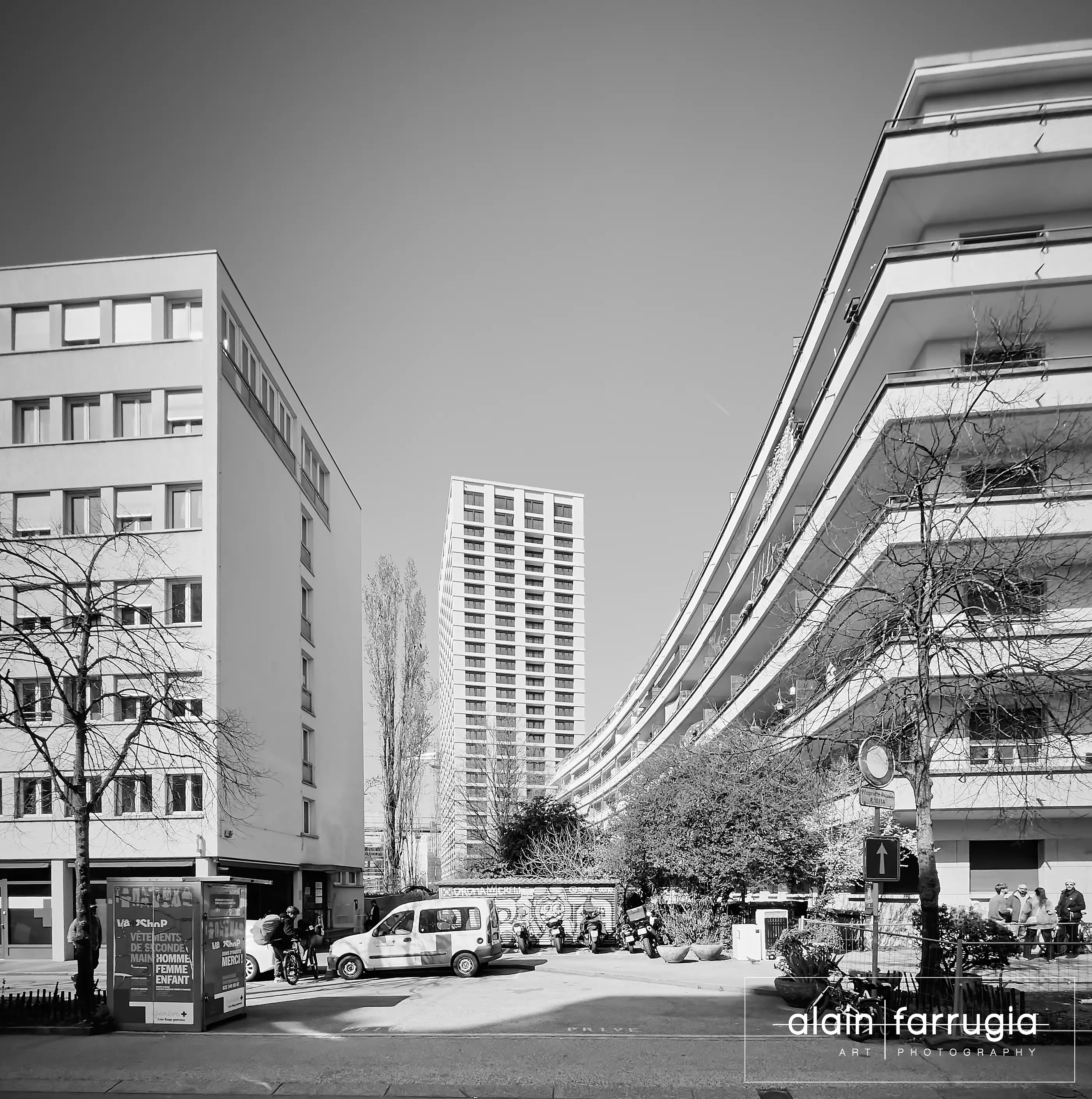
In the gigantic Praille-Acacias-Vernets urban project, intended to redesign an entire section of the city, the dominant aesthetic seems to draw inspiration from an architectural heritage of infinite richness:
- The French suburbs of the 1960s
- Soviet residential estates from the Brezhnev era.
A style instantly recognisable:
- Rectangles
- Repetitive façades
- Standardised concrete
- Perfectly aligned windows to avoid any visual excitement.
The aim is clear: never to provoke any emotion… It’s a total fail – it makes us feel sick… Yuck…
THE GREAT URBAN IDEAL: THE OPTIMISED RABBIT HUT
For Geneva’s urban planning pursues a noble mission:
To cram as many human beings as possible into the smallest possible space.
- Beauty comes at a price.
- Imagination is risky.
- Originality upsets the committees.
So we ‘optimise’:
- Optimised flats.
- Optimised façades.
- Optimised budgets.
- Optimised car parks… so optimised that they’re scrapped…
And above all, optimised slaves in perfectly standardised rabbit hutches.
All accompanied by an environmental rhetoric so green it would make a petrochemical waste tip look like a nature reserve, because in Geneva you can build perfectly ugly and dreary concrete blocks whilst explaining that you’re saving the planet.
ARCHIBORETUM’S ULTIMATE CRIME: BEING BEAUTIFUL!
In this context, Archiboretum committed a major strategic error within Geneva’s administrative ecosystem:
It was beautiful and spectacular
Worse still:
- It was daring
- It was iconic
- It was ambitious
- It could have become an international symbol.
In other words, an unacceptable risk.
For Geneva has a very strong urban tradition: to carefully avoid any architecture that might become famous.
Imagine for a moment the scandal:
- Tourists taking photos of a building,
- Architecture magazines writing about Geneva,
- Students coming to study an innovative urban project.
Worse still, an architectural project likely to make a visitor say: ‘Look, this city still dares to invent something.’
Chaos!!!
A WEALTHY CITY THAT BUILDS LIKE A TIRED SUBURB
The Geneva paradox remains fascinating.
The city is one of the richest in the world. It is home to international organisations, research centres and multinationals. It could become a global laboratory for sustainable cities.
But when it comes to building… it produces, almost religiously, the most bland urban planning on the continent.
Urban planning that seems guided by a fundamental principle: Above all, do not create anything interesting, let alone beautiful.
THE TRIUMPH OF PUSILLANIMITY
The word is harsh but perfectly apt: timidity.
- The fear of daring.
- The fear of displeasing.
- The fear of stepping outside the administrative mould.
So we choose the safest option: the administratively standardised concrete block
- Always the block.
- Yet again, the block.
- The glorious rectangular block.
That timeless monument to the bureaucratic imagination.
WE ALMOST DREAMED
With Archiboretum, Geneva could have shown something different:
- Spectacular eco-friendly architecture
- A city capable of innovation
- A European metropolis looking to the future.
But rest assured, the system works.
- The committees are keeping watch.
- The regulations provide protection.
- Dreams remain safely tucked away in the files of visionary architects.
And the people of Geneva will be able to continue admiring the best their city has to offer: magnificent rows of perfectly uniform cubes.
Progress, but without the risks... And above all, without the dreams!
ARCHIBORETUM BY VINCENT CALLEBAUT
Read and dream of what we could have had in Geneva—something fabulously beautiful and innovative....
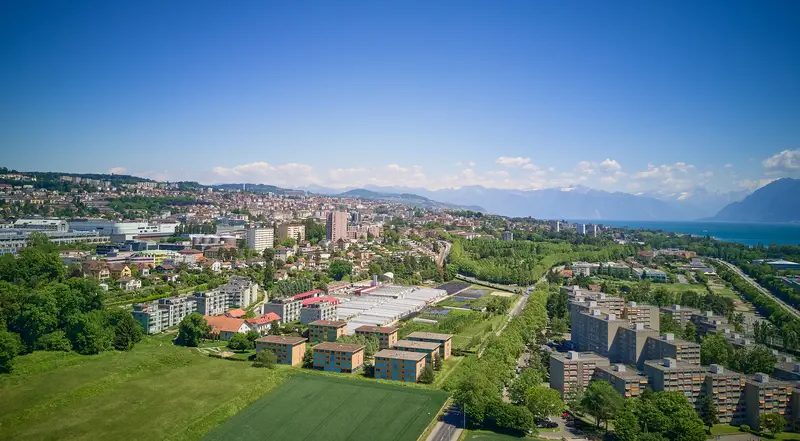
PAV BY GENEVA
And here is what we have for the moment.... Look forward to what comes next....