Français
  English
 SOCIAL SECURITY: CUMULATIVE LOSSES OF 2.2 BILLION FOR THE OASI, DI AND EAP IN 2018
IN THE RED – The AHV and IV schemes ended 2018 in the red due to poor performance in stock market investments. The shortfall between expenditure and revenue in the AHV scheme was CHF 1.038 billion (compared with CHF 1.039 billion in 2017).
"The Swiss economy is set to experience the largest wave of retirements in its history, that of the famous baby boomers. Some believe that older people should be encouraged to work for longer.
Workers born between 1945 and 1965 are leaving the labour market, and federal statistics are clear: the number of people over 65 will skyrocket from 2020 onwards, and the number of retirements will peak in 2030." (Source: RTS Economie)
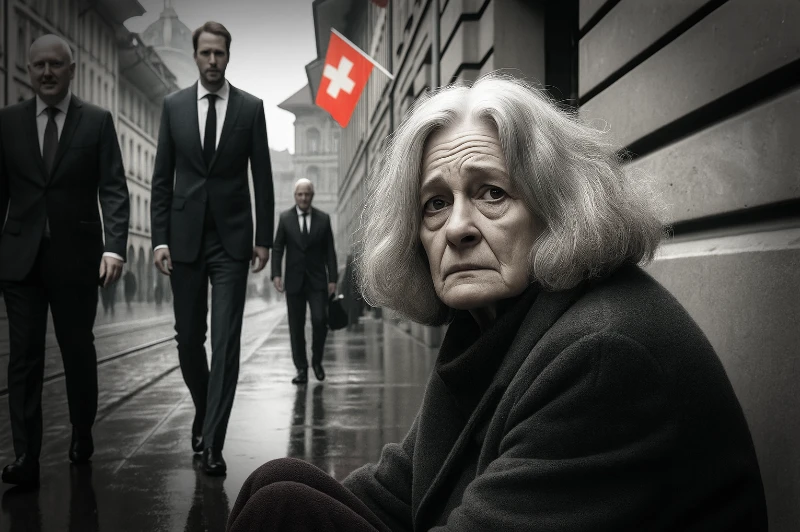
Indeed, this new wave of retirements, with the AVS (Old Age and Survivors’ Insurance) virtually bankrupt, demonstrates just how much of a pipe dream the “Swiss Dream” really is...
Why a pipe dream?
Because many believed that Switzerland was the safest country in the world, the most organised, with a perfectly well-oiled, and one that would offer security in the future for workers who had paid contributions throughout their lives of hard labour, in an extremely tough country where the majority of the population is unable to buy their own home, or, for the few homeowners, will have to sell it once they retire, as they can no longer afford the taxes on the notional rental value... The reality of the situation is, alas, quite different, as is becoming increasingly apparent because it can no longer even be hidden from the public.
Some from the middle class have nevertheless succeeded in Switzerland, because they worked very hard, lived frugally and cleverly managed to invest abroad, in income-generating property, in industries, businesses, factories, companies... Now most have left Switzerland and live happily and financially independently in their new host country.
In conclusion, NEVER rely on the state to secure your future or that of your family; think carefully and invest to build YOUR own pensions, for YOUR financial security and that of YOUR children in the future.
Alain Farrugia
This result is in line with the trend observed since 2014, compenswiss, the body managing the AHV/IV/EO compensation funds, stated on Monday. The negative investment result of the AVS Compensation Fund (-1.233 billion francs) and the interest paid by the Confederation on the AI debt (51 million) resulted in a negative operating result of -2.2 billion francs in 2018.
Poor investment performance
As for the AI, expenditure also exceeded revenue by CHF 65 million last year. This result marks a sharp decline compared with 2017 (+CHF 797 million). This deterioration is due to the end of the additional funding from which the DI benefited between January 2011 and December 2017: the Fund received around CHF 1 billion per year thanks to the 0.4% VAT levy.
Investment income (-CHF 172 million) also weighed on the operating result, which thus stands at -CHF 237 million compared with +CHF 1.1 billion a year earlier. This negative operating result therefore does not allow for a reduction in the DI’s debt to the OASI in 2018.
IV debt at 10 billion
This debt thus remains stable at CHF 10.3 billion. Since the launch of the IV Fund in 2011, the IV’s positive operating results have helped to reduce its debt to the AHV by CHF 4.6 billion.
The income and expenditure balance for loss of earnings allowances (APG) has, meanwhile, improved slightly. The scheme ended 2018 with a profit of 26 million francs (-49 million in 2017). However, the operating result, which stands at -11 million francs, is lower than that of 2017 (+12 million) due to losses on financial investments.
In total, contributions from insured persons and employers to the AVS, AI and APG schemes increased by 1.8% for each social insurance scheme.
Negative returns
The total assets of the AHV generated a return of -4.14%, those of the DI a return of -4.06% and those of the APG a return of -4.19%. The assets available to cover potential losses arising from the operating accounts of the social insurance schemes now amount to 66.7% of total annual OASI expenditure (73.5% in 2017), 44.8% for DI (45.3%) and 50.8% for the APG, a stable figure.
At the end of 2018, the combined assets of the AHV/IV/EO Compensation Funds stood at CHF 34.375 billion (end of 2017: CHF 36.870 billion). The assets of the AVS stood at CHF 29.3 billion, those of the AI at CHF 4.1 billion and those of the APG scheme at CHF 855 million.
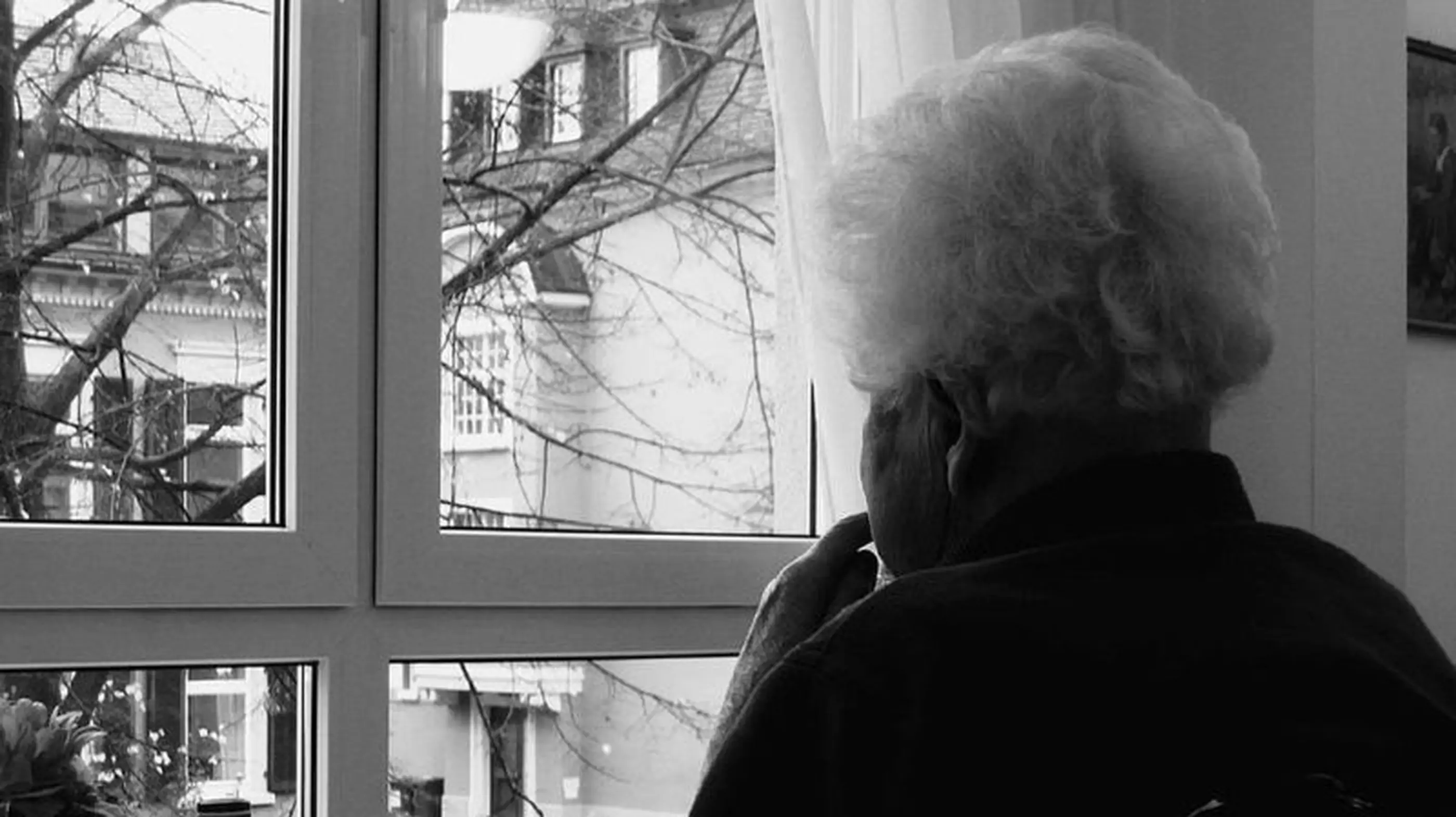
In total, 2,554,900 people received an AVS pension in 2018.
AVS and AI pensions... in the red for the long term...
Although the number of OASI pension recipients rose in 2018 and the number of DI recipients fell, both social insurance schemes ended the year in the red.
In 2018, the number of old-age pension recipients rose by 1.7% to 2,363,800 people. By contrast, the number of IV pension recipients fell slightly. Nevertheless, both schemes ended the year in the red.
In total, 2,554,900 people received an OASI pension in 2018, 2,363,800 in the form of an old-age pension and 191,100 in the form of a survivors’ pension. Compared with 2017, old-age pensions increased by 39,000, the Federal Social Insurance Office reported on Monday.
Some 433,000 people, meanwhile, received disability insurance benefits. Between December 2017 and December 2018, the DI recorded 18,000 new claims against 19,200 terminations, resulting in a decrease in the number of its pensions. Transfers to the AHV due to reaching retirement age accounted for the majority of exits, the FSIO states.
Four out of five disability pensions were granted due to illness, most often of a mental nature. Nearly three out of five (59%) pensions granted due to illness were for a mental illness. Furthermore, nearly half (47%) of all DI pensions granted were for mental illnesses.
Financially, both schemes ended the year in the red. AHV expenditure (CHF 44.1 billion) exceeded revenue (CHF 43 billion) by CHF 1.039 billion. As for the DI, the 2018 accounts showed a deficit of CHF 65 million against expenditure of CHF 9.3 billion.
Sources: