Français
  English
 SWITZERLAND - PENSION FUNDS STRUGGLE TO ACHIEVE A POSITIVE RETURN
Swiss pension funds generally performed well in September, but their performance for the year as a whole remains negative. A study published on Monday by UBS shows that Swiss pension funds have recorded a negative return of -0.26% since the start of the year.
Pension funds posting negative returns, a statutory conversion rate currently set at 6.8% but set to fall steadily each year, reaching below 5% in a few years’ time.
Add to this the lowest state pension in Europe, and we already know that only 30% of pensioners will be financially able to live in Switzerland.
And alongside this debacle, we have the Swiss stock market, which in 2019 posted its best result in 30 years, as explained in the articles below.
Isn’t there something baffling about this?
Once again, we have irrefutable proof that relying on one’s AVS and LPP for retirement is a very serious strategic and economic mistake; only financial investments that everyone can manage freely will ultimately ensure a comfortable retirement.
…Even though our wonderful Swiss Federal Council has just voted for a ‘pharaonic’ increase in AVS pensions of CHF 10 a month… Extraordinary – this will greatly reassure the 70% of pensioners in Switzerland living in precarious circumstances, most of whom are on a drip of SPC benefits, waiting for death to deliver them.
So have we been lied to? ... Nooo… never!!! Switzerland is the best country in the world, we all know that…
Alain Farrugia
Swiss pension funds posted a return in September that was admittedly low but positive, whilst performance for the year as a whole remains negative.
As shown by calculations carried out by UBS and published on Monday, after deducting their fees, the average return on pension funds’ financial investments barely exceeded 0.01%. For the sixth consecutive month, they have performed positively. Returns since the start of the year stand at -0.26%.
Best returns in August
It was in August that small pension funds – those with assets under management of less than CHF 300 million – achieved their best returns, with a performance of 0.06%.
Medium-sized pension funds (with assets under management of between CHF 300 million and CHF 1 billion) and large pension funds (with assets under management of over CHF 1 billion), on the other hand, recorded slightly negative returns of -0.02% and -0.03% respectively.
Both the best and worst performances were recorded by small pension funds, with +0.53% for the best and -0.69% for the worst.
Volatility in September
In September, a month that proved to be highly volatile, alternative investments delivered the best performances. Private equity and infrastructure were the drivers of performance, with 2.32%, followed by hedge funds at 1.86% and real estate at 0.91%.
Meanwhile, returns on Swiss franc bonds were limited to 0.75%, those on defensive Swiss equities to 0.6%, whilst the contribution from global equities was actually negative, at -1.32%.
Pensions: Pensioners will receive an extra ten francs from 2021

Pensioners will receive a little more from 1 January 2021 - Image by Free-Photos - Pixabay
The minimum pension will rise from 1,185 to 1,195 francs per month, the Federal Council decided on Wednesday. The maximum pension will rise to 2,390 francs.
The minimum pension for the AVS/AI will be increased by ten francs from 1 January 2021. It will thus rise from 1,185 to 1,195 francs per month, the Federal Council decided on Wednesday. The maximum pension will be increased by 20 francs to 2,390 francs.
These adjustments are due to changes in wages and prices, the government explains. Adjustments are also necessary in the areas of contributions, supplementary benefits and mandatory occupational pension provision.
The minimum AHV/IV/EO contribution for the self-employed and persons not in gainful employment will rise from CHF 496 to CHF 500 per year, and the minimum contribution for voluntary AHV/IV cover from CHF 950 to CHF 958.
The annual amounts of supplementary benefits, intended to cover basic living costs, will rise from CHF 19,450 to CHF 19,610 for single persons and from CHF 29,175 to CHF 29,415 for couples, to CHF 10,260 for children over the age of 11 and to CHF 7,200 for children under the age of 11.
Occupational pension provision
In individual occupational pension provision, those with a pillar 3a account will be able to deduct a maximum of 6,883 francs from their tax return if they are members of a second-pillar pension scheme, compared with 6,826 francs currently. Those who are not members will be able to deduct up to 34,416 francs (34,128).
The entry threshold for compulsory occupational pension provision will rise from 21,330 to 21,510 francs. And the amount of the coordination deduction will rise from 24,885 to 25,095 francs.
441 million
The additional expenditure resulting from the increase in pensions will amount to approximately 441 million francs. Some 390 million will be borne by the AHV, of which 79 million will be funded by the Confederation. The IV will bear additional expenditure of 51 million francs.
The adjustment of supplementary benefits to the AVS and the AI, meanwhile, will result in additional expenditure of CHF 1.4 million for the Confederation and CHF 0.8 million for the cantons.
The Federal Council reviews the need to adjust AHV and IV pensions every two years. The last adjustment was in 2019.
Nearly CHF 1.45 trillion traded on the Swiss stock exchange in 2019
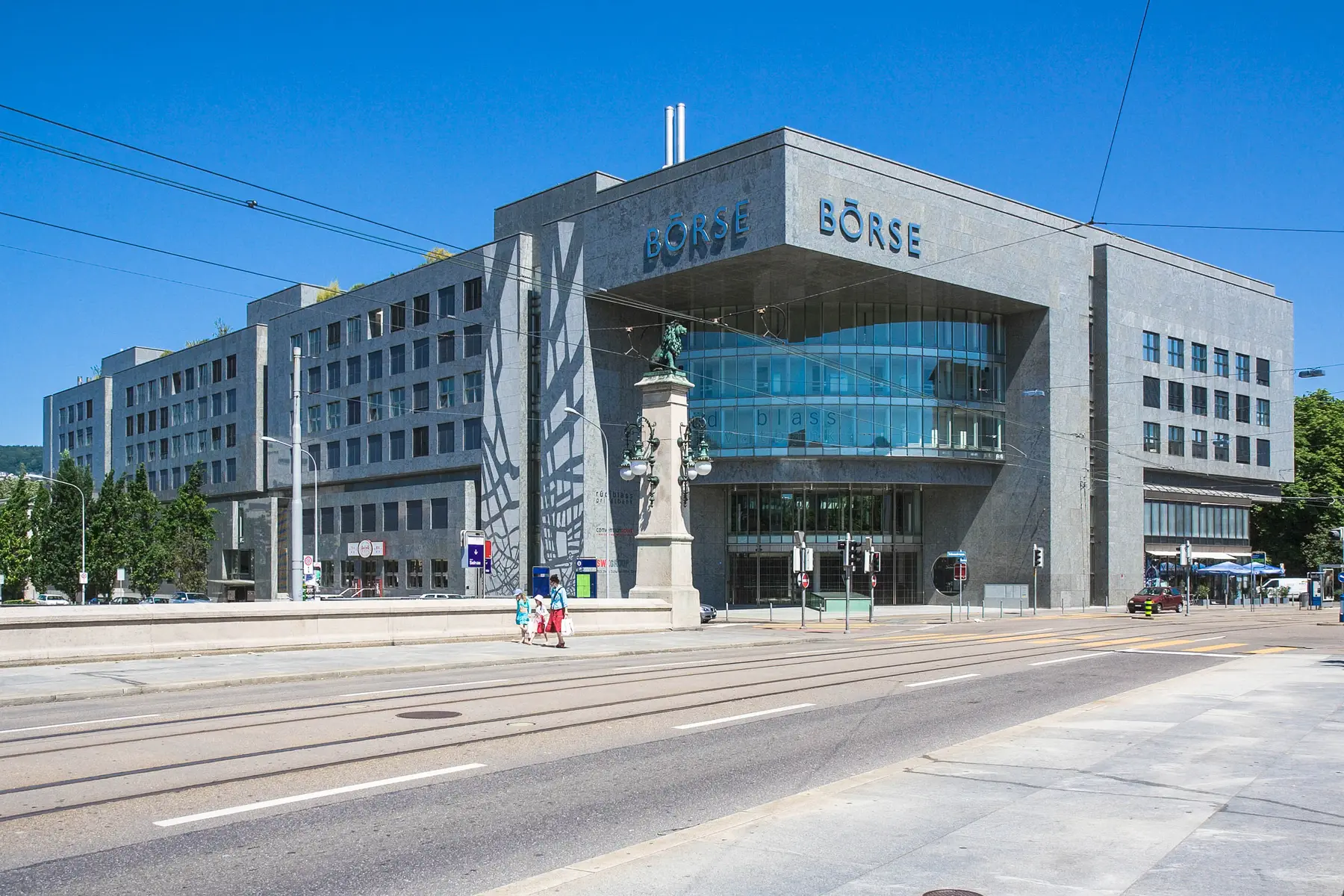
The IPO of Thurgau-based rolling stock manufacturer Stadler Rail proved to be the largest for SIX, but also on a European scale. Creative Commons licence
Trading volumes on the Swiss stock exchange soared in 2019. They reached CHF 1,447.1 billion, up 8.5% year-on-year. The number of transactions rose by 6.1% to around 64 million, according to figures released on Friday by SIX.
10 September proved to be the busiest day in terms of turnover, with transactions reaching CHF 13.4 billion. The number of trades peaked for the year on 2 August, with 458,940 trades on the Zurich platform.
Equity trading accounted for the lion’s share, with turnover of CHF 1,174.9 billion (+6%). The number of transactions rose by 6.6% to 62.09 million.
The three main indices soared, led by the largest, the Swiss Market Index (SMI), which rose by 26% in 2019. The Swiss Leader Index (SLI), which comprises the stock exchange’s thirty leading stocks, posted an identical increase. The Swiss Performance Index (SPI) for the broader market rose by 31.7%.
Unsurprisingly, Nestlé once again took the crown this year in terms of trading volume and number of transactions, with 134.8 billion francs and some 3.50 million trades. The Vevey-based food giant is the largest company by market capitalisation on the Swiss stock exchange, with Roche and Novartis also featuring among the heavyweights.
Stadler, Europe’s largest IPO
SIX recorded seven initial public offerings (IPOs) during the past financial year. “The total transaction volume of CHF 3.1 billion ranks fourth among the volumes recorded by European stock exchanges,” explains Jos Dijsselhof, CEO of the Swiss stock exchange operator, quoted in a press release.
The IPO of Thurgau-based rail equipment manufacturer Stadler Rail proved to be the largest for SIX, but also on a European scale. With a market capitalisation of CHF 4.2 billion, this deal notably surpassed the IPO of Alcon, a spin-off from the giant Novartis.
Medacta, Aluflexpack, Softwareone, Achiko and Novavest Real Estate also made their debut on the Swiss stock exchange last year.
In the bond market, issuers raised over CHF 71 billion in additional capital, explains SIX. Against a backdrop of low interest rates that is unfavourable to fixed-income securities, volumes stagnated (-0.1%) at CHF 120.8 billion.
SIX also highlights 186 new products in the highly popular exchange-traded fund (ETF) segment, where volume surged by 24% to CHF 124.7 billion.
SMI: The Swiss stock market significantly outperformed the CAC 40 and other European indices in 2019
Swiss equities significantly outperformed European equities in 2019
The Swiss Market Index (SMI), which comprises the 20 leading stocks on the Swiss stock market, has recorded a performance of 17.6% since the start of 2019. This is well above the performance of other major European indices.
Since 1 January 2019, Swiss equities have significantly outperformed other European markets. As of 15 August 2019, the Swiss Market Index (SMI) had risen by 17.6% (total return including dividends), according to a study by Florence Chernyak-Bosson, an analyst at Indosuez Wealth Management.
Among the other major European indices, the CAC 40 recorded the second-best performance with a total return of 13.9%, followed by the FTSE on the Milan Stock Exchange with 13.4%. Far behind are the OMX on the Stockholm Stock Exchange (+9.8%), the UK’s “FTSE” (+8.7%), the German DAX (+8.1%) and the Madrid Stock Exchange’s IBEX 35 (+2.6%), whilst the Euro Stoxx 50 and Stoxx Europe 500 indices posted negative returns, with declines of 5.2% and 5.1% respectively.
The SMI is the main index of the SIX Swiss Exchange, which has managed the Swiss stock market since the 1996 merger of the Zurich, Geneva, Lausanne and Basel stock exchanges. It covers around 85% of total Swiss market capitalisation. And whilst the three largest market capitalisations (Nestlé, Novartis and Roche) alone accounted for nearly 80% of the index until June 2017, SIX Swiss Exchange amended its rules and weighting system so that no single company could account for more than 18% of the SMI. In the SLI (the "Swiss Leader Index"), which comprises the 30 largest Swiss market capitalisations, no single stock may have a weighting of more than 9% of the index.
"Several structural forces"
For Florence Chernyak-Bosson, this exceptional performance by Swiss equities is due to the fact that they “benefit from several ‘structural’ forces”. “Firstly, the market’s composition is geared towards quality stocks, a factor that tends to reduce the risk of a downturn in the event of market turbulence, whilst allowing investors to participate in the upside,” notes the analyst.
Furthermore, “Swiss equities compare favourably with Swiss bonds for investors holding Swiss francs, particularly in the current environment of historically low interest rates,” continues Florence Chernyak-Bosson, who elaborates. "The yield on 10-year Swiss government bonds (issued by the Swiss National Bank, ed.) currently stands at -1.1%, whilst the dividend yield of the SMI index is 3.4% (2019 consensus)".
The Swiss franc: a safe haven
Another advantage of Swiss equities for European investors is exposure to the Swiss franc. Indeed, “as the Swiss franc tends to appreciate during periods of equity market correction, this exposure offers a certain safety net,” notes the analyst at Indosuez Wealth Management. "For example, in 2018, the SMI index was down 7% (total return calculated in CHF) compared with -11.8% and -10.7% for the Stoxx Europe 600 index (both in EUR). Measured in euros, the decline in the Swiss market was limited to -3.4%.
Exposure to the Swiss franc also proved beneficial in 2001, 2002, 2008 and 2011, all years marked by a sharp market correction,” she notes. Florence Chernyak-Bosson points out, however, that this phenomenon is a double-edged sword, as a prolonged rise in the CHF ultimately harms the results of Swiss companies, which are mainly exporters.
The analyst also notes that the aforementioned advantages translate into higher valuations for Swiss equities. Since 2009, the price-to-earnings ratio of the Swiss market relative to the Stoxx 600 index has ranged between 1 and 1.2, peaking at 1.3 in September 2011. “Currently, the SMI’s price-to-earnings ratio stands at 16.4 times 2019 earnings, compared with 14 times for the Stoxx Europe 600 Index, meaning that the ratio of these two multiples currently stands at 1.17.” In other words, the valuation premium for Swiss equities is 17% higher than that of the Stoxx Europe 600, and Florence Chernyak-Bosson believes that this valuation premium “could remain high in the coming months, especially if market turbulence persists”.
Sources