Français
  English
 SWITZERLAND MUST AIM FOR CARBON NEUTRALITY BY 2050
Switzerland must not emit more CO2 than its carbon sinks can absorb. In light of new findings on climate change, the Federal Council raised its climate target on Wednesday. It is aiming for carbon neutrality by 2050...
Climate policy: Switzerland must aim for carbon neutrality by 2050. 7.30 pm / 1 min. / 28 August 2019
By ratifying the Paris Climate Agreement, Switzerland has committed to halving its greenhouse gas emissions by 2030 compared to 1990 levels. It had also set a long-term target of reducing greenhouse gas emissions by 70 to 85 per cent by 2050.
This target was based on the findings of the Intergovernmental Panel on Climate Change (IPCC), which stated that global warming must be limited to less than 2 degrees by 2100 in order to avoid serious consequences for humanity and biodiversity. In 2018, experts demonstrated that profound changes were to be expected from a warming of 1.5 degrees.
Net-zero greenhouse gas emissions will therefore need to be achieved much sooner than anticipated. Switzerland intends to contribute to international efforts to limit global warming. It joins a large number of countries in doing so. With temperatures rising twice as fast as the global average, Switzerland is particularly affected by climate change.
No direct obligation
The announcement of this target does not entail any direct international obligation for Switzerland. The commitment will be implemented through a revision of the CO2 Act covering the period after 2030. The reform, which the Council of States is due to consider in September, is not affected.
This new target for 2050 is expected to be submitted to the UN Climate Change Secretariat by the end of February 2020. It forms the cornerstone of Switzerland’s Climate Strategy 2050, which will be presented to the Federal Council by December 2020.
CO2 emissions from transport, the building sector and industry could be reduced by up to 95% in Switzerland by 2050 using current technologies and renewable energy sources. Other greenhouse gases, particularly those from agriculture, such as methane and nitrous oxide, also offer potential for reduction. The strategy will also aim to reduce emissions abroad.
ats/lan
"It’s a bit disappointing" Océane Dayer, founder of Swiss Youth for Climate, put Switzerland’s commitment into perspective on the 7.30pm news: "I’m a bit surprised because Simonetta Sommaruga announced that the commitment would not consist of net-zero carbon emissions in Switzerland, but that we would also offset part of it abroad. It’s a bit disappointing because we don’t know what the target for net zero in Switzerland actually is.”
"It’s a bit problematic because scientists are clear: we need net-zero carbon emissions worldwide by 2050," she continued. "Yet in the business world, we know that clear targets are necessary, which isn’t the case here."
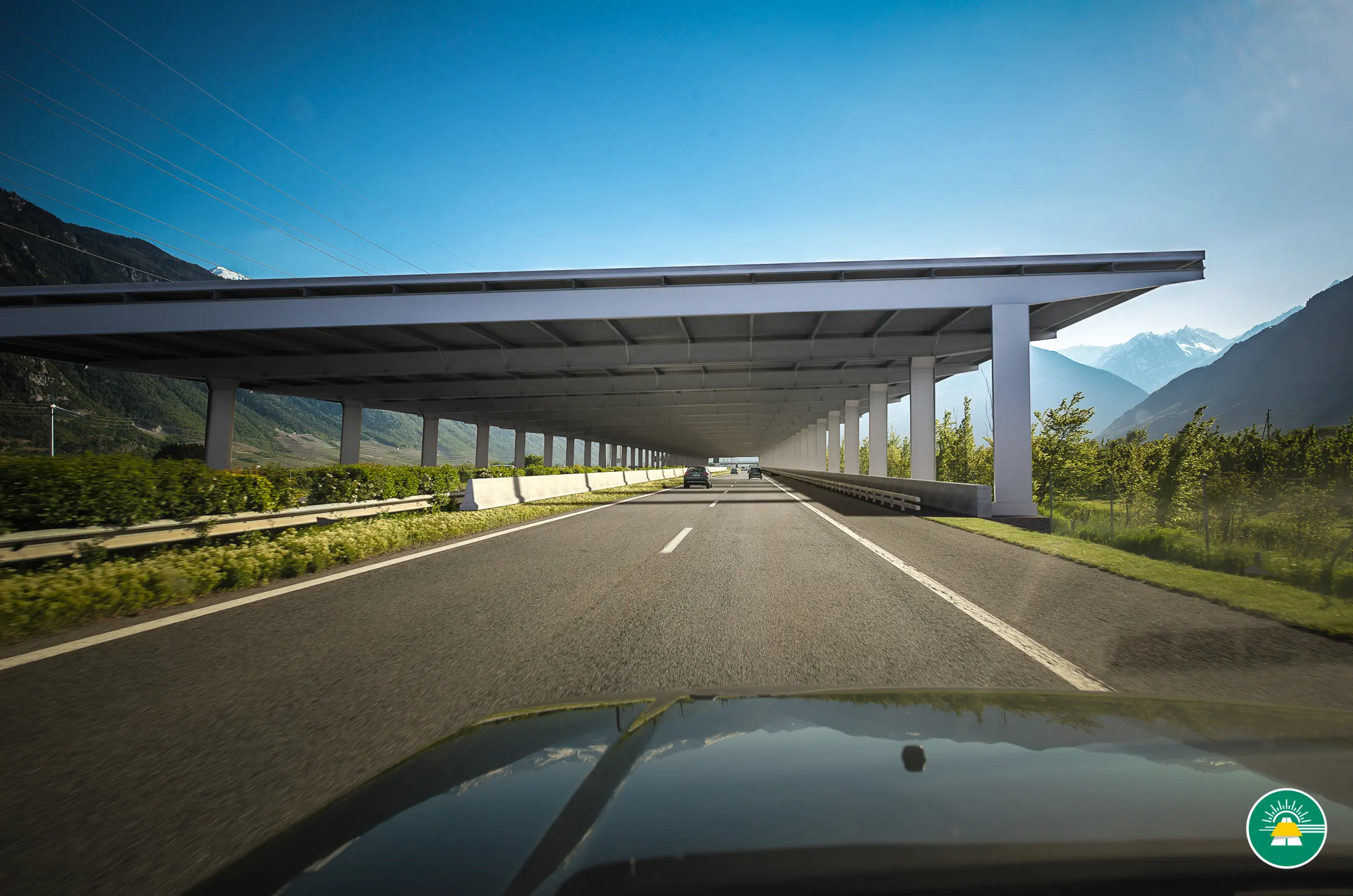
The solution for these targets = Swiss EnergyPier Solar Highway
With a GENUINE commitment to sound energy policy in Switzerland at national level, installing enough EnergyPier Solar Highway will quickly achieve this result!
To see for yourself, simply discover The EnergyPier Solar Highway Solution, which is nothing less than the world’s largest project for the industrial production of affordable electricity, as well as the positive externalities offered by this major urban development.
Enjoy the read…