Français
  English
 THE SOLAR MOTORWAY AND ITS UNEXPECTED LINKS TO BLOCKCHAIN
Summary: In this post, we continue to share our ongoing thoughts on the "Solar Highway" project, focusing in particular on the interconnections between blockchain technology, our energy future, and, of course, our solar motorway project.
BLOCKCHAIN – SOLAR HIGHWAY – SHAREHOLDERS – INDEPENDENCE
These four words form the basis of the financing structure for the current ‘Swiss EnergyPier Solar Highway’ concept (in Switzerland) as well as for future installations around the world.
In this article, a highly insightful analysis by Laurent Jospin reflects on the financing of major innovative projects that ‘fall outside the box’ of banks and institutional investors, who are paralysed by their regulatory bodies and all their administrative red tape, or which scare off ordinary investors who lack vision or are too risk-averse.
ICOs, equity financing and crowdfunding: three solutions that could guarantee financial independence as well as rather attractive returns for investors who subscribe.
The trick will be to make the right choice and create the right structure… The avenues are there and the experts are hard at work…
The future looks exciting!!
For information on cryptocurrencies: EXPLANER – Bitcoin for Dummies.
Alain Farrugia
Incidentally, we may, perhaps, give you the opportunity to become a millionaire for free, but without any guarantee, of course.
The previous article announced today’s topic: blockchain as a possible option for fully or partially financing sections of solar motorways.
What winding path led us to see a link between our project and the world of cryptocurrencies?
It so happens that a British project known as KWATT caught our attention, as it had raised exactly the amount we need (and what’s more, for a project that is frankly not comparable to ours in terms of sustainability, at least at the time of fundraising) and, moreover, with disconcerting ease via a cryptocurrency issuance.
From there, it was only a small step to imagine financing the Solar Highway Project via a token issue or something of that sort, a step my team and I happily took.
But the days when anyone could raise any amount of money by doing whatever they liked, however they liked, are well and truly over. Today, the vast majority of ICOs fail. Taking this fact into account, we have come to the conclusion that only a partnership with a truly high-performing/competent player in the niche would justify committing time and resources to this path.
The potential partners we have met are still hesitating. The problem can be summed up in a few words: the really good ones, inundated with requests, are focusing on easily achievable immediate gains and are reluctant to invest with us. The exceptional medium- to long-term prospects of our project pull them in one direction, whilst the immediate effort required leads them to look the other way.
As my personal expertise in blockchain doesn’t really extend beyond an understanding of the general principles, I had made a firm decision not to commit our team to this path alone: either a partner from the crypto world at the level of the Solar Highway project would commit to us, or we would abandon this avenue.
But then an article in the March 2019 issue of Science & Vie on the topic of electricity consumption generated by blockchain showed that the relationship clearly works both ways: Yes, blockchain could potentially be a fundraising solution for the Solar Highway Project, but on the other hand, the foreseeable energy requirements of blockchain make it imperative to establish clean energy production on a scale such that our solution seems perfectly suited to meet this need
In accordance with fair use, here is a scan of the first page of the article mentioned above:
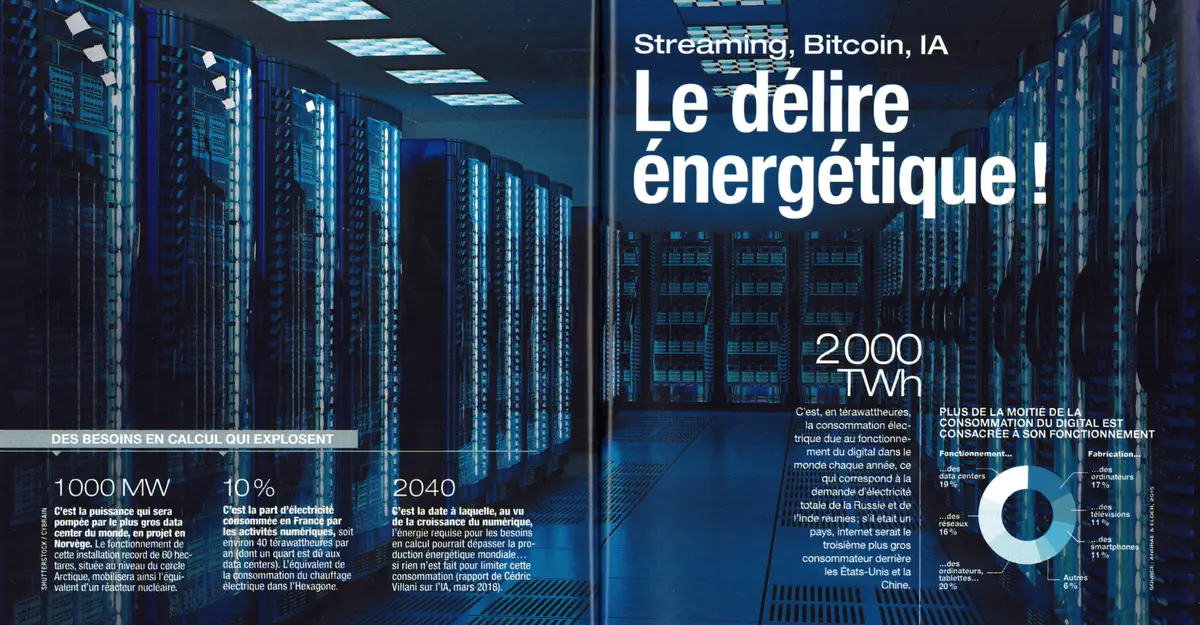
Furthermore, you are encouraged to get hold of a copy (Science&Vie website here: https://www.science-et-vie.com/ ) or perhaps pop into your favourite local library to have a look.
So, I started to look a bit more closely into the world of cryptocurrencies and blockchains. Experts in the field will no doubt be amused to hear of my surprise when I discovered the phenomenon of free distributions.
This is something completely counter-intuitive: project leaders (looking to create a new cryptocurrency, a blockchain-based tool, etc.) who wish to raise funds start by giving away a significant number of coins or tokens to the public for free.
Of course, there is a perfectly rational explanation. And once again, this draws a certain parallel with our Solar Highway project!
In the approaches discussed in the previous article, we mentioned crowdfunding. So here is our most painful dilemma: for the Solar Highway demonstrator in Fully, we could probably find funding relatively easily by issuing a large number of small shares, as given the appeal of our project and the growing awareness of the urgent need to decarbonise our economy, it is almost certain that a sufficient number of small investors would wish to become co-shareholders, thereby financing the project.
However, such an approach would almost certainly fall foul of the law. Indeed, the legislator would treat the process as a public offering (a privilege reserved for banks) and/or the sale of financial products without marketing authorisation.
That covers the basic issue, and we will discuss crowdfunding in more detail in the next post.
Returning to the question of ICOs, those behind a ‘crypto’ project generally face the same difficulty. As long as an asset of an essentially financial nature does not yet exist, any attempt to have it subscribed to in return for payment by an indeterminate number of small investors will almost inevitably fall foul of the law. However, in order to function and become a success, a crypto system must necessarily have significant liquidity. In some cases, it is possible to issue tokens in exchange for a right that is not comparable to a financial product (much like in the crowdfunding example above, e.g. Bitcoin, where you receive BTC in exchange for mining work), and in others it is not. In the latter case, the free distribution of “e-coins” or other tokens becomes an elegant solution for launching the project’s ecosystem.
Indeed, let us take the theoretical example of a group of people wishing to launch a token project entitling holders to a share of something (not specified here, but one might, for example, envisage a solution facilitating e-commerce) that must essentially exist through the liquidity of the tokens. If the group in question decides to issue 1 million tokens and offers them at any price (say, 1.– per token), as they have no liquidity at launch, they consequently have only speculative value based on future prospects. The success of the operation therefore seems highly uncertain on the one hand, and furthermore, unless the group is treated as a bank and registered as such with the financial markets regulator in each country where the new e-coin is promoted, the initiative will be penalised by the said authority.
On the other hand, if the same group decides to create not 1 million but 2 million and distribute this second million as a free giveaway to a large number of people, it will avoid the legal pitfall (giving away is always permitted!) and it will spontaneously create an ecosystem in which some beneficiaries will decide to resell their free tokens fairly quickly, whilst others will instead wish to capitalise on the initial amount received by purchasing additional shares. It then ‘simply’ requires that the token in question has a genuine utility to create an increase in value and thereby guarantee the project’s success.
At this stage, it seems almost certain that the financing of the Solar Highway Project in Fully will not involve blockchain technology. However, it is reasonable to assume that this will be the case for subsequent sections. It will become imperative for our team to enhance its blockchain expertise, as relying too heavily on external partners for strategic matters entails fundamental risks on the one hand, and risks that are not clearly identified on the other; the combination of these two factors is, quite simply, untenable.
As you will have gathered, to prepare for the future, I have begun to invest a little more time in studying the crypto world.
As the creation of a new cryptocurrency or token involves this ICO phase, it is worth focusing one’s efforts on understanding the various mechanisms involved. I have therefore decided to select around ten free distributions and participate in them, primarily to gain experience.
Of course, your favourite writer remains the same, fully convinced of the urgent need to create a sustainable world, amongst other things. The selection of these ten or so targets will therefore be based on a few basic criteria, including
- the real-world utility of the proposed new ecosystem,
- the absence of any detrimental effects on overall sustainability,
- and we will exclude any system with a purely speculative aim.
As a significant number of readers may also be interested in taking part in one or other of these free distributions (this has already started, rather naively, with the proofreaders before publication, so one can imagine the same for readers…), it is worth clarifying the following points:
- these giveaways are free in the sense that no money needs to be paid to obtain the cryptos in question, but a certain amount of effort is required, including at the very least registering in the relevant crypto ecosystem, and possibly additional steps such as posting a link on your social media accounts, …
- Furthermore, the cryptos received in this way for free may eventually gain considerable value (come on, we’ll all want to become multi-millionaires), but it’s also possible that they’ll fizzle out and the crypto will simply disappear.
In my case, there’s a clear goal: to gain a better understanding of the blockchain world, so even if the few hours (in total) I’ve invested come to nothing, I won’t be too bothered as the original purpose of the exercise was different.
So, here’s the first ‘free giveaway’ that caught our eye:

It’s a project aimed at making e-commerce easier for small players, thereby making them less dependent on giants like Amazon or Alibaba. There is clearly a social benefit to this project in seeking to empower the “small players”, who are often at the mercy of the “big players”, or at the very least to offer them an alternative. I don’t have time to carry out a full feasibility study to try and determine the chances of success of this initiative, but at the very least the stated aim meets a need and does not directly conflict with the values championed by this blog.
Here is the link for those who might be interested in this specific project: https://www.aussiedigital.io/referral/laurentdavidjospin (opens in a new window)
I’ll keep you updated on my discoveries in the world of crypto, whilst bearing in mind that this remains a secondary matter and that my/our main goal remains the launch of the solar motorway, if I may put it that way.
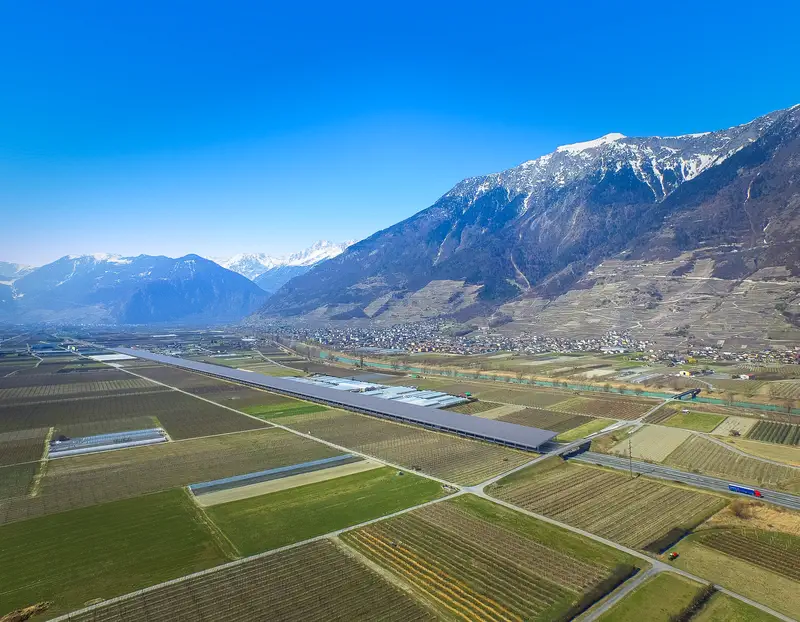
And to stay on our main topic, here is a new image from our studies for the Knonauer Amt project:
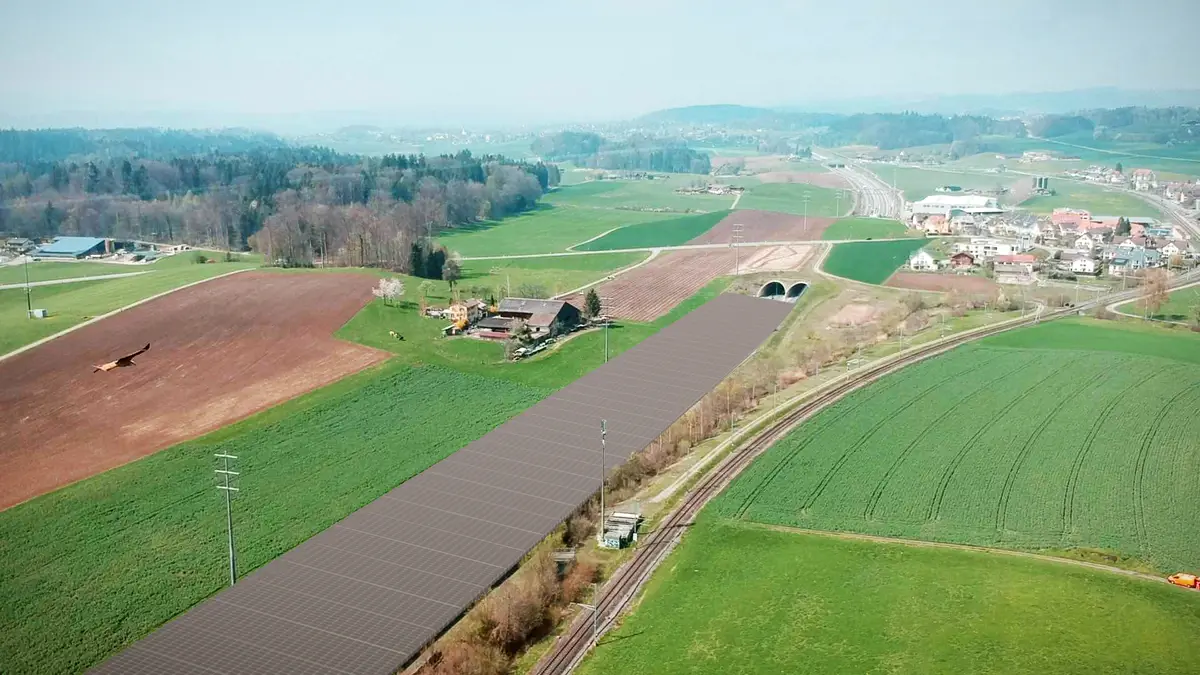
EnergyPier Knonauer Amt
The next article will focus on crowdfunding, and as a reminder, you can sign up to receive priority updates on the project. Your support, even if it’s just sharing our articles, will make all the difference!
The series of articles on our Solar Highway Project is now organised as follows:
- Introduction to the series here,
- Links to blockchain (you’re here),
- Ditto with crowdfunding around ,
- Permaculture and solar panels,
- New: Solar highways and sustainability,
- and more to follow…
Hoping that together we can contribute to a more sustainable world.
Laurent-David JOSPIN